Diplomatic Overture: Vatican Seeks Peace in Eastern Europe
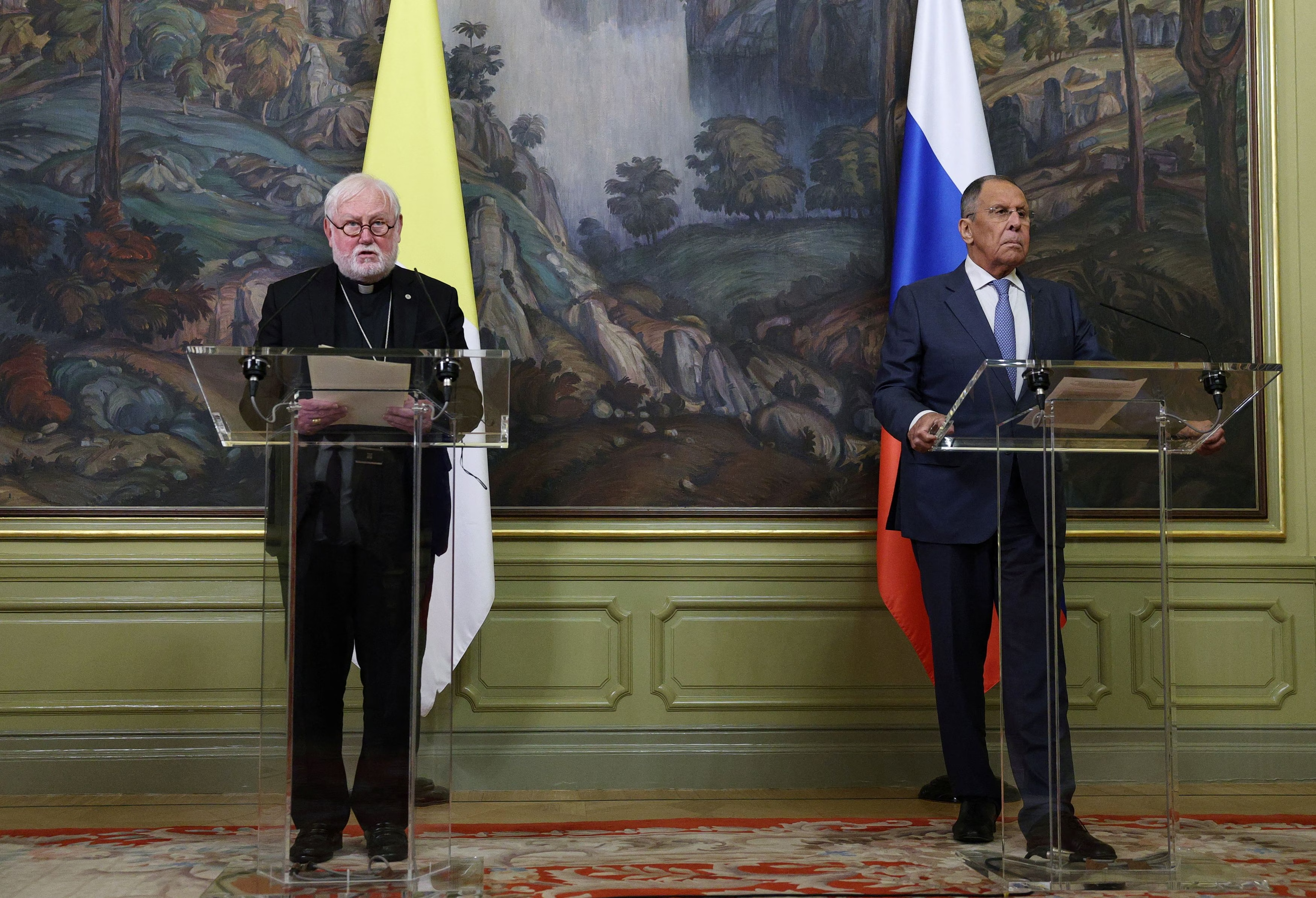
In a significant diplomatic development, a senior representative of the Vatican recently traveled to Moscow, engaging in high-level discussions with Russian officials. This visit marked the first such interaction in five years, signaling a renewed effort by the Holy See to address pressing international concerns, particularly the protracted conflict in Ukraine. The Vatican's Secretary for Relations with States and International Organizations, Archbishop Paul Richard Gallagher, led the delegation, aiming to foster dialogue and explore avenues for peace.
The central theme of Archbishop Gallagher's mission was an appeal for an end to hostilities in Ukraine. The Vatican has consistently expressed deep concern over the humanitarian crisis and the broader geopolitical implications of the conflict. Its long-standing tradition of humanitarian diplomacy and its moral authority in international affairs position it uniquely to advocate for peaceful resolutions. The discussions in Moscow, though not immediately yielding a breakthrough, represent a continuation of these efforts, emphasizing the Holy See's commitment to alleviating suffering and promoting stability in the region.
Historical Context of Vatican-Russia Relations
The relationship between the Vatican and Russia has historically been complex, marked by periods of both cooperation and tension. While both entities share deep historical and cultural roots, particularly through their respective Christian traditions, doctrinal differences and geopolitical interests have often created distance. The Russian Orthodox Church, a dominant religious institution in Russia, operates independently of the Roman Catholic Church, and inter-church relations have at times been strained. However, in recent decades, there have been concerted efforts to bridge these divides, particularly on issues of common concern such as religious freedom, social justice, and peace.
The last high-level meeting between Vatican and Russian foreign policy chiefs occurred five years ago. The resumption of such direct engagement underscores the urgency with which the Vatican views the current international landscape. The Holy See operates under the principle of active neutrality, seeking to mediate conflicts and provide humanitarian assistance without aligning itself with any particular political faction. This approach allows it to maintain open channels of communication with various state actors, even those embroiled in conflict, in pursuit of its humanitarian and peacemaking objectives.
The Vatican's Peacemaking Initiatives in Ukraine
Since the escalation of the conflict in Ukraine, the Vatican has undertaken several initiatives aimed at de-escalation and humanitarian aid. Pope Francis has repeatedly called for an end to the fighting, urging leaders to prioritize dialogue and diplomacy over military confrontation. He has also personally appealed for the protection of civilians and the establishment of humanitarian corridors to facilitate aid delivery and safe passage for those fleeing the conflict zones. The Holy See has dispatched aid missions and offered its resources to assist refugees and displaced persons, working through its charitable organizations and local dioceses.
Archbishop Gallagher's visit to Moscow can be seen as a direct extension of these efforts. His discussions with Russian officials likely encompassed a range of topics beyond just the immediate cessation of hostilities. These may have included the plight of prisoners of war, the protection of religious sites, the facilitation of humanitarian access, and the potential for a more comprehensive peace settlement. The Vatican's strategy often involves laying the groundwork for future negotiations, even when immediate breakthroughs seem unlikely, by maintaining communication and identifying areas of common ground.
Challenges and Prospects for Peace
The path to peace in Ukraine remains fraught with significant challenges. Deep-seated political, historical, and territorial disputes complicate any potential resolution. The international community is largely divided on how best to address the conflict, and various peace proposals have encountered considerable obstacles. In this complex environment, the Vatican's role is primarily that of a moral arbiter and a facilitator of dialogue, rather than a direct political negotiator with coercive power.
However, the Holy See's moral authority and its extensive diplomatic network can contribute significantly to creating a more conducive environment for peace. By engaging directly with key actors, it can help to humanize the conflict, remind parties of their shared responsibilities, and explore creative solutions that might not be readily apparent through traditional political channels. The Vatican's emphasis on universal human dignity and the sanctity of life provides a powerful framework for advocating for an end to violence and the protection of vulnerable populations.
The discussions in Moscow, while not expected to produce immediate dramatic shifts, are a crucial step in a long and arduous process. They underscore the Vatican's unwavering commitment to its peacemaking mission and its belief in the power of dialogue, even in the face of profound disagreements. The Holy See continues to hope that through persistent diplomatic engagement, humanitarian efforts, and appeals to shared moral principles, a pathway to a just and lasting peace in Ukraine can eventually be forged.
Future Diplomatic Engagements
The recent visit to Moscow is likely not an isolated event but rather part of a broader, ongoing diplomatic strategy by the Vatican. The Holy See often employs a multi-pronged approach, engaging with various stakeholders and utilizing different diplomatic channels. Future engagements might involve further discussions with Russian officials, renewed outreach to Ukrainian authorities, and coordination with other international bodies and religious leaders. The objective remains consistent: to leverage its unique position to promote reconciliation, provide humanitarian assistance, and advocate for an end to the suffering caused by the conflict.
The Vatican's diplomatic efforts are characterized by patience and persistence. Understanding that complex conflicts require sustained engagement, it continues to offer its good offices and its moral voice to contribute to a peaceful resolution. The visit of Archbishop Gallagher to Moscow serves as a powerful reminder of the Holy See's dedication to its global mission of promoting peace, justice, and human dignity in a world often beset by conflict and division. These efforts, though often behind the scenes, are vital in keeping the channels of communication open and fostering hope for a future where dialogue prevails over violence.