The technical failure behind the 9.9 magnitude alert
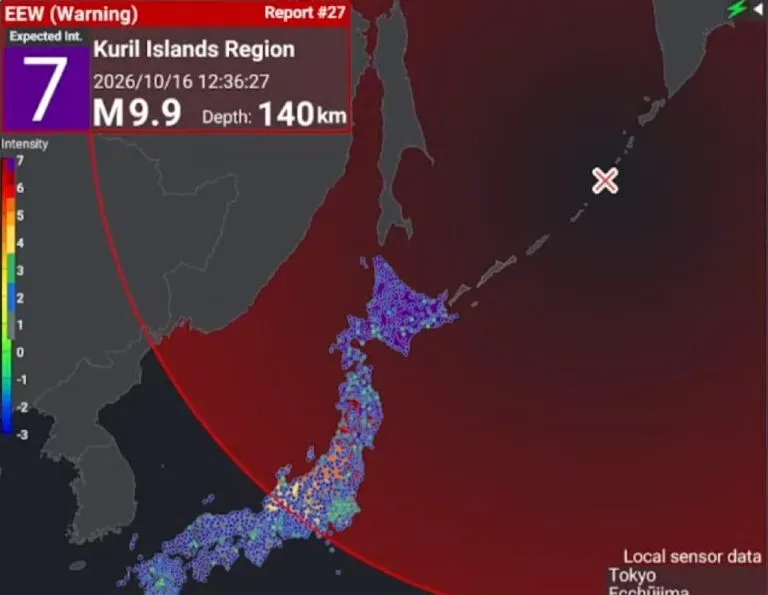
A significant calculation error regarding the seismic epicenter led to one of the most dramatic false earthquake warnings in recent history. The Japan Meteorological Agency (JMA) initially reported that a massive earthquake with a magnitude of 9.9 had occurred near the Kuril Islands, known in Japan as the Chishima Islands. This extreme figure suggested a catastrophic event capable of widespread destruction, causing immediate alarm across the region.
The error was not a simple typo but a fundamental miscalculation of the event's location. According to the JMA, the mistake stemmed from an anomaly in the calculation of the epicenter. The agency's initial assessment was based on the incorrect assumption that the epicenter was located approximately 680 kilometers further away from Japan than its actual position. This distance discrepancy fundamentally skewed the magnitude estimation, leading to the erroneous 9.9 reading.
The impact of the warning was immediate and widespread. Because the JMA's systems are integrated with national emergency protocols, the false data triggered high-intensity emergency alerts on millions of mobile phones. While the agency managed to retract the warning within minutes, the initial surge of notifications created a momentary atmosphere of high tension among the population.
Actual seismic activity near the Kamchatka Peninsula
The actual earthquake was significantly less powerful than the initial warning suggested, occurring near the Kamchatka Peninsula in Russia. Once the JMA corrected the data, it clarified that the earthquake had a magnitude of 6.9 rather than 9.9. This corrected figure represents a substantial difference in energy release, moving the event from a hypothetical global catastrophe to a significant, but much more localized, seismic event.
The true epicenter was located at a depth of 160 kilometers. The seismic activity took place shortly after noon on Friday, near the Russian peninsula. Although a 6.9 magnitude earthquake is a serious geological event, the corrected data provided much-needed relief to the Japanese public, as the actual threat level was far lower than the initial emergency broadcast indicated.
Impact on public infrastructure and transport
While the false alarm did not escalate into widespread mass panic, it did cause tangible disruptions to public services and transportation networks. The sudden influx of emergency alerts and the perceived threat of a massive earthquake led to temporary complications in the movement of people and goods. Public transport systems, which often have protocols for sudden seismic threats, experienced delays as they responded to the initial erroneous data.
The JMA noted that although the panic was contained, the logistical friction caused by the warning was undeniable. The suddenness of the alert meant that commuters and travelers were momentarily thrown into uncertainty, affecting the flow of daily activities across various sectors. These disruptions highlight how sensitive modern infrastructure is to automated emergency notification systems.
Official apology and institutional accountability
The Japan Meteorological Agency has issued a formal apology to the public for the distress and logistical issues caused by the error. Shinia Tsukada, an official from the JMA, addressed the media to express the agency's regret. "We sincerely apologize for the significant inconvenience and anxiety caused to the public," Tsukada stated during a press briefing.
The agency's transparency regarding the cause of the error—the 680-kilometer distance miscalculation—is part of an effort to maintain public trust in their early warning systems. As seismic monitoring technology becomes increasingly automated, the JMA is tasked with ensuring that the speed of alerts does not come at the cost of accuracy. The incident serves as a critical case study for meteorological agencies worldwide on the importance of verifying epicenter data before broadcasting extreme magnitude estimates.
Frequently Asked Questions
What was the actual magnitude of the earthquake?
The actual magnitude of the earthquake was 6.9. While the initial warning incorrectly stated a magnitude of 9.9, the JMA quickly corrected the data to reflect the true seismic strength of the event that occurred near the Kamchatka Peninsula.
Why did the JMA issue a false warning?
The false warning was caused by a calculation error regarding the earthquake's epicenter. The agency mistakenly assumed the epicenter was 680 kilometers further from Japan than it actually was, which led to the incorrect 9.9 magnitude estimation.
Did the false alarm cause widespread panic?
The false alarm did not result in widespread panic, although it did cause significant anxiety. Millions of mobile phones received emergency alerts, and the error caused temporary disruptions to public transportation and general daily activities before the correction was issued.
Conclusion
The erroneous 9.9 magnitude earthquake warning serves as a stark reminder of the complexities involved in real-time seismic monitoring. While the technical anomaly regarding the epicenter's distance led to a massive discrepancy in magnitude reporting, the rapid retraction of the warning prevented a larger crisis. The incident caused localized transport issues and public concern, but the JMA's subsequent apology and explanation aim to address the institutional fallout. Moving forward, the focus for meteorological services will likely remain on refining the algorithms that calculate epicenter locations to prevent such high-magnitude false alarms in the future.