Why did Marco Rubio choose Athens for his political messaging?
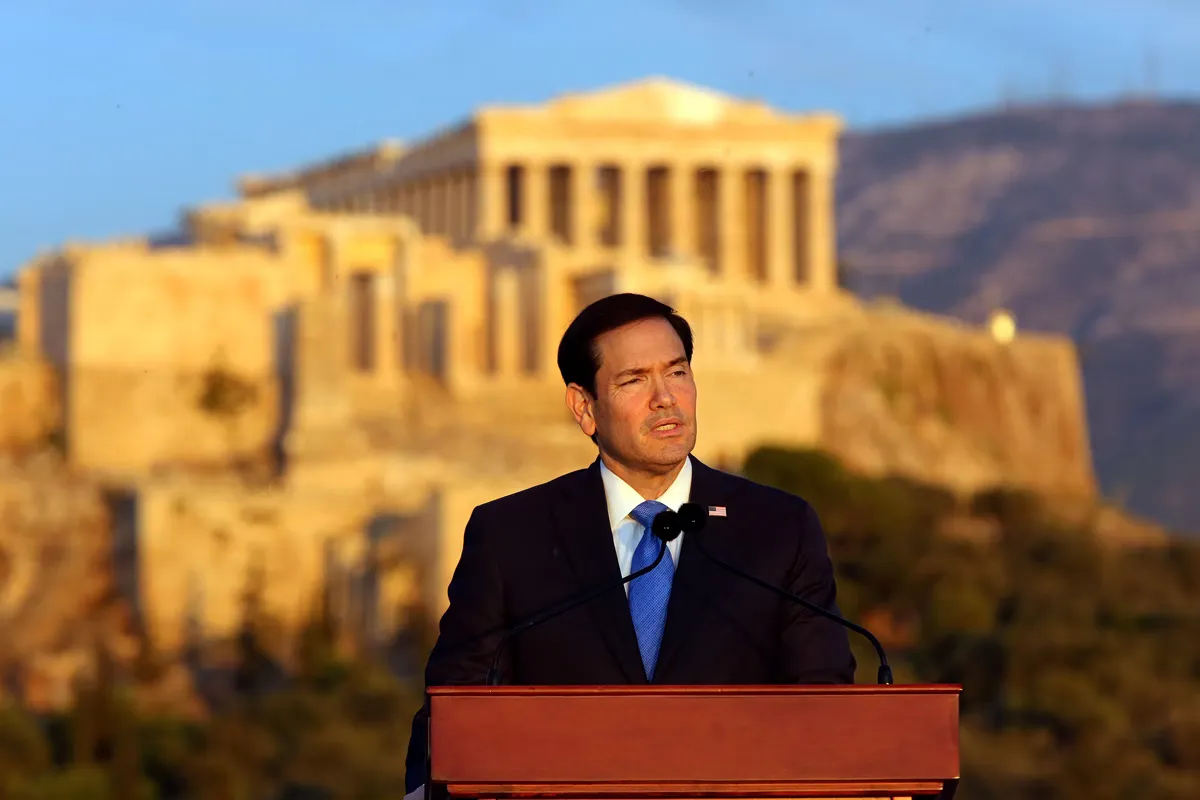
Marco Rubio utilized the historical backdrop of the Pnyx in Athens to deliver a speech that blended admiration for ancient Greek civilization with the modern political objectives of the Trump administration. By connecting the democratic foundations of the United States to its ancient roots, Rubio aimed to frame his upcoming political trajectory through a lens of historical continuity and national resurgence.
During his address, Rubio expressed a sense of cultural reclamation. He suggested that Western nations had previously experienced a sense of shame regarding their historical achievements and national identity. He argued that the term 'nationalism' had been unfairly stigmatized, leading to a decline in the celebration of national heritage. According to Rubio, the current US administration seeks to reverse this trend by prioritizing national power and economic sovereignty.
The intersection of ancient values and modern policy
Rubio's rhetoric focused on the concept of 'strength through wisdom.' He noted that while the ancient Greeks held high ideals, they were not naive; they understood that nations must act in their own interests. He asserted that effective governance requires a balance of diplomacy and the credible capacity to exercise power when diplomacy fails. This philosophy is intended to guide the Trump administration's approach to global leadership, emphasizing the re-industrialization of the US economy and the securing of critical supply chains.
What is the impact of the visit on regional energy security?
The visit provided a platform for the US to reaffirm its commitment to Greek energy projects, which are viewed as essential for European energy diversification. Rubio explicitly supported ongoing hydrocarbon exploration in the Mediterranean and critical infrastructure developments, such as the electricity interconnection cable between Greece and Cyprus.
Rubio highlighted that these projects are not merely bilateral interests but are central to global security. By diversifying energy routes, the US aims to help prevent future energy crises that could destabilize the region. He characterized the cooperation between the US and Greece in the energy sector as a shared national interest that promotes broader international stability.
How is the US managing the delicate Greece-Turkey dynamic?
While Rubio avoided explicitly naming Turkey in several official statements, his comments addressed the complexities of the Eastern Mediterranean. He acknowledged that certain Greek strategic plans involve 'highly sensitive situations' involving other nations. To navigate these tensions, Rubio suggested that such critical matters are often best handled through private diplomacy rather than public press conferences.
Regarding the potential for a crisis between the two NATO allies, Rubio described a major conflict as 'unthinkable.' He emphasized that both Greece and Turkey are essential partners within the NATO alliance, and a confrontation would be detrimental to all parties, including the United States. This stance aims to maintain a balance of support for both allies while preventing regional escalation.
The F-35 and S-400 deadlock
The issue of F-35 fighter jet deliveries to Turkey remains a significant point of friction in US-Turkey relations. Rubio acknowledged that while President Trump has expressed a desire to proceed with these deliveries—noting that Turkey has already made payments—legal hurdles remain. The primary obstacle is the US Congress and the National Defense Authorization Act (NDAA), which impose strict conditions on such sales. The central issue remains Turkey's acquisition of the Russian S-400 missile system, which currently prevents the legal transfer of these advanced aircraft. Rubio noted that while various solutions may eventually be found, the matter is not currently resolved.
What role does Greece play in the broader security architecture?
Greek Foreign Minister Giorgos Gerapetritis emphasized Greece's pivotal position in the security landscape of the wider region. He noted that strategic points such as Alexandroupoli and the Suez Canal highlight Greece's critical role in the security architecture that spans from the Middle East and the Eastern Mediterranean to Central and Eastern Europe.
Diplomatic sources indicated that the 40-minute meeting between Gerapetritis and Rubio involved intense discussions, including the presentation of maritime maps by the Greek Ministry of Foreign Affairs. These maps were used to illustrate Turkish maritime provocations and the strategic importance of specific areas. The discussions underscored that US support for Greece is a cornerstone of its broader strategic presence in the region.
How has Ankara responded to the US-Greece diplomatic shift?
The Turkish government monitored the developments in Athens closely, though its reaction was measured. Ankara viewed Rubio's comments regarding the Greece-Cyprus electricity cable as neutral and non-committal. However, the Turkish side interpreted the discussions regarding military equipment as an attempt by Washington to provide military support to Athens against Turkish interests.
Despite these differing interpretations, the Turkish response focused on the characterization of Greece as a 'necessary ally.' This suggests that while Ankara perceives a shift in US-Greece military cooperation, there remains a fundamental recognition of the necessity of maintaining a working relationship with both sides within the NATO framework.
Frequently asked questions
Why did the US Secretary of State visit Athens?
The visit served multiple purposes: to strengthen bilateral ties, to signal support for Greek energy security projects, and to use the historical setting of the Pnyx to frame a political message regarding national strength and the resurgence of American influence under the Trump administration.
What is the status of F-35 deliveries to Turkey?
The deliveries are currently stalled due to US legal restrictions, specifically the NDAA. The primary complication is Turkey's possession of the Russian S-400 missile system, which creates a conflict with US security requirements for the integration of the F-35 system.
How does the US view the Greece-Cyprus energy cable?
The United States views the Greece-Cyprus electricity interconnection as a vital project for regional energy security. Rubio expressed absolute commitment to its success, noting that diversifying energy routes is essential for preventing future regional and global energy crises.
Does the US support Greece in maritime disputes?
While Rubio preferred 'private diplomacy' for sensitive territorial issues, the US has reaffirmed its support for Greek energy projects and characterized Greece as a necessary ally, signaling a strong strategic partnership in the Eastern Mediterranean.
What was the significance of the Pnyx in Rubio's speech?
The Pnyx provided a symbolic backdrop that allowed Rubio to draw parallels between ancient Greek democratic values and the 250-year history of the United States, using the setting to advocate for a return to traditional notions of national power.
Key takeaways
- Rubio used the Pnyx to link ancient Greek civilization with modern US political identity.
- The US reaffirmed its support for the Greece-Cyprus electricity interconnection project.
- F-35 deliveries to Turkey remain blocked due to the S-400 missile system issue.
- Washington views Greek energy security as a vital component of global stability.
- The US emphasizes private diplomacy to handle sensitive Greece-Turkey maritime tensions.
Conclusion
The visit of Marco Rubio to Athens represents a sophisticated exercise in symbolic and strategic diplomacy. By anchoring modern American policy goals in the historical prestige of Greece, the US has signaled a renewed focus on national strength and regional stability. While the complexities of the Greece-Turkey relationship and the F-35 deadlock persist, the clear support for Greek energy infrastructure and the recognition of Greece's strategic role in the Mediterranean security architecture suggest a hardening of the US-Greece partnership. This alignment serves both bilateral interests and broader Western strategic objectives in an increasingly volatile region.