What were the primary objectives of the KEDE and Ministry meeting?
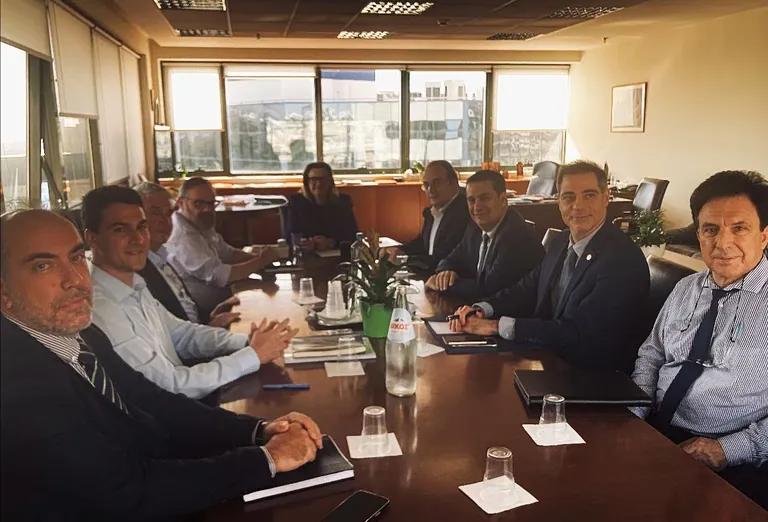
The meeting served as a high-level strategic dialogue to address the complex intersection of local governance and national urban regulations. Held on Tuesday, October 20, 2026, the session brought together the leadership of the Central Union of Municipalities of Greece (KEDE) and senior officials from the Ministry of Environment and Energy to resolve long-standing administrative and planning bottlenecks.
The central goal was to present the unified positions of KEDE, which had already been formally adopted by its Board of Directors and its Congress. By bringing these proposals directly to the Ministry, the local government aims to ensure that national spatial planning policies are practical, enforceable, and supportive of local community development. The discussions were not merely exploratory; they were designed to lay the groundwork for concrete legislative and administrative adjustments.
A collaborative approach to governance
The duration of the meeting—two and a half hours—reflects the density and technical nature of the agenda. Rather than a ceremonial visit, the session functioned as a working meeting intended to bridge the gap between the administrative realities of municipalities and the regulatory mandates of the central government. This collaborative framework is essential for ensuring that urban growth does not outpace the capacity of local services.
Which urban planning tools were under discussion?
Local and Special Urban Plans (TPS and EPS) were among the most significant technical elements addressed during the talks. These planning instruments are vital for defining how land is used, how settlements are structured, and how infrastructure is deployed across different regions of Greece.
The KEDE delegation highlighted several specific areas of concern regarding these plans:
- Local Urban Plans (TPS): Addressing the need for updated frameworks that reflect contemporary demographic and economic shifts within municipalities.
- Special Urban Plans (EPS): Coordinating large-scale or sensitive development projects that require specialized regulatory oversight.
- Settlement Management: Navigating the complexities of existing settlements and the legal requirements for their expansion or modernization.
By focusing on these tools, KEDE seeks to empower municipalities to take a more proactive role in managing their territory, rather than reacting to top-down decisions that may not suit local specificities.
How do building services and YDOM affect local administration?
The functioning of Building Services (YDOM) remains a critical point of contention and a primary focus for the KEDE delegation. As the frontline of urban management, YDOM services are responsible for processing building permits, ensuring compliance with safety standards, and overseeing the legality of construction.
Inefficiencies or regulatory ambiguities within YDOM can lead to significant delays in local development, affecting everything from housing availability to economic investment. During the meeting, KEDE representatives sought to discuss ways to streamline these services and clarify the legal responsibilities of municipal staff. This is particularly important in the context of the New Building Code (NOK), where the interplay between central regulations and local enforcement often creates administrative friction.
Navigating the New Building Code (NOK) and Council of State rulings
A significant portion of the technical discussion revolved around the incentives provided under the NOK and how they interact with recent decisions from the Council of State (StE). The Council of State plays a decisive role in Greek administrative law, and its rulings frequently redefine the boundaries of what municipalities can and cannot permit regarding construction and land use. KEDE is pushing for a regulatory environment that provides clarity, ensuring that the incentives meant to stimulate the building sector do not conflict with environmental protections or judicial precedents.
Who represented the participating organizations?
The meeting featured a high-level delegation from both sides, ensuring that the decisions made could carry significant weight. The presence of both political leadership and technical legal advisors indicates the multi-layered nature of the issues at hand.
From the KEDE side, the delegation included:
- Mr. Grigoris Konstantellos: 1st Vice President of KEDE.
- Mr. Giorgos PapAnastasiou: 2nd Vice President of KEDE.
- Mr. Andreas Kondylis: Mayor of Alimos.
The Ministry of Environment and Energy was represented by:
- Ms. Marilena Soukouli-Viali: Deputy Minister of Environment and Energy.
- Mr. Evangelos Kyriazopoulos: General Secretary of Spatial Planning and Urban Environment.
- Legal Advisors: A team of Ministry legal experts to address the complex regulatory and judicial questions raised.
What are the next steps for the KEDE-Ministry partnership?
The meeting concluded with a commitment to continued dialogue, signaling that the issues raised are too complex to be resolved in a single session. The discussions have moved from the phase of identifying problems to the phase of proposing specific, unified solutions.
A follow-up working meeting is already scheduled for the end of the following week. This upcoming session will focus on the technical processing of the proposals submitted by KEDE. The ultimate objective is to transform the points discussed—ranging from YDOM efficiency to spatial planning frameworks—into actionable policy changes through sustained cooperation between local authorities and the central Ministry.
Frequently asked questions
What is the role of KEDE in these discussions?
KEDE acts as the unified voice for Greek municipalities. It gathers the concerns, technical needs, and policy proposals of local governments and presents them to the central government to ensure that national laws are compatible with local administrative realities.
Why are the Council of State (StE) decisions important here?
The Council of State issues rulings that interpret the legality of urban planning and building regulations. These decisions can change how the New Building Code (NOK) is applied, making it essential for KEDE to coordinate with the Ministry to avoid legal conflicts.
What is the significance of YDOM?
YDOM refers to the Building Services responsible for issuing permits and overseeing construction. Improving their efficiency is a priority for KEDE because delays in these services directly impact the economic development and housing stability of local communities.
Will these meetings lead to immediate changes?
While the discussions are a crucial first step, changes will likely take time as proposals undergo technical processing. The scheduled follow-up meeting next week is intended to refine these proposals into concrete solutions for the Ministry to consider.
What are Local and Special Urban Plans?
These are regulatory frameworks (TPS and EPS) that dictate how land can be developed and how settlements are organized. They are essential tools for preventing disorganized urban sprawl and ensuring sustainable territorial growth.
Key takeaways
- KEDE and the Ministry met on October 20, 2026, to discuss vital spatial planning and urban regulations.
- The agenda included Local and Special Urban Plans, YDOM services, and settlement management issues.
- Discussions addressed the New Building Code (NOK) incentives and recent Council of State rulings.
- A follow-up meeting is scheduled for late next week to process KEDE's formal proposals.
Conclusion
The meeting between KEDE and the Ministry of Environment and Energy represents a critical attempt to harmonize Greek local governance with national urban planning mandates. By addressing technical bottlenecks in YDOM services and clarifying the application of the New Building Code, both parties are working toward a more predictable regulatory environment. The success of these negotiations will depend on the upcoming technical sessions, which aim to turn high-level political dialogue into practical administrative solutions that support the sustainable development of Greek municipalities and their local communities.