How does Myrto Korovesi's accession change the PASOK parliamentary group?
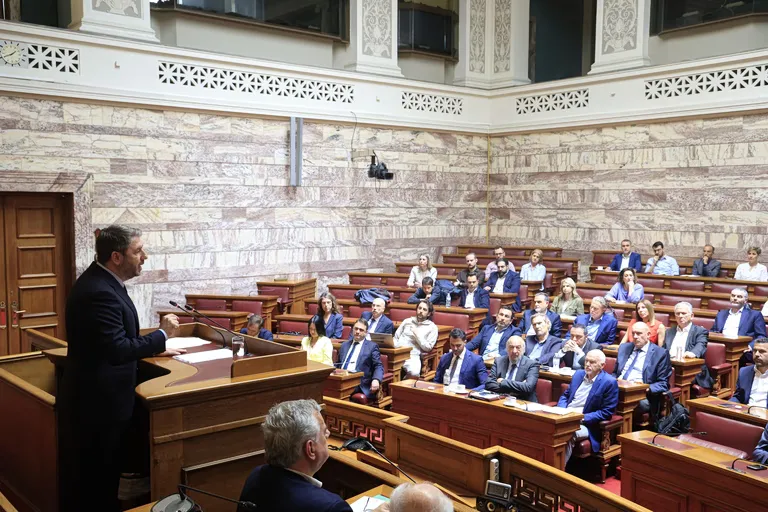
The PASOK parliamentary group officially grew to 36 members on October 21, 2026, after independent MP Myrto Korovesi joined the party. Her formal meeting with Nikos Androulakis at the Hellenic Parliament marks a significant shift in the parliamentary landscape, representing the sixth addition to the party's parliamentary group in recent months. This move is part of a deliberate strategy by the official opposition to broaden its political base through the recruitment of independent lawmakers.
Korovesi's transition is notable not just for the numerical increase in the group, but for the political trajectory she follows. She moved from the party of Stefanos Kasselakis, where she served as vice-president, to the ranks of PASOK. This "migration" from the Kumoundourou headquarters to Charilaou Trrikoupis signifies a consolidation of political forces within the center-left sphere.
The political context of the transition
The accession of Korovesi is viewed by party leadership as a validation of their expansionist policy. By attracting lawmakers who have moved away from other political currents, PASOK aims to present itself as a more cohesive and robust alternative to the current government. The presence of Korovesi at recent party gatherings, where she drew significant media attention, suggests that her entry is being utilized to signal momentum to the electorate.
What was the background of the negotiations with Myrto Korovesi?
Political flirtations between PASOK and Myrto Korovesi intensified in early August 2026, according to internal party sources. The process involved sustained communication between the young lawmaker and key PASOK officials, specifically Lefteris Karchimakis, the party's program manager and a close collaborator of Nikos Androulakis. This period of negotiation allowed the party to position itself as a more structured and reliable political option for the independent MP.
The discussions were not limited to a single channel. Korovesi also maintained contact with Kostas Tsoukalas, the party's spokesperson, and met personally with Nikos Androulakis toward the end of the summer. Interestingly, the proximity of Korovesi's legal office to the PASOK headquarters may have facilitated these high-level political exchanges. While Korovesi reportedly received overtures from the Hellenic Left Coalition, she ultimately opted for the PASOK platform.
Where will Myrto Korovesi run in the next elections?
The specific electoral district for Korovesi's future candidacy remains undecided, with two primary scenarios currently under consideration. Given her background and professional ties, the party is weighing whether she should contest a seat in East Attica or in Messinia. This decision is critical for the party's regional strategy and will likely be finalized in the coming weeks.
The two potential paths are defined by the following factors:
- East Attica: Korovesi originally secured her seat in East Attica following the resignation of Giorgos Karameros and the refusal of Christos Spirtzis to take the seat as the first runner-up. If she runs here again, she would face competition from candidates such as Manolis Christodoulakis and Vasilia Anastasiou.
- Messinia: Korovesi maintains very strong ties to the Messinia region. Beyond her political activities in Athens, she practices law in Kalamata, providing her with a professional and social foundation in the Peloponnese that could translate into electoral strength.
What do recent polls reveal about PASOK in Attica?
New polling data suggests that PASOK is experiencing an upward trend in the Attica region, moving into third place. According to an Opinion Poll conducted for Action24, PASOK's intention to vote stands at 8.6% across the Attica region. While this remains a competitive field, the party has seen an increase of more than two percentage points compared to the results of the June 2023 parliamentary elections.
The polling landscape in Attica is currently characterized by the following figures:
| Political Party / Entity | Intention to Vote (%) |
|---|---|
| SYRIZA (Alexis Tsipras) | 16.9% |
| ELAS | 13.9% |
| PASOK (Nikos Androulakis) | 10.2% (Estimated vote) |
| PASOK (Intention to vote) | 8.6% |
For PASOK, Attica has historically been a vulnerable electoral point. In the June 2023 elections, the party recorded only 8% in East Attica, where Korovesi was elected, and held fourth place with single-digit percentages in other parts of the Attica basin, including North, South, and West Athens, as well as Piraeus. The current rise to third place is viewed by the party leadership as a significant indicator of progress.
Strategic response to polling trends
The PASOK leadership is not treating these figures with complacency. Recognizing that Attica is a decisive battleground, the party has decided to deploy its full organizational machinery across the metropolitan area. The strategy involves maintaining the momentum seen over the last month, with a specific focus on shifting the existing political correlations in the region. The ultimate test of this regional strategy will be the official election results.
Frequently asked questions
How many members does the PASOK parliamentary group have now?
The PASOK parliamentary group currently consists of 36 members. This follows the recent accession of independent MP Myrto Korovesi, who joined the party on October 21, 2026, marking the sixth addition to the group under the current leadership.
Who is Myrto Korovesi?
Myrto Korovesi is an independent Member of Parliament who recently joined PASOK. She previously served as a vice-president for Stefanos Kasselakis's party before departing in July 2026. She was elected to the Hellenic Parliament representing East Attica.
What is the current polling status of PASOK in Attica?
According to an Opinion Poll for Action24, PASOK is currently in third place in the Attica region with an 8.6% intention to vote. This represents an increase of over two percentage points compared to the June 2023 parliamentary elections.
Which regions is Korovesi likely to represent?
Korovesi is expected to run in either East Attica, her current constituency, or in Messinia. The decision depends on whether the party prioritizes her existing parliamentary seat or her strong professional and personal connections in the Kalamata area.
Who led the negotiations for Korovesi's entry into PASOK?
The negotiations were primarily managed by Lefteris Karchimakis, PASOK's program manager and a close associate of Nikos Androulakis. Korovesi also maintained communication with party spokesperson Kostas Tsoukalas during the transition process.
Key takeaways
- The PASOK parliamentary group has expanded to 36 members following Myrto Korovesi's official accession.
- Korovesi transitioned to PASOK after previously serving as vice-president in Stefanos Kasselakis's party.
- PASOK is seeing an upward trend in Attica, rising to third place in recent Opinion Polls.
- The party is intensifying its regional operations in Attica to capitalize on recent polling gains.
Conclusion
The expansion of the PASOK parliamentary group to 36 members through the recruitment of Myrto Korovesi underscores the party's aggressive strategy to consolidate the center-left. By attracting independent lawmakers and focusing on regional growth in key areas like Attica, PASOK is attempting to reverse previous electoral weaknesses. While the polling data indicates a positive trajectory with an increase in voter intention, the party's success will depend on its ability to translate this momentum into a significant structural shift in the upcoming elections. The focus now shifts to Korovesi's future constituency and the party's organizational deployment across the Attica basin.