Why has the Mitsotakis Samaras conflict intensified recently?
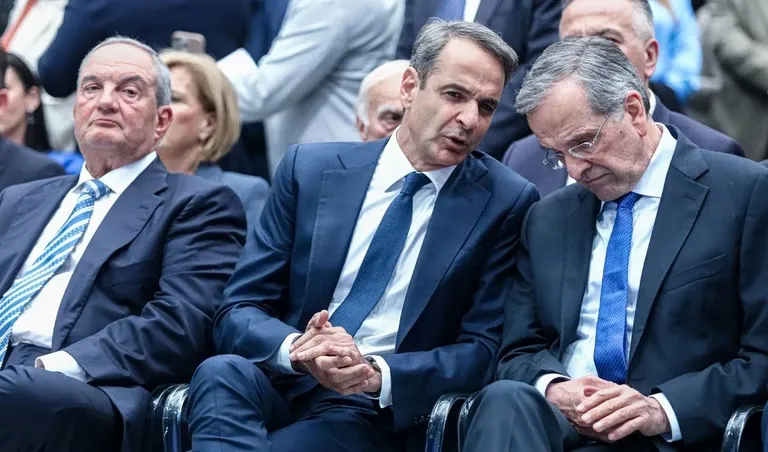
The Mitsotakis Samaras conflict has been reignited by a series of direct verbal exchanges in the media, moving the dispute from private disagreement to public warfare. During a recent interview on Alpha Radio 98.9, Prime Minister Kyriakos Mitsotaki launched sharp criticisms against Antonis Samaras, questioning his previous administration's handling of relations with Turkey. This follows a similar exchange that occurred during the Prime Minister's press conference at the Thessaloniki International Fair (TIF), where the tension first became visible to the broader public.
The escalation is not merely personal but touches upon the fundamental ideological and strategic direction of the New Democracy party. Mitsotakis has used these platforms to challenge the legacy of the Samaras era, creating a narrative of continuity versus past diplomatic approaches. This public sparring has forced both leaders to take definitive stances, leaving little room for the traditional political discretion usually afforded to former heads of government.
The role of media in political escalation
Media appearances have become the primary battlefield for this intra-party struggle. By choosing high-profile radio and press platforms, both leaders ensure their rebuttals reach the core constituency of the party. This strategy forces the electorate to witness the fracture in real-time, transforming policy debates into a litmus test for party loyalty.
How is the Prime Minister responding to the threat of a new party?
Kyriakos Mitsotakis is utilizing strategic regional visits, specifically to Messenia, to counteract the influence of a potential new political movement led by Antonis Samaras. The Prime Minister's upcoming tour of the Messenia region is a calculated attempt to secure the support of traditional New Democracy voters who may be drifting toward Samaras's camp. This demographic represents a significant portion of the party's base that feels alienated by the current "technocratic state" model of governance.
The visit is centered around the KEDE convention, where Mitsotakis is scheduled as a keynote speaker. However, the mission extends beyond a single event; it is a broader effort to stabilize the party's flanks. The government faces a challenge in a region where the "Samarican" electoral base remains robust and potentially receptive to a new political alternative that critiques the current administration's methods.
Strategic regional deployment
By entering the political "stronghold" of his rival, Mitsotakis is attempting to demonstrate leadership and presence where it is most contested. This move is designed to prevent voter leakage and to reinforce the idea that the current leadership remains the sole legitimate representative of the New Democracy tradition.
What are the core arguments in the foreign policy dispute?
The foreign policy dispute centers on the historical management of relations with Turkey, with Mitsotakis accusing Samaras of being overly conciliatory. In his recent media statements, Mitsotakis suggested that Samaras's administration engaged in dialogue and signed agreements with President Erdoğan that may not have served long-term national interests. Mitsotakis has explicitly called on former Prime Ministers to reflect on their own histories and the impact of their decisions once they are out of power.
Antonis Samaras has responded with a fierce rebuttal, turning the focus toward the current government's perceived failures in international forums. Samaras argued that his administration's approach was necessary and that the current geopolitical landscape—including the "Blue Homeland" doctrine and various maritime disputes—did not exist in the same form during his tenure. He criticized the current government for what he termed "unsuccessful results" in international organizations regarding Turkish-Libyan legalities.
How does Kostas Karamanlis influence the internal party dynamics?
Kostas Karamanlis serves as a complicating factor in the Mitsotakis Samaras conflict, as the Prime Minister is actively attempting to separate Karamanlis's legacy from Samaras's potential new movement. Mitsotakis has made deliberate efforts to highlight his own political roots, noting that he entered politics in 2004 as a member of the Karamanlis government. By emphasizing this connection, Mitsotakis seeks to signal respect for the Karamanlis era while maintaining a distinct path from the Samaras faction.
The Prime Minister's strategy involves portraying Karamanlis as a figure who, due to his political lineage, remains inherently tied to New Democracy and would never support a breakaway party. This is a tactical move to isolate Samaras. While Karamanlis has maintained a critical stance toward the current administration—notably during his recent speech at the War Museum—Mitsotakis is attempting to frame this criticism as a legitimate internal dialogue rather than an alliance with the Samaras camp.
The "Neutrality" Tactic
Information suggests that Karamanlis maintains a position of neutrality regarding the potential new party. By not actively encouraging or discouraging movement toward Samaras, Karamanlis remains a potent, if independent, figure. Mitsotakis is attempting to leverage this perceived neutrality to prevent a unified opposition from forming between the Karamanlis and Samaras supporters.
FAQ: Mitsotakis Samaras conflict
What triggered the recent escalation between Mitsotakis and Samaras?
The escalation was triggered by recent media interviews where Kyriakos Mitsotakis criticized the foreign policy of Antonis Samaras, specifically his dealings with Turkey. Samaras responded with sharp rebuttals, accusing the current government of failing to handle modern maritime and diplomatic provocations effectively.
Why is the Prime Minister visiting Messenia?
Mitsotakis is visiting Messenia to shore up support among traditional New Democracy voters. The region is a stronghold for Samaras, and the visit aims to prevent voter attrition to a potential new political party being formed by the former Prime Minister.
How does the conflict affect New Democracy's voter base?
The conflict risks alienating traditional voters who may feel caught between competing leadership legacies. The Prime Minister is specifically targeting these voters to prevent them from moving toward a Samaras-led alternative or other political movements.
What is the role of Kostas Karamanlis in this dispute?
Kostas Karamanlis acts as a symbolic figure that Mitsotakis tries to distance from Samaras. By highlighting his own history with the Karamanlis government, Mitsotakis attempts to claim the traditional party mantle and isolate the Samaras faction.
Does Samaras intend to form a new political party?
While the article discusses the "fear of a new party being formed by Samaras," it highlights that the Prime Minister's strategic moves are a direct response to this perceived threat of a political breakaway.
Key takeaways
- The Mitsotakis Samaras conflict has shifted from private disagreement to a public media battle.
- Mitsotakis is conducting a strategic tour of Messenia to secure Samaras's traditional voter base.
- The dispute includes heavy criticism regarding historical and current Turkish foreign policy.
- The Prime Minister is attempting to politically decouple Kostas Karamanlis from Samaras.
Conclusion
The Mitsotakis Samaras conflict represents more than a personal rivalry; it is a struggle for the soul and future direction of New Democracy. As Mitsotakis attempts to consolidate power through regional outreach and the strategic use of historical legitimacy, the specter of a Samaras-led breakaway party looms large. The ability of the current leadership to manage the criticisms of former Prime Ministers like Karamanlis, while simultaneously neutralizing the influence of Samaras, will determine the party's stability. Ultimately, the outcome of this internal friction will shape the broader Greek political landscape and the competitiveness of the conservative movement.
| Issue | Mitsotakis's Position | Samaras's Rebuttal |
|---|---|---|
| Turkish Relations | Criticizes past dialogue and agreements with Erdoğan. | Argues his era lacked current provocations like the "Blue Homeland." |
| National Sovereignty | Focuses on current maritime and diplomatic challenges. | Claims the current government fails to address Turkish-Libyan issues. |
| Political Legacy | Emphasizes the need for former leaders to reflect on their impact. | Accuses the current leadership of superficiality and ignoring history. |