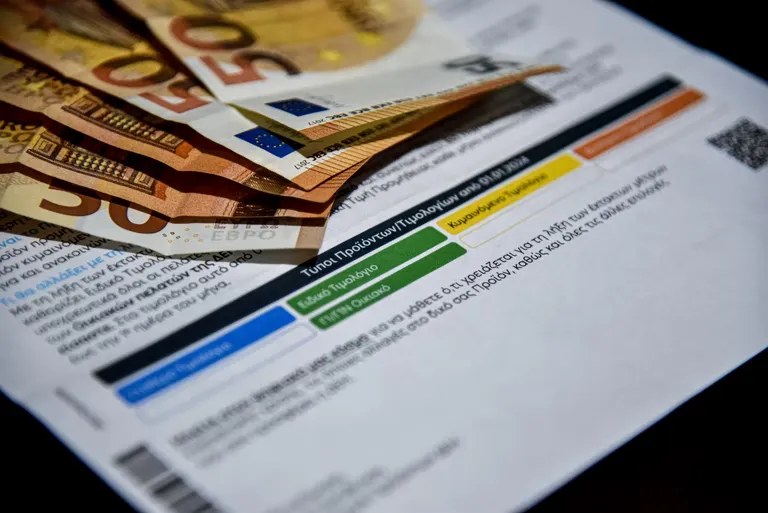
The mechanism of the proposed tariff transition
The amendment submitted by the PASOK-KINAL parliamentary group targets the automatic migration of consumers from variable 'green' tariffs to more stable 'blue' fixed tariffs. This legislative move is presented as a response to the Ministry of Environment and Energy's bill regarding the improvement of electricity market design and the integration of EU Directive 2024/1711. The core objective is to reverse the current default mechanism that has left millions of Greek households vulnerable to market fluctuations.
According to the PASOK-KINAL announcement, the proposal functions by identifying consumers who were moved to variable rates without their explicit request and transitioning them to the most economical fixed tariff offered by their existing provider. This transition is intended to prevent the 'entrapment' of households in high-cost energy products.
Implementation through a three-phase approach
To ensure that energy providers can manage the risk of this transition, the amendment suggests a gradual implementation. The proposal outlines a three-phase rollout, which allows providers to adjust their risk hedging strategies. The parliamentary group emphasized that this phased approach would prioritize vulnerable households and those with high energy consumption levels to ensure the most significant impact on cost reduction is felt where it is most needed.
Comparative analysis of electricity costs
The economic rationale for the amendment is based on the widening gap between the costs of variable and fixed electricity contracts. In November 2026, variable rates experienced a sharp spike, significantly outperforming the costs of stable market alternatives. The following table illustrates the cost disparity for an average household based on the data provided by PASOK-KINAL.
| Tariff Type | Rate (cents/kWh) | Monthly Cost (400 kWh usage) |
|---|---|---|
| Variable ('Green') Tariff | 28 cents | €118 |
| Fixed ('Blue') Tariff | 14–15 cents | €64 |
As the data shows, a household consuming 400 kWh per month faces nearly double the cost under the variable regime compared to the fixed regime. PASOK-KINAL highlights that while the state automatically moved millions of consumers to variable rates in 2023, the current lack of an automatic exit mechanism has left over 50% of households exposed to these rising costs.
Consumer rights and transparency measures
The proposed amendment includes specific safeguards to ensure that the automatic transition does not infringe upon consumer freedom of choice. While the primary goal is automatic protection, the legislation provides several layers of notification and control for the end user.
- Written Notification: Consumers will be notified in writing 30 days before any transition to a fixed tariff occurs.
- Right of Refusal: Users can opt out of the transition through a simple telephone call.
- Penalty-free Exit: Once the transition is complete, consumers retain the right to exit the new contract without penalty for a period of 60 days.
- Mandatory Transparency: For those who choose to remain on a variable tariff, or those on 'yellow' tariffs, electricity bills must explicitly state how much the consumer would have paid had they been on a fixed tariff.
These measures are designed to provide a clear comparison, allowing consumers to see the real-time cost of their choice to remain on variable rates.
Fiscal impact and political context
A key component of the PASOK-KINAL proposal is its claim of zero fiscal impact on the Greek state. The parliamentary group stated that the regulation does not burden the national budget, nor does it require state subsidies or public spending. Because the transition occurs at the prices already offered by providers in the free market, the cost is absorbed by the existing commercial structures rather than the taxpayer.
The submission comes at a time of heightened political tension regarding the cost of living. Nikos Androulakis, the leader of PASOK-KINAL, is expected to address the Hellenic Parliament to debate the Ministry's bill, using the opportunity to criticize the government's handling of energy affordability. The amendment, processed by energy sector expert Fragiskos Parasiris and the party's energy department, positions the opposition's stance as a direct response to the 'artificially high' electricity costs currently affecting Greek households.
The role of EU Directive 2024/1711
The broader legislative context involves the integration of EU Directive 2024/1711 into national law. While the government's bill focuses on market design and EU compliance, PASOK-KINAL's amendment seeks to add a layer of consumer-centric protection within that new regulatory framework. This suggests a debate in Parliament that will weigh the technicalities of market integration against the immediate economic pressures faced by the electorate.