How will the operational shutdown affect the network's future?
The duration of the current operational pause is the most critical factor for the survival of the Pizza Fan network. Market analysts suggest that a brief interruption followed by a smooth restart offers a manageable path, whereas a prolonged period of inactivity could prove fatal for the brand's ability to meet its obligations.
Because the network relies heavily on a centralized organization and the constant repetition of orders, any significant delay in reopening creates a vacuum. This vacuum is particularly dangerous for the many partners and delivery platforms that depend on the chain's volume. While these partners are currently facing lost revenues, their primary concern is the continuity of the business model they have integrated into their own operations.
The risk of customer churn
A prolonged shutdown increases the likelihood that customers will permanently switch to competitors. In the highly competitive food delivery market, consumer habits are formed quickly; if a preferred brand becomes unavailable, the friction of switching to a new provider is minimal. For a network that grew through aggressive expansion, maintaining a consistent presence is vital to preventing the loss of its established customer base.
What is the impact of the crisis on brand reputation?
The damage to the company's reputation may ultimately prove more costly than the immediate loss of revenue. Even if the physical stores reopen quickly, the brand must overcome the psychological barrier of lost consumer trust. The chain had successfully built a brand identity centered on being an affordable and friendly option in the catering sector, a reputation that is notoriously difficult to rebuild once tarnished by legal and financial scandals.
The crisis is compounded by the fact that returning to online delivery applications does not guarantee a return of the consumer base. The perception of the brand has been fundamentally altered by the ongoing investigations, making the recovery process a matter of long-term brand management rather than simple operational resumption.
How has the Greek food industry responded?
The organized catering sector has taken formal action by suspending the company's membership. The Hellenic Association of Catering Professionals (EPOES) has unanimously decided to suspend Pizza Fan's membership status pending a full investigation into the allegations. This move reflects the industry's stance on upholding legality, transparency, and healthy competition.
While the association emphasizes the respect for the presumption of innocence, the suspension serves as a signal to the market. The industry is distancing itself from the controversy to protect the integrity of the broader catering sector. This reaction adds a significant layer of pressure on the company, as it now faces isolation not just from customers, but from its professional peers.
How was the Pizza Fan business model constructed?
Pizza Fan was built on a foundation of aggressive pricing and a highly sophisticated centralized order management system. Despite the founder, Kostas Andaras, having no prior experience in the food industry, he leveraged his background in marketing and advertising to create a technologically driven network.
The company's growth was remarkable. Despite a difficult economic climate for consumption, the chain managed to gain market share from multinational giants. According to available data, sales reached €60 million, and the company remained profitable despite intense competitive pressure. However, recent revelations suggest that this growth may have been shadowed by internal issues, as an auditor had previously raised alarms regarding financial irregularities that the management was called to address.
The technological edge of the centralized system
The core innovation was the centralized order reception system. Originally an idea proposed during Andaras's time in advertising, the system allowed for better control over customer service across various locations. This technology enabled the network to redirect orders to neighboring stores if one location faced issues and to limit service during peak times to manage delivery windows effectively. This integration of production, technology, and distribution was the engine of their rapid expansion from a single pilot store in Ampelokipoi in 1997 to a major national player.
What is the history of Kostas Andaras's entrepreneurial journey?
Kostas Andaras began his career in the advertising sector during the 1980s, working as a commercial director for 'Koskotas Line' before founding his own agency, Staff, in 1988. His transition into the food industry was a direct result of the insights gained while consulting for major clients, including Pizza Hut and Roma Pizza.
The financial trajectory of Pizza Fan involved strategic shifts in ownership. In 2001, Andaras sold a 34% stake to Vectis Capital for approximately €3 million to fund expansion, but he eventually repurchased the stake five years later. He noted that the early years, particularly up to 2007, were characterized by narrow financial margins and the complexities of managing investor expectations during periods of strategic change. The company also pioneered a franchise model in 2006, similar to the McDonald's approach, to accelerate its footprint.
Frequently asked questions
What is the current status of Pizza Fan stores?
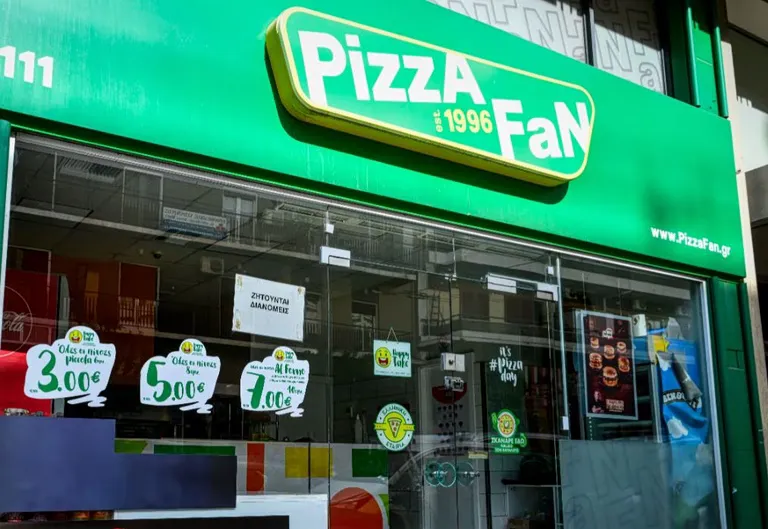
The stores are currently closed and are not accepting any orders. This includes both traditional telephone orders and digital orders through online platforms and mobile applications. The shutdown is a direct consequence of the ongoing legal and financial investigations involving the company's leadership.
Why did EPOES suspend Pizza Fan?
EPOES suspended the company's membership to ensure the investigation into alleged financial irregularities is conducted thoroughly. The association aims to protect the standards of legality and transparency within the catering industry while awaiting the full results of the judicial process.
How much revenue was Pizza Fan generating?
Before the current crisis, Pizza Fan was a significant player in the market with sales reaching approximately €60 million. Despite economic pressures, the company had maintained a profitable bottom line through its aggressive pricing and centralized operational model.
Who is the founder of Pizza Fan?
The company was founded by Kostas Andaras, a former advertising professional. He launched the first pilot store in 1997, utilizing a centralized ordering system that he had developed to improve service efficiency and control across the network.
What was the role of the auditor in this case?
The company's statutory auditor had previously identified certain irregularities in the financial statements. The auditor had formally raised these concerns, calling on the company's management to address and rectify the issues before the current legal situation escalated.
Key takeaways
- Pizza Fan stores are currently closed to all telephone and digital orders.
- The company's sales had previously reached the €60 million mark.
- EPOES has unanimously suspended Pizza Fan's membership pending investigation.
- The brand's centralized ordering system was a key driver of its rapid expansion.
Conclusion
The Pizza Fan crisis represents a defining moment for both the company and the Greek catering sector. While the brand's technological infrastructure and aggressive pricing once allowed it to challenge multinational competitors, the current legal scrutiny threatens to dismantle its hard-won market position. The immediate challenge lies in the operational continuity and the ability to restore consumer trust. Whether the network can navigate the judicial fallout and the professional isolation imposed by EPOES remains to be seen, but the impact on its partners and the broader industry is already profound.