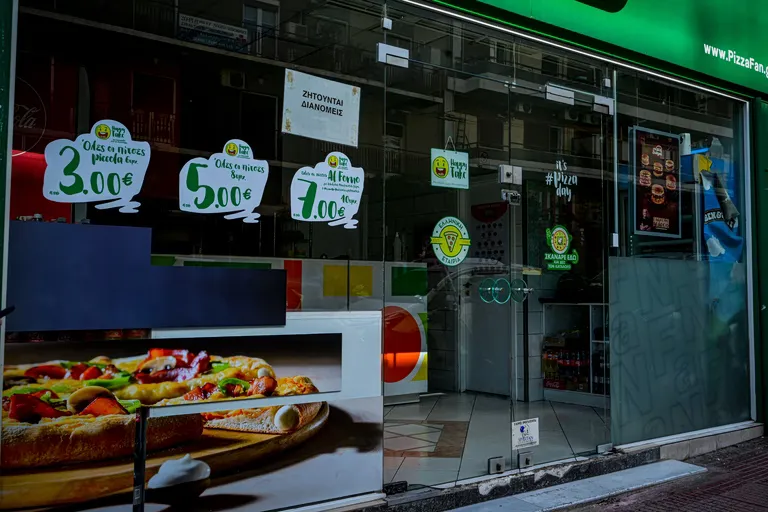
How did the Pizza Fan tax evasion scheme operate?
The alleged tax evasion system at Pizza Fan relied on a sophisticated digital loophole within the company's own ordering software. According to police investigations, the organization utilized a specific function within their system to bypass standard financial protocols for years.
The core of the mechanism involved a custom option labeled "kerasma" (treat). When this option was selected during the order process, it allowed employees to complete specific transactions without issuing a formal receipt. While the customer received their meal, the transaction remained invisible to the tax authorities. However, the actual revenue generated from these "off-the-books" sales was not lost; it was recorded centrally within the company's internal management systems.
This dual-track accounting allowed the company to maintain a clear view of its true financial performance while presenting a significantly diminished revenue profile to the Independent Authority for Public Revenue (AADE). The scale of the operation is staggering. Police reports indicate that this practice was likely in place since at least 2016, suggesting a decade-long culture of systemic evasion.
The digital paradox of modern tax evasion
The investigation raises critical questions regarding the efficacy of digital integration in the modern economy. Despite the widespread implementation of electronic receipts and real-time digital connectivity between businesses and the state, Pizza Fan managed to exploit a gap in the digital workflow. Industry experts note that while consumers can now easily verify receipts via smartphone scans to report irregularities, the internal manipulation of software functions presents a much harder challenge for regulators to detect in real-time.
What are the legal and financial consequences of the investigation?
The financial scale of the Pizza Fan investigation is among the most significant recent tax fraud cases in the Greek food sector. Authorities estimate that the hidden taxable base reaches approximately €150 million, resulting in a direct loss to the public treasury exceeding €35 million.
The legal fallout has been swift and severe. As of the latest reports, 23 individuals have been arrested in connection with the scheme. This group includes the company's owner, Kostas Antaras. The legal proceedings are far from over, as the official case file includes another 109 individuals under investigation. During recent police searches, authorities managed to seize €1.28 million in cash, which is believed to be part of the illicit proceeds.
The method of handling these illegal funds was highly organized. Rather than being deposited into traditional banking channels, the cash was reportedly transported to regular monthly meetings. During these gatherings, members of the organization would review the network's financial progress and distribute the untaxed revenue. This physical handling of cash served to further decouple the company's true earnings from its digital and banking footprint.
How is the Ministry of Labor responding to the employee crisis?
The sudden closure of the Pizza Fan network has placed 2,500 workers in a precarious position, with no definitive timeline for the resumption of operations. The Ministry of Labor is currently reviewing several emergency measures to mitigate the impact on these employees.
Potential solutions being considered by the Ministry include:
- The temporary suspension of employment contracts to prevent immediate termination.
- The provision of specific social allowances or subsidies to cover basic living costs.
- Direct intervention to ensure that legal protections for workers are upheld during the investigation.
The urgency of the situation is underscored by the fact that the store closures appear to be a voluntary decision by the company rather than a direct mandate from the AADE. Because the company's tax identification number (AFM) has not been forcibly deactivated, the legal ambiguity regarding the company's future status makes it difficult to implement standard labor protections. The central question for the Ministry remains how to provide stability to a workforce whose livelihood depends on a business currently under intense criminal scrutiny.
What is the potential impact on the retail and food markets?
The collapse or prolonged suspension of a major player like Pizza Fan creates a significant vacuum in the market, raising concerns about broader economic contagion. Market analysts have drawn parallels between this situation and the historic Marinopoulos case, a retail giant that faced bankruptcy due to mismanagement.
While the causes of the two cases differ—one being a matter of criminal tax evasion and the other a matter of mismanagement—the systemic risks are strikingly similar. The market is concerned about the "ripple effect" that such a massive disruption can cause. This impact is expected to be felt across several layers of the economy:
- Suppliers: Small and medium-sized enterprises that provided ingredients and logistics to the Pizza Fan network face immediate cash flow risks and the loss of a major client.
- Competitors: While rivals may capture the lost market share, the sudden instability in the sector can lead to increased regulatory scrutiny for all players.
- The Labor Market: The potential loss of 2,500 jobs in a single sector creates localized economic pressure.
Current discussions regarding potential investors or a buyout of the Pizza Fan brand are being met with extreme skepticism by market professionals. It is widely believed that institutional capital will be hesitant to enter a business characterized by an open tax investigation, uncertain operational continuity, and significant reputational damage. The speed at which the market recovers will depend on the outcome of the judicial process and whether a viable restructuring plan can emerge.
Frequently asked questions
How much money was allegedly hidden by Pizza Fan?
According to police investigations, the company is accused of concealing approximately €150 million in taxable income. This massive scale of evasion resulted in an estimated loss of over €35 million to the Greek public treasury through unpaid taxes.
Who is responsible for the Pizza Fan investigation?
The investigation is being conducted by the Greek Police and tax authorities. To date, 23 people have been arrested, including the owner, Kostas Antaras, while an additional 109 individuals are named in the official case files.
What happened to the 2,500 employees?
The employees are currently facing extreme uncertainty due to the sudden closure of the network. The Ministry of Labor is currently evaluating options such as contract suspensions or emergency allowances to protect the workforce while the company's future is decided.
Why did the stores close if the tax office didn't order it?
The closures appear to be a strategic decision made by the company itself rather than a legal mandate from the AADE. Because the company's tax registration remains active, the closure is a corporate response to the ongoing criminal investigation.
Will Pizza Fan be bought by another company?
While there are rumors of potential buyers, the market remains highly skeptical. Investors are generally reluctant to acquire a business facing such significant legal liabilities, an open tax investigation, and a damaged brand reputation.
Key takeaways
- The Pizza Fan investigation involves an estimated €150 million in concealed taxable revenue.
- Authorities have arrested 23 individuals, including the owner, Kostas Antaras, so far.
- Approximately 2,500 employees face job insecurity due to the sudden network closure.
- The alleged fraud utilized a "kerasma" software function to bypass receipt issuance.
- The estimated loss to the Greek state exceeds €35 million.