Production timeline and the role of Janusz Kaminski
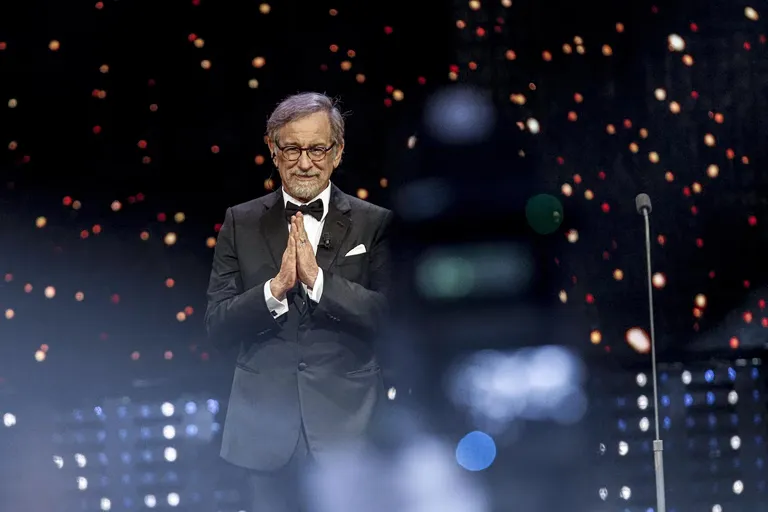
The production of Steven Spielberg's first western is expected to begin in 2027, according to long-time collaborator and cinematographer Janusz Kaminski. Speaking at the Camerimage Film Festival in Poland, Kaminski revealed that the project is gradually taking shape, moving from a conceptual idea to a tangible production. This collaboration is significant, as Kaminski has served as the director of photography for many of Spielberg's most successful works over several decades.
While a specific release date has not been established, the 2027 start date for filming suggests a rigorous pre-production phase is currently underway. The transition into the western genre is a notable milestone for the director, who has spent much of his career exploring themes of science fiction, adventure, and historical drama.
The importance of long-term creative partnerships
The continuity between Spielberg and Kaminski provides a foundation of visual stability for this new genre exploration. Their partnership has historically helped define the aesthetic of major Hollywood blockbusters, and the move to a western setting will likely leverage their established visual language to interpret the American frontier.
Visual inspiration and landscape aesthetics
Janusz Kaminski is drawing visual inspiration for the film from the landscapes of his childhood in Poland to create a unique perspective on the western genre. He noted that certain European terrains offer a specific morphology that can evoke the feeling of the American West while providing a distinct visual lens. This approach aims to avoid the standard visual tropes often seen in American-produced westerns.
Kaminski specifically highlighted the Sudetes Mountains as a primary source of inspiration. He described the region as having beautiful, smooth hills that bear a resemblance to the landscapes of Montana. By utilizing these European environments, the production may achieve a different aesthetic quality than traditional westerns.
| Landscape Element | Inspiration Source | Intended Visual Effect |
|---|---|---|
| Smooth Hills | Sudetes Mountains, Poland | Resemblance to Montana landscapes |
| Terrain Morphology | European mountain ranges | A unique, non-traditional western perspective |
| Atmospheric Conditions | Snow and mist | Texture and depth in cinematography |
A departure from science fiction and space epics
The move to the western genre represents a pivot away from the science fiction and space themes that have been central to Spielberg's recent filmography. For a director often associated with the vastness of space and futuristic technology, the grounded, rugged reality of the American frontier presents a new creative challenge. This shift addresses a perceived gap in his extensive filmography, as the western has remained an unvisited territory throughout his five-decade career.
Throughout his tenure in the industry, Spielberg has been a central figure in American cinema, earning numerous accolades and shaping the modern blockbuster. This new project allows him to apply his storytelling expertise to a genre that is deeply rooted in American cultural history, yet viewed through a fresh lens provided by his international production team.
The evolution of a cinematic legacy
As Spielberg approaches his 80th year, this project serves as a testament to his ongoing desire to explore new narrative territories. Rather than repeating established formulas, the director is actively seeking to diversify his body of work by mastering a genre that requires a different approach to pacing, landscape, and character archetypes.
The perspective of the 'outsider' in American cinema
Kaminski suggested that the film will benefit from the perspective of creators who are not native to the American landscape. He observed that while many people filming American stories come from elsewhere, they often bring a different way of seeing the same subject matter. This "outsider" perspective can prevent the film from falling into the visual clichés typically associated with the genre.
According to Kaminski, the combination of specific environmental elements—such as snow-covered ground and mist—can be utilized to create a cinematic experience that feels both familiar to the western genre and entirely new to the audience. This methodology relies on the idea that the morphology of the land and the atmospheric conditions can tell a story as much as the script itself.