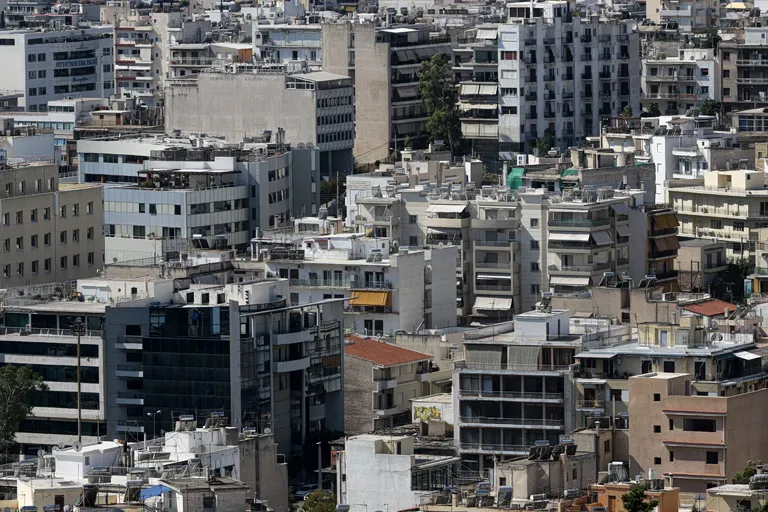
The government's policy reversal on ZYS zones
The Greek government has retreated from its original urban planning design to accommodate local municipal leaders. Following intense pressure from mayors in the Northern Sector of Athens, the administration clarified at Maximos Mansion that the implementation of Coefficient Reception Zones (ZYS) is no longer a top-down mandate. Instead, the process now requires the formal agreement of the relevant municipality, and the movement of building coefficients between different municipal jurisdictions is prohibited.
Prime Minister Kyriakos Mitsotakis indicated that the government remains open to corrective legislative or regulatory interventions to improve the speed and efficiency of the process, provided there is local consensus. However, for municipalities that choose to maintain the current status quo, the central government has issued a clear warning: the state will not indefinitely bear the financial burden of expropriating public spaces for urban use.
Implications for municipal financial autonomy
The shift in policy places the responsibility for land acquisition and urban development back onto local authorities. While the BCT mechanism serves as an alternative compensation method for property owners whose land is reserved for public use—allowing them to transfer development rights to a designated ZYS—the municipality must still manage the resulting urban changes. If a municipality rejects the mechanism, it must rely on its own financial resources to fund expropriations for parks, squares, or roads.
Distinguishing the BCT mechanism from its application
Legal and urban planning experts have highlighted that the controversy lies not in the institution of the Transfer of Building Coefficient itself, but in how it is implemented. The BCT was established in 1979 as a compensation mechanism for owners whose properties are restricted from development for public interest reasons. The Council of State (StE) did not reject the concept of BCT; rather, it criticized the previous practice of allowing coefficients to be transferred "anywhere" without sufficient urban planning oversight.
According to Christos Duchanis, former Vice President of the Council of State, the current ZYS studies aim to address this lack of planning. He noted that if a specific zone study is flawed, the solution should be to correct the errors rather than rejecting the entire BCT institution. Furthermore, Duchanis pointed out a legal risk regarding existing public spaces, such as squares and roads, which are currently privately owned but have not been compensated, leaving owners with the right to seek judicial redress.
The Metamorfosi model for land acquisition
The Municipality of Metamorfosi provides a distinct example of how the BCT can be utilized as a strategic tool for urban development. Mayor Stratos Saroudas has expressed support for the mechanism, not to increase density in already crowded areas, but to acquire public spaces without depleting municipal capital. The municipality faces significant land requirements to meet its public space needs, and the BCT offers a way to bypass traditional, expensive expropriation processes.
The financial scale of land acquisition for municipalities is substantial. The following table outlines the land requirements and financial commitments cited by the Metamorfosi administration:
| Category | Details/Figures |
|---|---|
| Total land needed for public use | Approximately 190,000 sq.m. |
| Land acquired during current term | Approximately 30,000 sq.m. |
| Cost of land acquired to date | Approximately €8 million |
| Pending obligations (52 stregma) | 5-6 million Euro requirement |
Mayor Saroudas has proposed creating a reception zone in areas currently dominated by industrial and technical uses. This would allow for development without increasing building heights in residential areas, while simultaneously facilitating the relocation of businesses away from the residential fabric and supporting new infrastructure and road networks.
Regional disparities in BCT capacity
The ability of a municipality to utilize the BCT mechanism depends heavily on its existing urban density and protected status. For instance, Kifisia presents a unique challenge; while it possesses a high volume of protected historical buildings that generate significant BCT titles through compensation, its highly organized and protected urban fabric leaves very little room to host new development density. This creates a scenario where owners hold valuable rights that have no viable "destination" within the municipality.
The implementation timeline for municipalities willing to participate is expected to begin within two months. However, the effectiveness of the policy remains tied to the availability of suitable urban space. If a municipality possesses many BCT titles but lacks a suitable ZYS, the rights remain effectively stranded, and the public spaces intended for acquisition remain uncompensated and tied up in legal limbo.
Diverse municipal responses to the new mandate
The reaction among Athens' northern municipalities remains fragmented, reflecting different local priorities and administrative approaches. While some see the BCT as a financial lifeline, others view it as a potential threat to existing urban character. The following table summarizes the current stances of several key municipalities:
This lack of a unified front suggests that the success of the revised BCT policy will depend on case-by-case negotiations between the central government and individual local administrations.
| Municipality | Mayor | Current Position/Action |
|---|---|---|
| Metamorfosi | Stratos Saroudas | Supportive; seeks to use BCT to acquire public space and industrial zones. |
| Nea Ionia | Panagiotis Manouris | Evaluative; will review study errors before submitting to Municipal Council. |
| Chalandri | Symeon Roussos | Cautious; requested time to examine and correct existing studies. |
| Lykovrysi-Pefki | Marios Psychalis | Decentralized; approaching via local municipal decision-making. |