What is the transfer of building coefficient and why does it matter?
The transfer of building coefficient refers to the legal mechanism that allows development rights to be moved from a 'source' property to a 'reception' property. This system was established in 1979 to provide economic compensation to owners of properties that cannot be fully developed due to legal or environmental restrictions. These source properties typically include protected cultural heritage buildings, properties in traditional settlements, or land subject to expropriation and urban planning constraints.
By allowing these rights to be transferred to areas where additional construction is permitted, the state achieves two primary goals: it compensates owners for lost development potential and facilitates urban growth in controlled, pre-planned areas. According to the Ministry of Environment and Energy (YPEN), the potential volume of these rights is massive; beyond the currently active titles, it is estimated that up to 16.4 million square meters could eventually be offered by owners of protected or expropriated properties.
The legal framework and urban balance
The implementation of this tool requires strict adherence to urban planning principles to ensure that new construction does not overwhelm local infrastructure. Between 1994 and 2017, the Council of State established decisive jurisprudence, ruling that transfers must only occur within specifically designated Building Coefficient Reception Zones (ZYS). These zones are selected based on their capacity to absorb new density without compromising the local character or environmental stability. Consequently, the transfer of rights is no longer viewed merely as a compensation tool, but as a sophisticated urban planning instrument that requires rigorous prior design.
Where are the new reception zones located?
The Technical Chamber of Greece (TEE) has completed a scan of the first 50 municipal units, identifying 194 proposed reception zones across nine regions. The distribution of these zones reflects a strategic attempt to direct development toward areas with the highest capacity for absorption. The concentration is heavily weighted toward Greece's major metropolitan hubs, specifically Attica and Central Macedonia.
- Attica: 62 zones are located in Northern Athens and East Attica.
- Central Macedonia: 55 zones are proposed in this region.
- Crete: 32 zones, primarily in Heraklion and Chania.
- Other regions: 12 zones in Magnesia, 11 in Eastern Macedonia and Thrace, 6 in Achaia, 6 in Central Greece, 4 in Kastoria, and 4 in Nafplio.
The selection process for these ZYS involves a complex analysis of land use, existing building terms, infrastructure capacity, accessibility, and environmental constraints. However, the rollout has not been without friction. For instance, the Municipality of Dionysos in Attica has already raised concerns regarding potential inconsistencies between the new ZYS studies and the local urban plans currently being developed across the country.
How is the building rights supply distributed geographically?
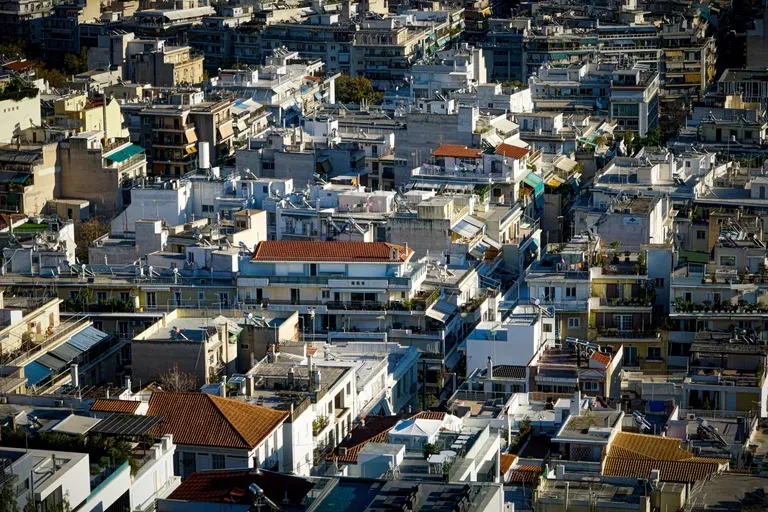
There is a significant geographic concentration of transferable building surfaces within Greece's two largest urban centers. According to data from YPEN, 72.4% of the total transferable surface area is located in Athens and Thessaloniki, while the remaining 27.6% is spread across the rest of the country. At a regional level, Attica and Central Macedonia together account for 79.6% of the total transferable area.
The distribution at the municipal level highlights where the most significant development potential lies. The Municipality of Athens leads the rankings with 132,820.93 square meters of transferable surface, followed by the Municipality of Thessaloniki with 57,983.52 square meters, and the Municipality of Piraeus with 21,624.34 square meters. Other significant areas include Galatsi, Chalandri, Karditsa, Patra, Elefsina, Koridellos–Evosmo, Volos, Kifisia, and Kalamaria.
What is the role of the Digital Land Bank?
The Digital Land Bank serves as the central electronic mechanism for recording and managing building coefficient titles. This platform is designed to facilitate the matching of supply (owners of rights) and demand (properties in reception zones). The system is currently in a pilot phase, managed by the TEE, with full activation expected by early 2027, provided no unforeseen delays occur.
The matching process follows a strict legal hierarchy to ensure local integration. The law mandates that the correspondence between supply and demand must first be sought within the same municipality. If no match is found, the search expands to neighboring municipalities, and if still unsuccessful, it moves to the level of the Regional Unit or the Region. This geographic priority is intended to keep development benefits as close to the original site as possible while still allowing for necessary urban expansion.
Integration and operational challenges
While the Digital Land Bank provides the technical infrastructure, the existence of active titles does not automatically guarantee that a transaction will occur. The success of the system depends on several variables: the established rules of correspondence, the actual market demand for additional density, and the completion of necessary administrative procedures. The effectiveness of the bank is intrinsically linked to the progress of the ZYS studies and the formal institutionalization of these zones.
Frequently asked questions
What is the primary purpose of the transfer of building coefficient?
The primary purpose is to provide economic compensation to owners of properties—such as those in protected areas or traditional settlements—who cannot use their full development rights. It also serves as an urban planning tool to direct growth into pre-planned reception zones.
How many reception zones have been identified so far?
The Technical Chamber of Greece has proposed 194 reception zones across 50 municipal units. These zones are spread across nine regions, with the highest concentrations found in Attica and Central Macedonia to accommodate the majority of the available building rights.
When will the Digital Land Bank be fully operational?
The Digital Land Bank is currently undergoing pilot testing. Barring any unforeseen technical or administrative delays, the system is expected to be fully activated by the beginning of 2027, allowing for the seamless matching of building rights supply and demand.
Which cities have the most transferable building rights?
Athens holds the largest amount of transferable surface area with 132,820.93 square meters. This is followed by Thessaloniki with 57,983.52 square meters and Piraeus with 21,624.34 square meters, reflecting the heavy concentration of rights in Greece's major urban centers.
Does the transfer of rights affect local infrastructure?
The law requires that transfers only occur in designated Reception Zones (ZYS) that have been studied for their capacity to absorb extra density. These studies evaluate infrastructure, accessibility, and environmental factors to prevent overstraining the local urban fabric.
Key takeaways
- 194 proposed reception zones have been identified across 50 municipal units in Greece.
- 72.4% of transferable building surfaces are concentrated in Athens and Thessaloniki.
- The Digital Land Bank is expected to be fully operational by early 2027.
- The Municipality of Athens holds the highest volume of transferable rights at 132,820.93 sqm.
- The system aims to unlock a potential 16.4 million square meters of building rights.
The future of the Greek construction market
The activation of the transfer of building coefficient represents a pivotal shift in Greek urban management. By transitioning from a period of legislative dormancy to a structured, digital-first approach, the state is attempting to bridge the gap between heritage preservation and urban development. The success of this initiative will depend on the seamless integration of the Digital Land Bank with local municipal plans and the ability of the 194 identified zones to absorb density without compromising environmental integrity. If implemented effectively, this mechanism could provide much-needed liquidity to the real estate market while modernizing the country's urban landscape.