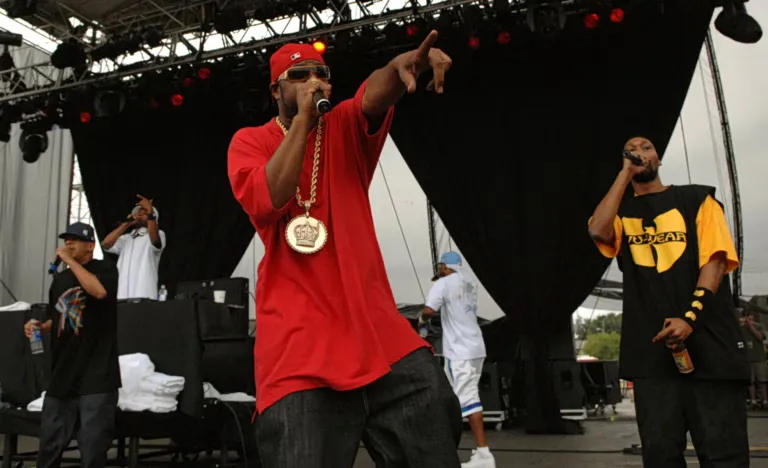
The historical significance of the Wu-Tang Clan induction
The Wu-Tang Clan's entry into the Rock and Roll Hall of Fame honors a legacy that began in the fall of 1993. During that period, a group of youths from the neighborhoods of Staten Island released their debut album, Enter The Wu-Tang (36 Chambers), through Loud Records and RCA Records. The original lineup featured RZA, GZA, Ol’ Dirty Bastard, Method Man, Raekwon, Ghostface Killah, Inspectah Deck, U-God, and Masta Killa.
The Rock and Roll Hall of Fame describes the group as a force that redefined the concept of a hip hop collective. According to the Hall of Fame, the Clan functioned as a rap group, a modern pop culture mythology, an artistic brand, and a musical powerhouse. Their presence caused significant disruption across the realms of music, fashion, and film, establishing a blueprint that influenced a wide spectrum of artists ranging from JAY-Z and Nas to Pusha T and Odd Future.
A revolutionary business model and artistic autonomy
A core component of the Wu-Tang Clan's enduring success was their pioneering approach to the music industry's structural power dynamics. Unlike many traditional groups, the Clan utilized a unique business model that allowed individual members to sign solo contracts with different record labels while remaining part of the collective. This strategy allowed the group to expand its reach and influence without sacrificing its central identity.
This decentralized approach facilitated the creation of several highly influential solo works that bolstered the overall Wu-Tang brand. The following table outlines several key solo albums produced under this model:
| Artist | Album Title |
|---|---|
| Method Man | Tical |
| Ol’ Dirty Bastard | Return to the 36 Chambers |
| GZA | Liquid Swords |
| Raekwon | Only Built 4 Cuban Linx |
| Ghostface Killah | Supreme Clientele |
The Rock and Roll Hall of Fame notes that no other rap group has created such a deep and impactful collection of interconnected works. By allowing members to negotiate their own power and rights independently, the Clan fundamentally changed how artists interact with the industry.
Current activity and recent solo releases
The induction arrives during a period of significant productivity for several members of the collective. While the group's history is rooted in the 1990s, the members remain active in the contemporary music landscape with several recent solo projects.
Raekwon and Ghostface Killah have recently released new material, specifically The Emperor’s New Clothes and Supreme Clientele 2, respectively. Other members have also maintained a steady presence in the industry:
- Cappadonna: The member who joined the crew at a later stage has released A Work in Progress.
- Masta Killa: Recently collaborated with Rakim and Kurupt for the project The Godbody.
This ongoing activity demonstrates that the group's influence is not merely historical but remains a living part of the hip hop genre.
Voices from the Clan and the Hall of Fame
The members of the Wu-Tang Clan have expressed the importance of their collective synergy in achieving their global status. Raekwon highlighted the collaborative nature of their rise during an interview with Vibe, noting that the group's success was built on diverse individual strengths.
"All of us had different strengths that contributed to the greatness of what we built,"
stated Raekwon, to Vibe.
Raekwon further elaborated on the personal growth experienced through the group, stating that growing up with the Clan taught him a great deal and that one is constantly inspired by the energies surrounding them.
Recognition of other industry pioneers
The Rock and Roll Hall of Fame's 2026 announcements extend beyond the Wu-Tang Clan to honor other vital figures in music history. The inclusion of Queen Latifah and MC Lyte under the Early Influence Award recognizes their foundational roles in shaping the genre. Additionally, the Musical Excellence Award will be presented to producer Rick Rubin, acknowledging his significant contributions to the evolution of various musical styles. This broad recognition underscores the Hall of Fame's effort to capture the diverse lineages that have shaped modern music.