Why is apartment building insurance currently optional in Greece?
Insurance for multi-story buildings in Greece is presently handled on an individual basis per apartment, meaning there is no overarching legal obligation to insure the entire structure. While most building management regulations list the insurance of common areas as a primary responsibility for building managers, implementation remains extremely low. This gap in coverage leads to severe consequences when accidents such as fires, explosions, or earthquakes occur.
Currently, the only widespread scenario where insurance is mandatory is for properties acquired through housing loans. In these instances, the requirement usually ceases once the mortgage is fully repaid. Without a collective policy, a single incident in one unit can trigger a domino effect of financial liabilities. If a fire starts in one apartment and spreads to common areas or neighboring units, the responsibility for damages falls on the individual owner. If that owner lacks the financial capacity to compensate neighbors or cover the repair of common infrastructure, the entire building's functionality is compromised.
The absence of mandatory collective insurance means that many disputes are currently settled in courtrooms. These legal battles are often protracted, delaying essential repairs and leaving residents in precarious living conditions for extended periods while waiting for judicial resolutions.
What are the specific risks facing multi-story residents?
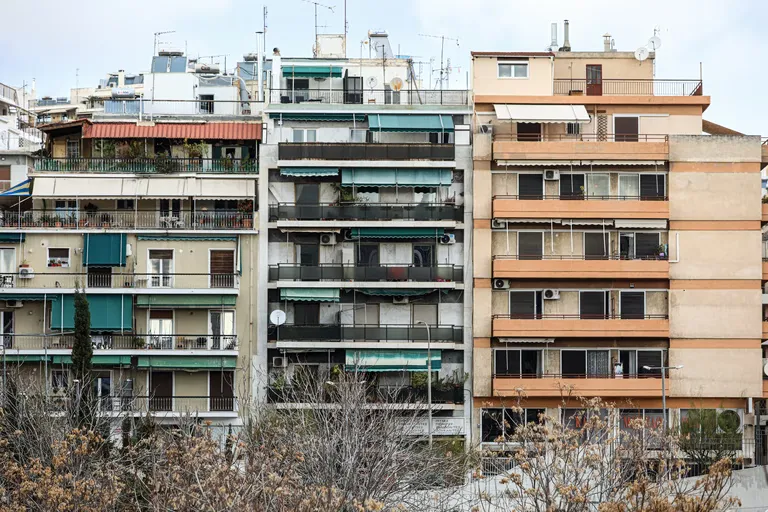
The high density of urban living in Greece, particularly in Athens, amplifies the risks associated with shared infrastructure. When a significant event occurs, the damage is rarely confined to a single property line.
Common hazards in high-density housing
Living in multi-story buildings exposes residents to several interconnected risks:
- Fire and Smoke Damage: A fire in one apartment or storage unit can quickly spread to common stairwells, elevators, and adjacent residences.
- Hydraulic Failures: Burst pipes in one unit can lead to widespread flooding across multiple floors, damaging both private property and the building's structural integrity.
- Seismic and Structural Events: Earthquakes or ground subsidence can cause damage to the common framework of the building, affecting all co-owners simultaneously.
- Maintenance Accidents: Issues such as falling plaster or elevator malfunctions present significant third-party liability risks for the building management.
Because these risks are communal, the financial burden of a single accident can be distributed unevenly, often penalizing those who were not at fault for the initial incident.
How is POMIDA proposing to increase insurance uptake?
The Panhellenic Association of Property Owners (POMIDA) is advocating for a shift in how property protection is incentivized. Recognizing that current measures have proven insufficient, the association is pushing the government to implement significant tax incentives to encourage owners to insure their assets.
According to Stratos Paradias, President of POMIDA, previous attempts to boost insurance rates have lacked the necessary impact. For example, a 20% reduction in the ENFIA (Unified Real Estate Ownership Tax) for insured properties was found to be inadequate in driving a meaningful increase in coverage levels. The association argues that for insurance to become a standard practice, the financial benefits must be more substantial and directly linked to the protection of the property's value.
Furthermore, the Hellenic Insurance Association of Greece has expressed support for expanding insurance coverage to all apartment buildings. They contend that increasing the total number of insured properties will lead to a reduction in individual insurance premiums through the benefits of scale and risk pooling.
What is the status of the legislative reform in Greece?
A recent structural failure in a building in the Petralona district has acted as a catalyst for legislative action. This incident has prompted the Ministry of Justice to include building safety and insurance as a priority for its 14-member scientific working group.
This working group is tasked with a radical overhaul and codification of legislation regarding co-ownership and horizontal/vertical property rights. The upcoming discussions within this committee are expected to address several critical pillars of property law:
- Scope of Mandatory Coverage: Determining whether mandatory insurance should cover only the common areas (stairwells, roofs, elevators) or extend to the individual apartments themselves.
- Civil Liability Requirements: Establishing whether it should be mandatory for building management to carry third-party liability insurance (e.g., for elevator accidents) and for individual owners to carry liability insurance for damages caused to their neighbors.
- Risk Categorization: Deciding which specific perils must be covered. While fire, flood, and earthquake are standard, there is debate over whether more complex risks like ground subsidence or structural collapse should be included.
This legislative movement represents a fundamental shift from a reactive, litigation-based approach to a proactive, insurance-based framework designed to protect the stability of the Greek real estate market.
FAQ: Apartment building insurance in Greece
Is insurance mandatory for all apartment owners in Greece?
No, insurance is currently not a legal requirement for most apartment owners. It is typically only mandatory if the property is under a mortgage. For most residents, coverage is decided on an individual basis, which leaves common areas and neighboring units vulnerable to uninsured damages.
What happens if a fire spreads from one apartment to another?
If insurance is not in place, the owner of the apartment where the fire started is legally liable for the damages caused to neighbors and common areas. If they cannot afford the compensation, the dispute often moves to the courts, causing long delays in repairs.
Will the new reforms include civil liability?
The Ministry of Justice is currently evaluating whether to make civil liability insurance mandatory. This would cover damages caused by building management, such as elevator accidents, as well as damages caused by individual owners to their co-owners, such as fire or water damage.
Can tax breaks help increase insurance rates?
POMIDA has proposed significant tax incentives to encourage owners to insure their properties. While a 20% ENFIA reduction was previously attempted, experts suggest that more substantial incentives are needed to change long-standing habits regarding property protection in Greece.
What specific risks will the new insurance policies cover?
Discussions are ongoing regarding which risks should be mandatory. Standard coverage usually includes fire, flood, and earthquake, but the scientific working group is also considering whether more complex issues like structural collapse and ground subsidence should be included in the mandate.
Key takeaways
- 50% of Greeks and 70% of Attica residents live in multi-story apartment buildings.
- Current insurance in Greece is largely voluntary and tied to mortgage requirements.
- POMIDA is requesting stronger tax incentives to boost property insurance uptake.
- The Ministry of Justice is reviewing co-ownership laws to address building safety.
- Mandatory insurance may soon cover both common areas and individual unit liability.
The future of urban property protection
The transition toward mandatory apartment building insurance in Greece represents a necessary evolution in response to the country's high urban density and seismic risks. Moving away from a system where disputes are settled through lengthy litigation toward a structured, insurance-led model could provide much-needed financial stability for homeowners. As the Ministry of Justice deliberates on the scope of liability and coverage, the outcome will likely redefine the rights and responsibilities of co-owners, ultimately creating a more resilient real estate environment.