The metaphor of the chestnut roast
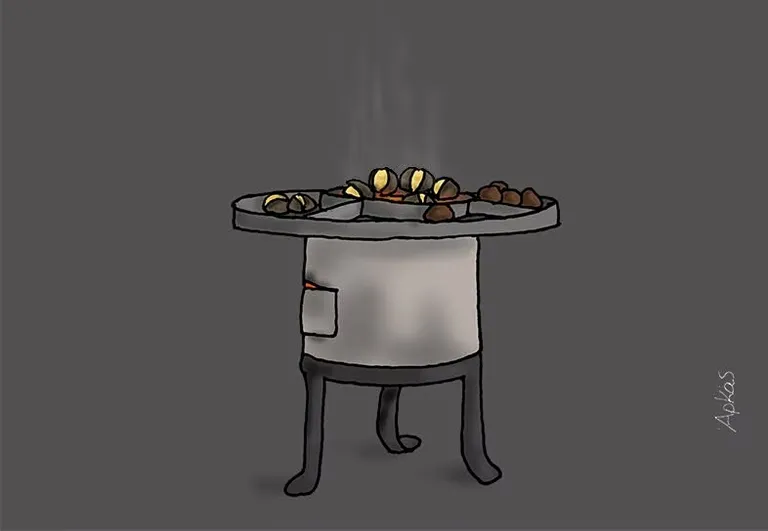
The latest work from the famous cartoonist Arkas utilizes a traditional scene to deliver a biting critique of social dynamics. The sketch depicts a classic chestnut roasting setup, a common sight in Greek culture, but uses it to illustrate a much deeper behavioral pattern. By focusing on the process of roasting rather than just the consumption, Arkas highlights a fundamental human tendency regarding labor and reward.
The caption accompanying the drawing reads: "Unlike 'who will get them out,' the 'who will eat them' was never a problem." This clever wordplay serves as the centerpiece of the satire. It moves the conversation from the physical act of cooking to the psychological act of avoiding effort. The artist uses the simplicity of a seasonal snack to mirror complex societal structures where roles are often unfairly distributed.
Satirizing the avoidance of responsibility
Arkas cartoon satire often relies on well-known idioms to ground his observations in everyday language. In this specific instance, he plays on the Greek expression "getting the chestnuts out of the fire," which refers to performing a difficult, unpleasant, or risky task for the benefit of others. The cartoonist uses this imagery to mock individuals who consistently delegate the "heavy lifting" to their peers.
The satire targets a specific archetype: the person who is conspicuously absent during the struggle but becomes highly visible when it is time to enjoy the results. This dynamic is not limited to personal relationships but extends to professional and political spheres. By using the chestnut metaphor, Arkas makes a universal observation about the imbalance of contribution and consumption that exists in many organized groups.
The mechanics of social parasitism
The sketch suggests that while the difficulty of a task is often a point of contention, the distribution of the reward is rarely questioned by those seeking to benefit. This highlights a recurring theme in Arkas's body of work: the tension between those who drive progress through effort and those who navigate the system to secure ease.
Cultural impact of Greek political satire
While this particular sketch focuses on a social observation, it carries the weight of the broader tradition of Greek satirical art. Arkas has long been a staple of the media landscape, providing a rhythmic, daily commentary on the state of the nation. His ability to translate complex social frustrations into a single, digestible image is what maintains his relevance across decades.
The effectiveness of the sketch lies in its relatability. Everyone has encountered the person who avoids the "fire" of responsibility. By elevating this common grievance to the level of art, Arkas provides a space for public reflection on fairness and accountability. His work serves as a mirror, reflecting the subtle inequities that define much of modern social interaction.