Why is the donkey kick such an effective exercise?
The donkey kick is a highly efficient movement because it allows for isolated gluteal activation without requiring complex gym machinery. While many modern fitness trends focus on high-intensity interval training or heavy lifting, this exercise remains a staple due to its simplicity and practicality. It can be integrated into almost any routine, whether at home or in a professional gym setting.
The primary physiological benefit lies in its ability to target the gluteus maximus, which is a critical muscle for hip stability and overall lower body strength. However, the exercise is not purely a lower-body movement. Because the body must remain stable while on all fours, the core and shoulder muscles are forced to work as stabilizers. This multi-group engagement ensures that you are not just working on aesthetics, but also on functional strength and postural control.
How do you perform the donkey kick with correct form?
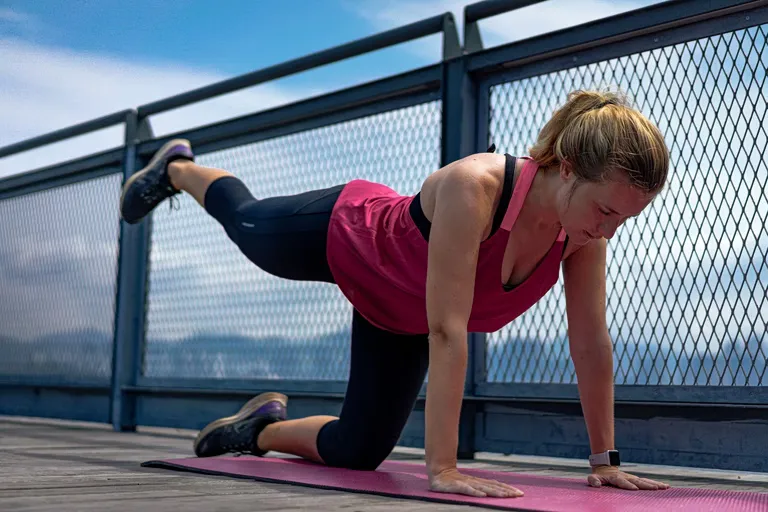
Proper execution is the most vital component of the donkey kick, as incorrect form can shift the tension away from the glutes and toward the lower back. To begin, you must assume a quadruped position on the floor. Your hands should be positioned directly beneath your shoulders, and your knees should be aligned vertically under your hips.
Once the foundation is set, follow these specific technical steps:
- Maintain a neutral spine: Avoid arching your back or rounding your shoulders. Keeping a flat, neutral spine ensures the core remains engaged.
- Engage the abdominals: Lightly contract your core muscles throughout the entire movement to prevent pelvic tilting.
- Execute the kick: Lift one leg toward the ceiling, keeping the knee bent at approximately a 90-degree angle.
- Control the range of motion: Only lift the leg as high as you can without causing your lower back to arch or your pelvis to rotate.
Common mistakes to avoid during execution
The most frequent error is attempting to lift the leg too high. Many practitioners believe that a higher kick equates to a better workout, but if the lift causes the spine to curve or the pelvis to twist, the effectiveness of the exercise is lost. When the lower back arches, the tension moves from the gluteus maximus to the lumbar spine, increasing the risk of injury. If you feel your pelvis rotating, you have exceeded your functional range of motion. The key is to prioritize the quality of the contraction over the height of the movement.
How many repetitions should you perform for best results?
For those looking to incorporate donkey kicks into a broader strength training program, a structured approach to volume is necessary. Beginners should focus on mastering the movement before worrying about high numbers. A standard starting point is to perform 10 to 15 repetitions per leg, repeated for two sets.
As your body adapts to the movement, you can gradually increase the volume or frequency. Integrating the exercise into your routine one or two times per week is sufficient for maintaining and building strength. The goal is not immediate exhaustion, but rather teaching the neuromuscular system to execute the movement with precision and control. As you become more proficient, you can transition from basic sets to more advanced variations.
How can you increase intensity with resistance?
Once the basic bodyweight version of the donkey kick feels effortless, you can introduce resistance to continue challenging the muscles. The most common and effective way to do this is by using resistance bands. These can be placed around the thighs or just above the knees to add tension to the lifting phase.
However, adding resistance must be done with extreme caution. The fundamental rule of progressive overload is that intensity should never come at the expense of technique. If adding a heavier band causes you to 'cheat' by swinging your hips or using momentum from your lower back, the resistance is too high. You should always aim for a controlled ascent and descent, ensuring the glute remains the primary driver of the movement.
Donkey kicks vs. squats: Which is better?
Choosing between donkey kicks and squats depends entirely on your specific training goals for that session. Squats are a compound exercise that engages a vast array of muscle groups, including the quadriceps, hamstrings, and glutes, making them superior for overall lower-body hypertrophy and functional strength. They are highly demanding and require significant energy.
In contrast, donkey kicks are an isolation-focused movement. They allow you to direct a higher concentration of tension specifically onto the gluteal muscles. Because they are less taxing on the central nervous system, they are excellent for 'finishing' a workout or for days when you want to focus on glute shaping without the heavy load of a squat. A well-rounded fitness program often includes both, utilizing squats for power and donkey kicks for targeted muscular fatigue.
When should you avoid this exercise?
While the donkey kick is a low-impact exercise, it is not suitable for everyone in every circumstance. Physical limitations or existing injuries can make the movement counterproductive or even harmful. It is essential to listen to your body and recognize when a movement is causing discomfort rather than productive muscle tension.
Individuals experiencing any of the following should consult a medical professional before attempting the exercise:
- Chronic knee pain or recent knee injuries.
- Hip joint issues or inflammation.
- Lower back problems or spinal instability.
- Acute gluteal or muscle strains.
A doctor or physical therapist can provide guidance on whether the movement is safe for your specific condition or suggest alternative exercises that provide similar benefits without the risk.
FAQ: Frequently asked questions
How can I tell if I am using my glutes correctly?
You will know you are targeting the glutes if you feel a localized 'burn' or tension in the buttock area. If you primarily feel tension in your lower back or the front of your thighs, your form likely needs adjustment, specifically regarding spinal neutrality.
Can I do donkey kicks every day?
While possible, it is generally better to allow for recovery. Like any strength exercise, muscles need time to repair. Integrating them two to three times a week into a structured program is more effective for long-term growth than daily repetition without rest.
Is it okay to use weights instead of bands?
Yes, you can use ankle weights to increase difficulty. However, the same rule applies: the weight must not compromise your form. If you find yourself arching your back to lift the weight, it is too heavy for your current strength level.
Does the speed of the movement matter?
Yes, slower movements are generally more effective for this exercise. A controlled, deliberate tempo ensures that the muscle stays under tension throughout the entire range of motion, which maximizes the stimulus provided to the gluteus maximus.
What is the best surface for donkey kicks?
A yoga mat or a padded exercise mat is ideal. Performing the exercise on a hard floor can cause discomfort in your knees and wrists while in the quadruped position, which can distract from proper muscle engagement.
Key takeaways
- Target the gluteus maximus by keeping the knee bent at 90 degrees during the lift.
- Maintain a neutral spine and engaged core to prevent lower back injury.
- Start with 10-15 repetitions for two sets to build foundational control.
- Use resistance bands gradually to increase intensity without sacrificing form.
- Combine donkey kicks with squats for a comprehensive lower-body routine.
Conclusion
Mastering the donkey kick technique is a highly effective way to enhance glute strength and core stability. By prioritizing form over the height of the kick and maintaining a neutral spine, you ensure that the gluteus maximus receives the intended stimulus while protecting your lower back. Whether you are starting with simple bodyweight repetitions or progressing to resistance bands, consistency and control are the most important factors. When integrated thoughtfully into a broader fitness regimen, this simple movement provides significant functional and aesthetic benefits for any level of trainee.