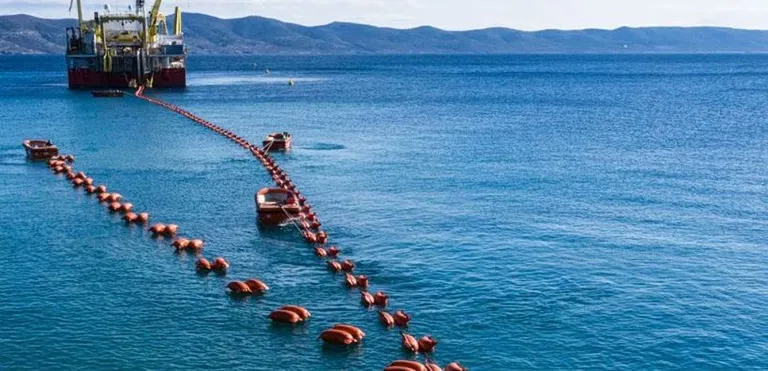
What are the EMC and GSI cables?
The EMC and GSI cables are two distinct but geographically overlapping infrastructure projects that serve different strategic purposes in the Eastern Mediterranean. The Great Sea Interconnector (GSI) is a subsea electrical interconnection project designed to link the electricity grids of Greece and Cyprus, ultimately integrating Cyprus into the European Union's energy network. This project is viewed as vital for energy security and regional geopolitical stability.
The East to Med Corridor (EMC) is a separate subsea telecommunications project. Unlike the GSI, which focuses on electricity, the EMC is designed for high-speed data transmission, specifically aiming to create a fiber-optic link that connects Saudi Arabia to Europe via Greece and Cyprus. This corridor represents a significant shift in digital infrastructure, positioning the Eastern Mediterranean as a central hub for global data flows.
Both projects share a common vulnerability: they traverse maritime areas where jurisdictional claims are heavily contested. The overlapping interests of Greece, Cyprus, and Turkey mean that the technical deployment of these cables is inseparable from the broader maritime sovereignty disputes in the region.
How is the Great Sea Interconnector (GSI) progressing?
The Great Sea Interconnector (GSI) is currently moving through critical financial and regulatory phases, despite significant geopolitical hurdles. According to Cypriot Minister of Energy, Commerce, and Industry Michalis Damianis, the Republic of Cyprus is prepared to proceed with a €25 million payment for the project, provided that the necessary maritime safety notices (NAVTEX) are issued by Greece.
The financial structure of the GSI involves complex multi-party coordination. The Cypriot Regulatory Authority for Energy (RAEK) has currently recognized expenditures of €82 million out of a total €302 million requested by the implementing body, ADMIE. Furthermore, an ongoing study by the European Investment Bank (EIB) is expected to provide further institutional backing for the project's viability.
The role of international stakeholders in GSI
The GSI is not merely a bilateral project between Greece and Cyprus; it involves significant international interests. Minister Damianis has highlighted that Greece and France, along with various French economic interests, play a decisive role in the protection and advancement of the project. The involvement of French entities, such as the cable manufacturer Nexans, adds a layer of European diplomatic weight to the endeavor. The request from Nexans to the Greek Ministry of Foreign Affairs was submitted in early October, with a positive response anticipated in early November. This timeline suggests that the GSI is entering a decisive operational phase that will test the diplomatic resilience of the involved nations.
Why does the East to Med Corridor (EMC) cause tension?
The East to Med Corridor (EMC) is generating friction due to its strategic implications for data sovereignty and the shifting alliances in the Middle East. The project seeks to establish a data link between Saudi Arabia and Europe, a move that intersects with recent geopolitical realignments, such as the Mecca defense agreement signed between Turkey, Saudi Arabia, and Pakistan.
Turkish opposition to the EMC is rooted in Ankara's desire to maintain influence over all major interconnections in the Eastern Mediterranean. Turkey aims to ensure that major infrastructure players, such as France and Nexans, coordinate more closely with Turkish interests rather than exclusively with Athens. This creates a diplomatic tug-of-war where Greece maintains that it holds the sole legal authority to license such projects within its maritime zones.
The deployment of the EMC is expected to trigger a NAVTEX in the coming days, a move that is widely anticipated to provoke a Turkish reaction. The intersection of digital infrastructure and traditional energy politics makes the EMC a highly sensitive component of the regional security landscape.
What is the impact of Turkish "anti-NAVTEX" responses?
Turkey has actively utilized "anti-NAVTEX" notices to challenge the maritime jurisdiction of Greece and Cyprus in the Eastern Mediterranean. On October 16, 2026, the Turkish side issued two such notices to dispute the legitimacy of Greek and Cypriot maritime activities.
The first notice, NAVTEX 1018/26, was issued by the Antalya station in response to a Greek NAVTEX regarding the multilateral exercise "Euonomia," which involves Greece, Cyprus, France, and Italy. The second, NAVTEX 1020/26, challenged a Cypriot announcement regarding geophysical surveys conducted by the vessel "Kobi Ruegg." These surveys are specifically tied to the subsea telecommunications cable work for the EMC, scheduled to take place between October 21 and November 2, 2026.
In these challenges, Turkey frequently cites its own continental shelf coordinates, which it submitted to the United Nations in 2020, to contest the authority of Nicosia and Athens to license seabed research or infrastructure installation. This pattern of "counter-notices" serves as a primary tool for Turkey to assert its presence and contest the legal framework established by the EU member states in the region.
When will the next major diplomatic test occur?
The next significant test of Greece-Turkey relations is expected in early November 2026, coinciding with the anticipated Greek NAVTEX for the GSI project. This notice will facilitate the research activities of the French vessel "Abeille Marengo," which is central to the GSI's development.
Whether Turkey chooses to respond with physical presence in the field or through further diplomatic protests remains to be seen. The intensity of the reaction will serve as a critical indicator of the current state of communication channels between Athens and Ankara. If the EMC's upcoming NAVTEX precedes the GSI's, the tension may escalate even sooner, potentially creating a cumulative effect of maritime friction that could overwhelm existing diplomatic protocols.
FAQ: EMC and GSI cables
What is the primary difference between the GSI and EMC projects?
The GSI (Great Sea Interconnector) is an energy project focused on connecting the electrical grids of Greece and Cyprus to the European Union. In contrast, the EMC (East to Med Corridor) is a telecommunications project designed to transport digital data via fiber-optic cables from Saudi Arabia to Europe.
Why is Turkey opposing these cable projects?
Turkey seeks to assert its own influence and maritime claims in the Eastern Mediterranean. Ankara aims to ensure that major international companies and nations coordinate with Turkish interests, contesting the exclusive rights of Greece and Cyprus to license and manage infrastructure within these disputed waters.
How does the EMC link to Middle Eastern politics?
The EMC connects Saudi Arabia to Europe, a route that intersects with new regional alliances. Specifically, the defense agreement between Turkey, Saudi Arabia, and Pakistan adds a layer of geopolitical complexity to the data corridor's development and its maritime passage.
What role does France play in these developments?
France is a key stakeholder through its economic interests and involvement in the GSI project. French companies like Nexans are responsible for constructing the cables, and France's participation in multilateral maritime exercises provides a diplomatic shield for the projects' implementation.
What are "anti-NAVTEX" notices?
Anti-NAVTEX notices are official maritime warnings issued by Turkey to challenge the validity of Greek or Cypriot maritime notices. They are used to contest the authority of those nations to conduct research, exercises, or infrastructure work in areas where maritime boundaries are disputed.
Key takeaways
- The GSI project aims to integrate Cyprus into the European electrical grid via Greece.
- The EMC project will create a strategic data link between Saudi Arabia and Europe.
- Turkey uses anti-NAVTEX notices to challenge Greek and Cypriot maritime jurisdiction.
- A major diplomatic test is expected in early November 2026 regarding GSI research.
- French industrial and diplomatic interests are central to the GSI's progression.
Conclusion
The EMC and GSI cable projects represent much more than technical engineering feats; they are central pillars of the emerging geopolitical architecture in the Eastern Mediterranean. As Greece and Cyprus move to secure energy and digital connectivity, the friction with Turkey highlights the deep-seated disputes over maritime sovereignty. The upcoming months, particularly the scheduled research activities in November 2026, will serve as a critical barometer for regional stability. Whether these projects act as catalysts for cooperation or as triggers for renewed maritime confrontation will depend on the effectiveness of existing diplomatic channels and the willingness of all parties to respect established international frameworks.