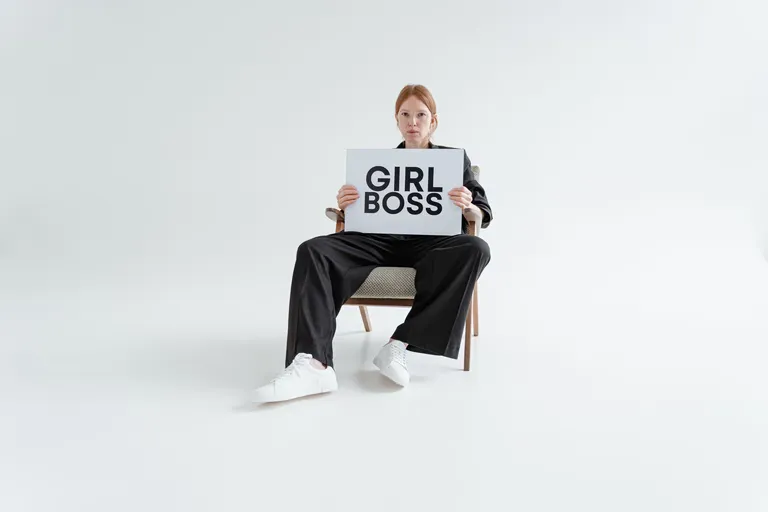
What was the promise of the girlboss culture?
The girlboss culture emerged in the 2010s as a dominant narrative of female empowerment, centered on the idea that women could and should seize leadership roles within existing corporate structures. It championed the notion that professional success and economic independence were the primary vehicles for liberation, encouraging women to prove they could meet the most rigorous demands of the business world.
This movement provided a much-needed challenge to historical exclusions and brought gender discrimination into the spotlight. By celebrating female CEOs and dynamic corporate environments, it gave women the tools to demand space in sectors where they had long been marginalized. However, the foundations of this empowerment were arguably fragile because they focused on individual achievement rather than structural change.
The trap of individualised empowerment
The fundamental flaw in the girlboss ideology was its tendency to treat systemic issues as personal hurdles. Instead of addressing the patriarchal structures of society, the movement often framed success as a solitary race. A woman's individual ascent was presented as proof of progress for all women, which effectively obscured the need for institutional reform. This approach placed the burden of overcoming societal obstacles—such as the lack of affordable childcare and the unequal distribution of domestic labor—entirely on the shoulders of the individual woman.
Why is the girlboss narrative collapsing?
The collapse of the girlboss ideal is driven by the realization that the pursuit of perfection is unsustainable. The archetype of the successful woman became an impossible standard: she was expected to be a decisive leader, a tireless worker, a stylish icon, and a perfect mother and spouse, all while managing every obstacle without assistance. This brand of feminism essentially morphed into a mandate for perfectionism.
The cracks in this image became visible as high-profile leaders resigned amidst allegations of toxic workplace cultures. These scandals exposed the illusion that the girlboss model offered a different or more equitable type of leadership. Rather than transforming the workplace, the model often merely asked women to adopt the same high-pressure, often toxic, behaviors as their male counterparts to prove their worth.
How does the conflict between career and caregiving impact women?
The tension between professional advancement and caregiving responsibilities remains a central driver for women exiting the traditional workforce. According to the Lean In 'Women in the Workplace 2025' report, which surveyed approximately 9,500 employees and 124 organizations in the US, women are less likely than men to express a desire for promotion. This reluctance is often tied to the prohibitive costs and time commitments required to manage both career growth and the care of children or elderly relatives.
Many women are choosing to leave full-time corporate roles in favor of more flexible arrangements or even lower-paying work that allows for better life integration. Sheryl Sandberg, the former CEO of Meta, has noted that this trend is a sign that companies are failing to adapt. Sandberg argues that when leadership fails to provide flexible hours, extended parental leave, or adequate healthcare, women's professional ambitions inevitably decline, resulting in a loss for the economy and society at large.
Is the shift toward self-employment a sustainable alternative?
For many, entrepreneurship and remote work have become essential tools for reclaiming control over their time. While the pandemic initially provided a surge in flexibility, the subsequent push for a return to physical offices has created new pressures. For women who bear a disproportionate share of domestic duties, these rigid office policies can act as a barrier to continued participation in the workforce.
Economic data highlights this trend: according to Matthew Nestler, an economist at KPMG, there was a measurable decline in labor force participation among university-educated women with children under the age of five between December 2023 and May 2026. This has led many to seek autonomy through self-employment, allowing for a 'softer' approach to professional life.
From 'Girlboss' to 'Soft Life'
A new cultural phenomenon is replacing the exhausting hustle of the girlboss with the 'soft life' movement. As noted by author Daisy Jones in a 2023 Vogue article, this shift represents a move away from multitasking and constant meetings toward a focus on self-care, wellness, and personal health. The aesthetic of the high-powered executive in a power suit is being replaced by a lifestyle centered on hydration, sleep cycles, and mental well-being. In this new paradigm, the priority is no longer the next promotion, but rather the preservation of one's own energy and health.
What are the consequences for the corporate world?
The exodus of women from corporate leadership positions is not merely a personal choice; it represents a significant loss of talent, expertise, and perspective for organizations. When experienced women leave the ladder of advancement, companies lose the very individuals who could drive innovation and long-term stability.
Furthermore, the departure of women from high-level roles creates a dangerous cycle. Sheryl Sandberg has warned that as fewer women reach leadership positions, there are fewer voices available to advocate for the very policies—such as flexible working and affordable childcare—that would make staying in the workforce viable. This creates a paradox where the act of leaving, while perhaps necessary for personal survival, may inadvertently perpetuate the systemic inequalities that caused the departure in the first place.
Frequently asked questions
What was the main goal of the girlboss movement?
The primary goal was to encourage women to pursue leadership roles and economic independence within the existing corporate framework. It aimed to break down barriers to entry and prove that women could compete at the highest levels of business through hard work and professional excellence.
Why are women rejecting traditional corporate paths?
Women are rejecting these paths because the 'girlboss' model often demands an unsustainable level of perfectionism and fails to address structural issues like childcare and domestic inequality. Many are prioritizing flexibility, mental health, and personal autonomy over the high stress of traditional climbing.
What is the 'soft life' trend?
The 'soft life' is a lifestyle movement that prioritizes ease, wellness, and self-care over the 'hustle culture' of the past. It focuses on managing one's energy, health, and personal time rather than pursuing constant professional growth at any cost.
How does this trend affect the economy?
The trend affects the economy by reducing the participation of highly skilled women in the workforce. When talented women leave corporate roles or opt for less demanding work, companies lose experienced leadership and the broader economy loses significant productive potential.
Are companies adapting to these changes?
Many companies are still struggling to adapt. As noted by industry experts, a lack of flexible working arrangements, adequate parental leave, and support for caregivers continues to drive women away from full-time corporate career paths.
Key takeaways
- The girlboss culture focused on individual success rather than changing systemic corporate inequalities.
- Women are increasingly prioritizing 'soft life' and wellness over high-pressure corporate climbing.
- Economic data shows declining workforce participation among educated women with young children.
- The loss of female leadership reduces the ability to advocate for essential workplace flexibility.
Conclusion
The transition away from the girlboss era marks a profound shift in how women perceive the relationship between work and identity. It is a move from a model of forced assimilation into existing structures toward a demand for environments that actually accommodate the realities of human life. While the rise of the 'soft life' offers individual relief, the broader challenge remains for corporations. To retain female talent, the business world must move beyond superficial empowerment and implement structural changes—such as flexible scheduling and robust support systems—that value people as much as productivity.