The mechanics of the cross-body kettlebell lift
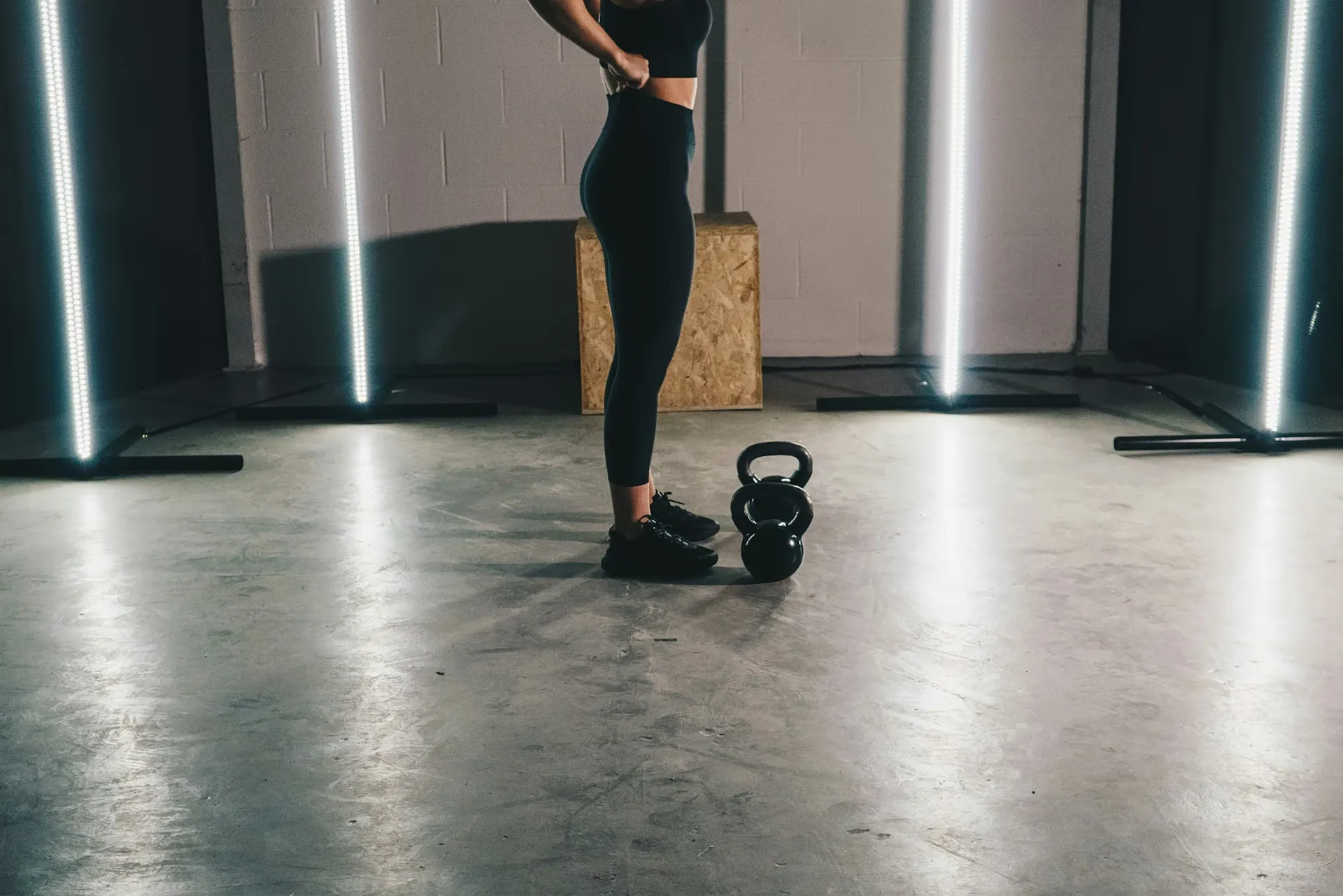
The Gladiator deadlift functions by placing two kettlebells on the floor, positioned to the left and right of the lifter's body. Rather than using a traditional parallel grip, the athlete performs a hinge movement and reaches across their midline to grasp the weights. Specifically, the left hand reaches toward the right-side kettlebell, while the right hand reaches toward the left-side kettlebell.
This cross-body positioning creates a significant mechanical challenge. As the weights are lifted sequentially rather than simultaneously, there is a period during the repetition where the entire load is concentrated on a single side of the body. This intentional imbalance forces the musculoskeletal system to react to sudden shifts in the center of mass. To prevent the torso from tilting or rotating toward the weighted side, the stabilizer muscles must engage with high intensity.
Managing asymmetrical load distribution
During the transition between lifting the first weight and the second, the body enters a state of high instability. The core must act as a bridge, transferring force while resisting the urge to twist. This makes the Gladiator deadlift significantly more demanding than standard kettlebell deadlifts, where the weight is typically centered and balanced between both hands.
Muscular activation and functional benefits
This exercise targets a wide array of muscle groups, primarily focusing on the posterior chain and the lateral stabilizers. The primary movers involved in the hip hinge and lift include the glutes and the hamstrings, which provide the upward drive. Additionally, the quadriceps and the adductors on the inner thigh contribute to the stability and power of the movement.
Beyond the lower body, the exercise provides a comprehensive stimulus for the following areas:
- Core and Back: The abdominal muscles and the muscles of the back work in tandem to maintain spinal alignment and prevent rotation.
- Grip and Forearms: The intense demand of holding offset weights requires significant forearm strength and a secure grip.
- Bone and Tissue Health: As with most resistance training, the mechanical loading helps maintain bone density and muscle mass, which is vital for long-term health.
While these benefits are substantial, it is important to note that they are not exclusive to the Gladiator deadlift. These physiological advantages are the result of structured, systematic resistance training rather than a unique property of this specific variation. The primary distinction lies in the functional application: the ability to manage uneven loads mimics real-world tasks, such as carrying heavy grocery bags or lifting unbalanced objects.
Critical technical errors to avoid
The most dangerous moment in the Gladiator deadlift occurs immediately after the first kettlebell has been lifted while the torso is still in a hinged position. If the weight is too heavy or the lifter lacks sufficient core control, the body may succumb to an abrupt lateral tilt or a sudden rotation of the spine.
To mitigate the risk of injury, lifters must verify their technical proficiency in several key areas before increasing the load. A safe execution requires the following benchmarks:
| Technical Requirement | Correct Execution | Risk of Failure |
|---|---|---|
| Hip Hinge | Pelvis moves backward without rounding the lower back | Lumbar spine flexion/injury |
| Footing | Stable, wide base with absolute control over torso position | Loss of balance or ankle instability |
| Tempo | Smooth, controlled ascent and descent of weights | Sudden jerking or spinal shearing |
| Fatigue Management | Repetitions completed without breakdown in form | Compromised stability due to exhaustion |
The importance of spinal neutrality
Maintaining a neutral spine is non-negotiable. When the core fails to resist the rotational pull of the offset kettlebell, the vertebrae are subjected to shearing forces. This is why the transition from a standard deadlift to a Gladiator deadlift must be gradual and monitored.
Safety considerations and prerequisites
Mastering the fundamental bilateral deadlift—using both hands on a single central weight—is a mandatory prerequisite for this exercise. Attempting to jump directly into complex, asymmetric movements without a foundation of strength increases the likelihood of acute injury. The complexity of the movement requires a high level of neuromuscular coordination that only develops through consistent, basic training.
Specific populations should exercise extreme caution or seek professional guidance before attempting this variation. If you fall into any of the following categories, personalized instruction is recommended:
- Individuals returning to exercise after a long period of inactivity.
- Those with a history of previous injuries, particularly in the lower back or hips.
- People experiencing chronic back discomfort or spinal issues.
- Individuals diagnosed with osteoporosis, where bone density concerns necessitate highly controlled loading.
Ultimately, the Gladiator deadlift should be integrated into a broader strength program only when it aligns with your specific fitness goals and current physical capabilities. It is a tool for advanced stability, not a replacement for foundational lifting mechanics.