What is the scope of the private debt and servicers bill?
The proposed legislation is a massive regulatory framework designed to enhance the supervision of managed requirements stemming from loans and credits. Titled 'Strengthening oversight of managed requirements from loans and credits – Protection of compliant debtors,' the bill covers a wide array of financial and administrative reforms. Beyond debt management, the bill introduces new rules for the tax treatment and supervision of crypto-assets, alongside a general government accounting reform. It also seeks to bolster collective investments, capital markets, and overall risk management within the financial system.
A critical component of this legislative package is the integration of several European Union directives. These include EU Directives 2024/1619, 2024/2994, 2024/927, 2023/2864, 2024/2811, and 2024/1640. By incorporating these mandates, the Greek government aims to align national financial oversight with broader European standards, specifically targeting the management of private debt and the stability of the financial sector.
Key regulatory pillars
The bill is structured around several core objectives intended to modernize the Greek financial landscape. These include:
- Enhanced Supervision: Tightening the control over how servicers manage non-performing loans and credits.
- Debtor Protection: Implementing safeguards for individuals who are actively participating in debt restructuring processes.
- Digital Asset Oversight: Establishing clear protocols for the taxation and monitoring of cryptocurrency holdings.
- Systemic Stability: Improving the management of risks within the broader financial and capital markets.
How has the bill been modified to address public concerns?
The government has introduced significant amendments to mitigate the backlash caused by earlier versions of the bill, specifically regarding the powers of debt servicers. A major point of contention was Article 23, which originally allowed servicers to proceed with the seizure of a debtor's property without a prior court order. Following widespread public outcry and political criticism, the government urgently withdrew this article and replaced it with new provisions aimed at tempering the perceived severity of the law.
To address the concerns of vulnerable populations, Minister of National Economy and Finance Kyriakos Pierrakakis proposed an amendment that establishes a fixed interest rate of 3% for eligible and vulnerable debtors. This rate applies to those who choose to settle their debts through the extrajudicial mechanism. This move is intended to provide a predictable and manageable path for citizens struggling with debt, preventing the predatory practices that critics feared might emerge under the previous draft.
Furthermore, the amendment significantly increases the punitive measures available to the Bank of Greece. Under the new terms, the maximum fine that the central bank can impose on servicers for regulatory violations will jump from €500,000 to €5 million. This massive increase in potential penalties is designed to act as a deterrent against malpractice and ensure that debt collection entities operate within the strict bounds of the law.
What are the details of the parliamentary proceedings?
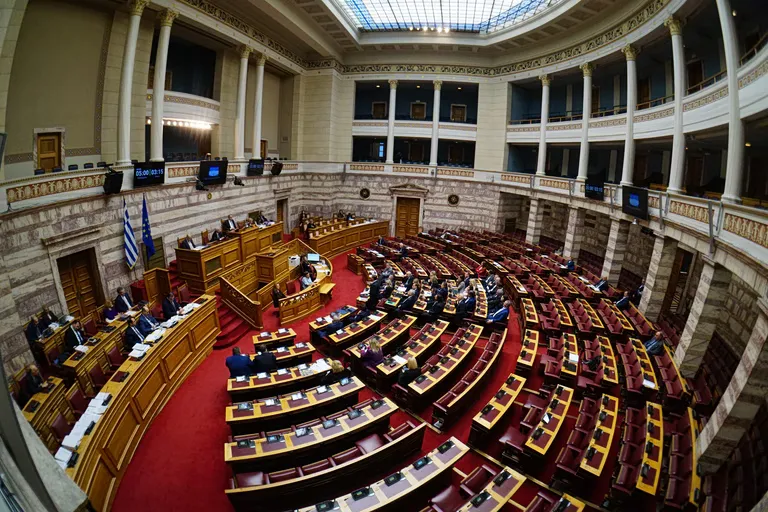
The debate in the Hellenic Parliament is a high-stakes session involving multiple political factions and key government officials. On the second day of discussions, the plenary session has been characterized by intense debate over the specific articles of the bill. A roll-call vote, scheduled to take place between 2:00 PM and 3:00 PM, will determine the fate of various articles proposed by both the New Democracy (ND) party and the main opposition, SYRIZA.
The debate has seen participation from a wide spectrum of political leaders. On the government side, the discussion has been led by Minister Kyriakos Pierrakakis, supported by Deputy Ministers Dimitris Markopoulos and Thanos Petralias. On the opposition side, leaders of the parliamentary groups have taken the floor to challenge the government's approach to debt management and consumer protection. According to reports, a total of 67 MPs have registered to speak on the bill, including 55 representatives from all parliamentary wings.
The voting process and structure
The parliamentary schedule for the day is divided into several critical phases of voting:
- Article-by-Article Vote: A roll-call vote on the specific articles presented by the competing political groups.
- The Principle Vote: A vote on the fundamental principles underlying the legislation.
- Remaining Articles: A vote on all subsequent articles not covered in the initial phase.
- Final Bill Approval: The concluding vote on the entirety of the legislative package.
What is the impact of this legislation on the financial sector?
The legislation represents a fundamental shift in how debt is managed and how servicers interact with the Greek population. By increasing the regulatory burden and the cost of non-compliance, the bill forces servicers to adopt more transparent and legally compliant practices. The jump in maximum fines to €5 million signals that the Greek state is prioritizing the integrity of the debt collection process over the ease of asset recovery.
For the financial system, the bill's integration of EU directives and its focus on capital market oversight suggest a drive toward greater institutional maturity. While the increased oversight might pose operational challenges for debt management companies, the inclusion of protections for compliant debtors and the 3% interest rate cap aims to stabilize the social impact of debt, potentially reducing the long-term economic drag caused by widespread insolvency and litigation.
Frequently asked questions
What is the new interest rate for vulnerable debtors?
Eligible and vulnerable debtors who participate in the extrajudicial debt settlement mechanism will benefit from a fixed interest rate of 3%. This amendment was introduced by Minister Kyriakos Pierrakakis to protect citizens from excessive interest charges during the debt restructuring process.
How much can the Bank of Greece fine servicers now?
The maximum fine that the Bank of Greece can impose on debt servicers has been increased from €500,000 to €5 million. This change aims to ensure stricter compliance with regulations and provide a stronger deterrent against illegal or unethical collection practices.
Was the power to seize property without a court order kept?
No, the provision that allowed servicers to seize property without a judicial decision (Article 23) was withdrawn by the government following significant public and political backlash. The current version of the bill focuses on enhanced oversight rather than bypassing the judiciary.
Which EU directives are being incorporated into this bill?
The bill incorporates several EU directives, including 2024/1619, 2024/2994, 2024/927, 2023/2864, 2024/2811, and 2024/1640. This ensures that Greek financial regulations, particularly regarding debt and crypto-assets, are aligned with current European Union standards.
Who is leading the debate in the Greek Parliament?
The debate is led by the Minister of National Economy and Finance, Kyriakos Pierrakakis, along with Deputy Ministers Dimitris Markopoulos and Thanos Petralias. The opposition, led by SYRIZA and other parliamentary groups, is also actively participating in the discussions.
Key takeaways
- The bill introduces a 3% fixed interest rate for vulnerable debtors using extrajudicial mechanisms.
- Maximum fines for servicers imposed by the Bank of Greece have increased to €5 million.
- The controversial Article 23, allowing seizure without court orders, was withdrawn.
- The legislation integrates six different EU directives to align with European standards.
- The bill covers debt management, crypto-asset oversight, and capital market reforms.
The future of Greek debt management
The outcome of this parliamentary vote will set a new precedent for the relationship between financial institutions, debt servicers, and the Greek public. By balancing the need for efficient debt recovery with robust consumer protections and significantly higher penalties for misconduct, the government is attempting to navigate a complex socio-economic landscape. If passed, the law will not only modernize the regulatory framework for private debt but also integrate Greece more deeply into the European financial regulatory architecture, emphasizing stability and judicial oversight over rapid asset liquidation.