How are US strategic priorities changing for NATO allies?
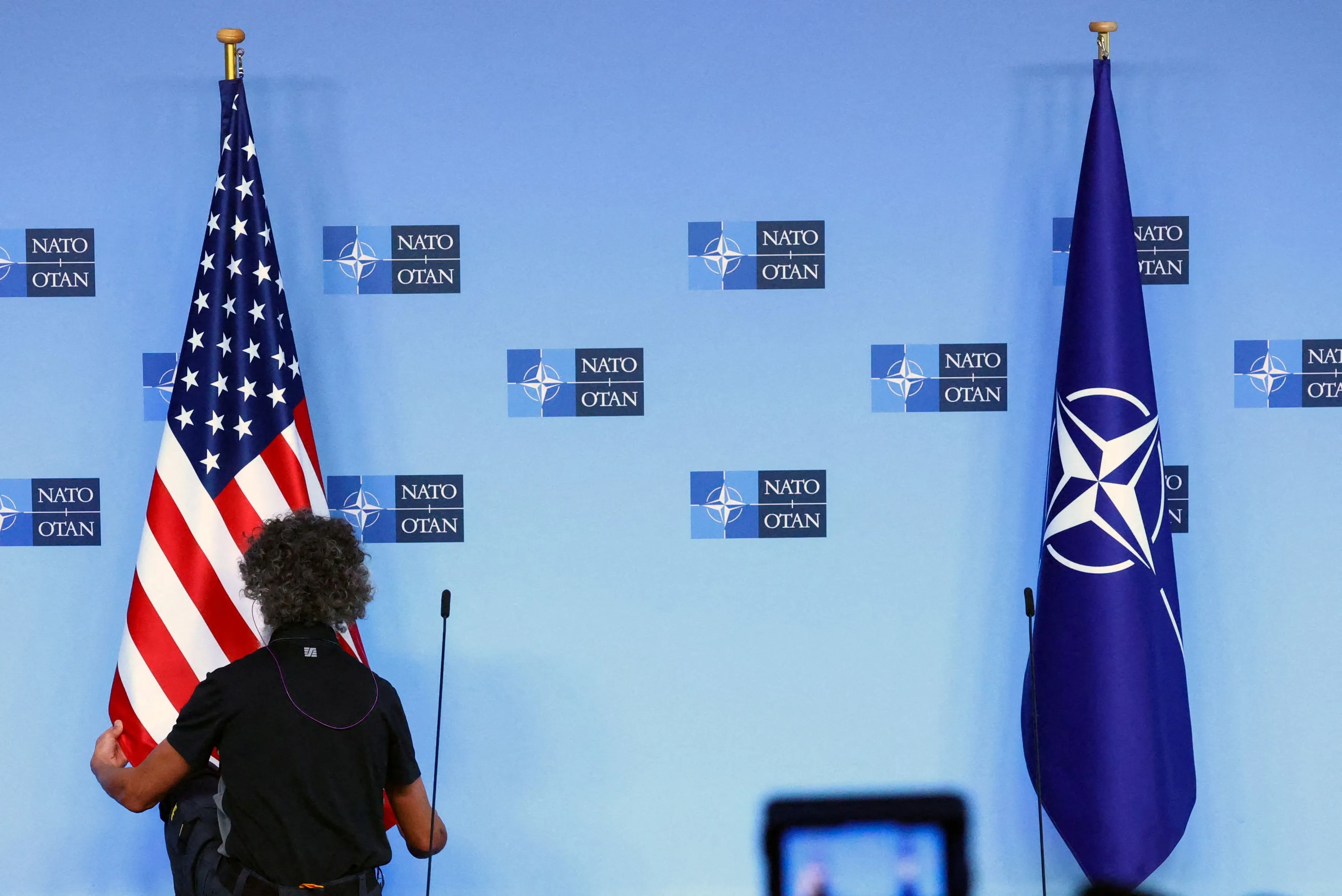
The United States has explicitly downgraded Europe's position within its hierarchy of national security interests. During a recent high-level discussion in Des Moines, Iowa, US Ambassador to NATO Matthew Whitaker clarified that the American strategic focus is now centered on the homeland, followed by the Western Hemisphere and the Pacific region. This hierarchy places Europe at number four in the list of US priorities.
This shift does not signal a total abandonment of the continent, according to Whitaker, but rather a demand for European allies to "step forward" and take greater responsibility for their own regional security. This policy alignment reflects the "America First" doctrine, which seeks to minimize American financial and military burdens abroad while focusing on competing interests in the Pacific, particularly regarding China.
The hierarchy of interests
The new strategic ranking establishes a clear distinction between immediate domestic concerns and long-term trans-Atlantic obligations. By prioritizing the Pacific and the Western Hemisphere, the US is signaling that its primary geopolitical battles are no longer being fought on European soil. This has created a sense of uncertainty among NATO members who have traditionally relied on the US as the ultimate security guarantor.
What is the impact of the "NATO 3.0" transition?
The concept of "NATO 3.0" represents a period of profound structural and operational uncertainty for the Alliance. This transition is characterized by potential reductions in American military presence and a push for higher defense spending across Europe. In June 2026, the US announced a reduction in its permanent contribution to the NATO "Force Model" for crisis response, a move that sparked significant backlash in both the US Congress and among European capitals.
While a plan to withdraw approximately 25,000 American troops from Europe—nearly one-third of the total force—was initially considered, a six-month evaluation period was ultimately implemented following political pressure. During this interim period, the US has been conducting inquiries with allies regarding defense spending, military readiness, and the level of public support for American foreign policy objectives. The underlying question being asked by Washington is simple: what exactly does the United States gain from maintaining its large-scale force posture in Europe?
Evaluating the cost of presence
The debate over the "NATO 3.0" model is as much about economics as it is about strategy. The US administration is scrutinizing the return on investment for stationing troops in Europe, especially when those troops serve as a platform for broader American power projection. NATO Secretary General Mark Rutte has attempted to bridge this gap by highlighting the interconnectedness of the two regions, noting that European bases were essential for operations such as "Epic Fury," which facilitated thousands of sorties in support of US interventions.
Why is European defense capability lagging despite increased spending?
European defense spending is rising, yet a significant gap remains between current capabilities and the requirements for a large-scale conflict. According to a report by the International Institute for Strategic Studies (IISS), while European defense expenditures in 2026 are over 90% higher in nominal terms than they were before the 2022 Russian invasion of Ukraine, these increases have not yet translated into full operational readiness.
The IISS warns that European military power is unlikely to close critical gaps in personnel, artillery, air defense, ammunition, and maintenance before the year 2030. This timeline is particularly concerning given intelligence warnings that Russia could be prepared for a major attack against a NATO member state by the end of this decade. The current European military posture struggles to meet the requirements for "forward defense, rapid reinforcement, and continuous continental operations" demanded by new NATO defense plans.
Critical shortages in military readiness
The gaps identified by the IISS are multifaceted, ranging from industrial capacity to technological integration. While there has been a notable increase in the production of 155mm artillery shells, combat vehicles, and unmanned aerial vehicles (UAVs), several structural hurdles remain:
- Personnel and Maintenance: A shortage of trained manpower and the logistical capacity to sustain long-term operations.
- Infrastructure: Deficiencies in the physical networks required to move and support large military forces.
- Bureaucracy: Administrative obstacles that slow the procurement and integration of new technologies.
- Technological Dependence: A heavy reliance on the United States for the integration of Artificial Intelligence (AI) and advanced military technologies.
How does the Russian threat shape the current security landscape?
The ongoing war in Ukraine and escalating Russian hybrid warfare are the primary drivers of the current security crisis. As the conflict enters its fifth year without a clear resolution, the European Union is actively discussing the creation of an "Emergency Security Protocol," modeled after NATO's Article 4, to address increasing hybrid threats. These threats include cyberattacks, disinformation, and other non-traditional forms of aggression aimed at destabilizing European societies.
The geopolitical tension is further complicated by the shifting focus of the US toward the Arctic and Greenland, as evidenced by recent US-Denmark-Greenland agreements. This suggests that even within the North Atlantic sphere, the US is looking to redefine its interests around resource competition and Arctic sovereignty, potentially further distancing its focus from the traditional European theater of operations.
Frequently asked questions
What does the "Europe is number 4" ranking mean for NATO?
It means the United States has officially placed European security below its own homeland, the Western Hemisphere, and the Pacific region in its strategic hierarchy. This shift signals a move toward a more transactional relationship where Europe is expected to provide more of its own defense funding and manpower.
Will the US withdraw troops from Europe?
The US has initiated a six-month evaluation of its military presence in Europe following a proposed plan to withdraw 25,000 troops. While a full withdrawal has not been finalized, the administration is actively questioning the strategic benefits of maintaining a large-scale American force on the continent.
Can Europe defend itself by 2030?
Current assessments by the IISS suggest it is unlikely that Europe will close its major gaps in air defense, artillery, and personnel before 2030. Although spending has increased by over 90% since 2022, the industrial and logistical capacity to meet high-intensity conflict requirements remains insufficient.
What is the significance of "NATO 3.0"?
NATO 3.0 refers to the transitional phase of the Alliance characterized by a potential reduction in US leadership and resources. It involves a shift toward a model where European allies must take a more prominent role in conventional defense, reducing the historical reliance on American military dominance.
How is Russia impacting European security policy?
Russia is utilizing both conventional military pressure in Ukraine and hybrid warfare tactics against European states. This has forced the EU to consider new emergency protocols and has accelerated the need for a more robust, integrated European defense architecture to counter non-traditional threats.
Key takeaways
- The US has reordered its strategic priorities, placing Europe at fourth behind the homeland, Western Hemisphere, and Pacific.
- A six-month evaluation is underway regarding the potential reduction of 25,000 US troops in Europe.
- European defense spending has risen by 90% since 2022, yet critical readiness gaps are expected to persist until 2030.
- The IISS identifies significant shortages in European air defense, artillery, and AI integration capabilities.
The evolving landscape of trans-Atlantic security
The current state of NATO is one of profound transition, caught between a shifting American political landscape and an increasingly assertive Russia. The move toward "NATO 3.0" suggests that the era of guaranteed American military primacy in Europe is being replaced by a model of shared, and perhaps more fragmented, responsibility. For Europe, the challenge is no longer just about increasing budgets, but about rapidly building the industrial and technological depth required to survive a period of heightened instability. The window for closing these gaps is narrowing as the 2030 horizon approaches.