What are the specific details regarding the surveillance device found at OpenAI?
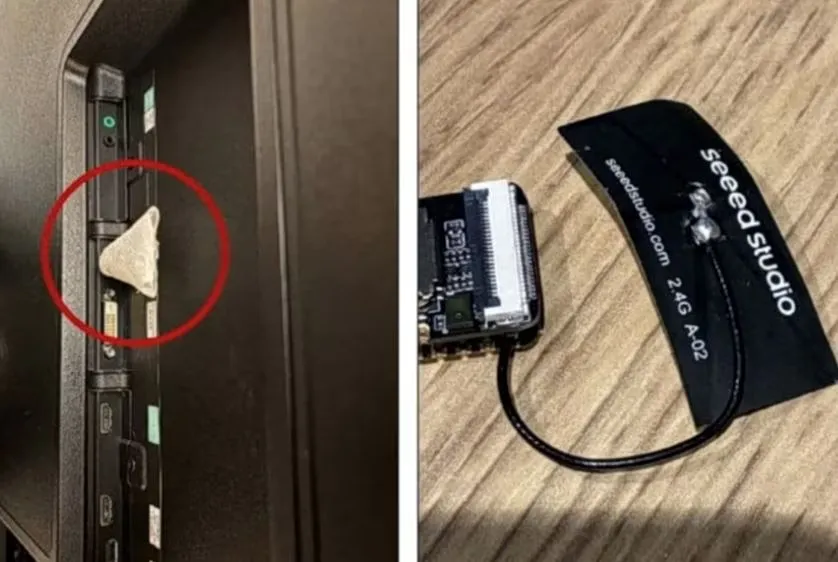
A low-cost recording device of Chinese manufacture was discovered hidden within the OpenAI headquarters, sparking a federal investigation. According to reports from the Financial Times, the device was found wrapped in tissue paper and concealed behind a television set located in an executive meeting room.
The discovery was made by OpenAI's internal security team, which identified the device on October 2, 2026. FBI investigations subsequently determined that the device had been placed there around September 28, 2026, approximately two days before the security team's detection. The nature of the device suggests a targeted attempt to capture sensitive discussions held by high-level executives during private meetings.
The mechanics of the discovery
The concealment method—using common household items like tissue paper to mask the electronic components—indicates a level of premeditation intended to bypass standard office inspections. By placing the device behind a television, the perpetrator utilized a common blind spot in office environments, aiming to ensure the device remained undisturbed for as long as possible to facilitate continuous monitoring.
Why was the OpenAI surveillance employee arrested by the FBI?
Abdulrahman Alfozan was arrested by the FBI on October 9, 2026, following evidence linking him to the placement of the monitoring equipment. Alfozan, a Saudi national who had been employed as an engineer at OpenAI since mid-2025, had been a legal permanent resident of the United States since 2020.
The urgency of the arrest was driven by flight records uncovered during the investigation. Prosecutors revealed that Alfozan, his wife, and another family member had booked travel to Saudi Arabia for October 12, 2026. Crucially, these were one-way tickets, suggesting an intent to flee the United States. US Department of Justice lawyers argued that Alfozan possessed both the motive and the means to flee if he became aware of the impending investigation.
To prevent such an escape, authorities requested that a federal judge seal the case files to protect the integrity of the arrest. The judge granted this request on October 8, 2026, before eventually ordering the documents to be unsealed on the following Tuesday.
What is the impact of this incident on OpenAI’s proprietary data?
OpenAI has stated that there is currently no evidence suggesting that customer data, source code, or critical "model weights" have been compromised. The model weights, which are the fundamental parameters that define how an AI system functions, represent the most sensitive intellectual property of any major AI laboratory.
Despite the breach of physical security, the company's assessment indicates that the scope of the incident was limited to the surveillance of meetings rather than a massive digital exfiltration of core technology. However, the breach has prompted a significant internal review of security protocols to prevent similar physical intrusions in the future.
Protecting the "weights" of the model
In the context of artificial intelligence, the theft of model weights would be catastrophic, as it would allow a competitor to replicate the capabilities of a model without the massive computational costs required for training. While OpenAI maintains that these assets remain secure, the presence of a recording device in an executive room highlights a vulnerability in the physical perimeter that could potentially lead to the acquisition of strategic roadmaps or sensitive development plans through verbal disclosure.
How does this case reflect the risks of industrial espionage in the AI sector?
The incident underscores long-standing concerns that leading artificial intelligence companies are primary targets for state-sponsored industrial espionage. As the global race for AI supremacy intensifies, foreign entities are increasingly seeking technical secrets to gain a competitive advantage.
The involvement of a high-level engineer suggests that "insider threats" remain one of the most difficult security challenges for technology firms to manage. Unlike external cyberattacks, an insider possesses legitimate access to facilities and information, making their activities significantly harder to detect through traditional digital security measures.
Legal representatives for Alfozan, including attorney William Pernick, have challenged the allegations. Pernick stated to the Financial Times that the charges are entirely inconsistent with his client's character and pledged to conduct a thorough investigation into the evidence presented by the government. OpenAI terminated Alfozan's employment on the same day he was arrested.
Frequently asked questions
Who is the individual accused in the OpenAI case?
The individual is Abdulrahman Alfozan, a Saudi national who worked as an engineer for OpenAI. He had been a legal permanent resident of the United States since 2020 and joined the company in mid-2025. He was arrested by the FBI on October 9, 2026.
What was found during the security sweep at OpenAI?
Security teams discovered a cheap, Chinese-made recording device. It was found wrapped in tissue paper and hidden behind a television in a meeting room used by executives. The device was believed to have been placed there around September 28, 2026.
Did the hackers steal the AI model weights?
According to OpenAI, there is no evidence that the company's source code, customer data, or model weights were stolen. The company maintains that the breach was limited to the physical surveillance of meetings rather than a theft of the core AI architecture.
Why did the FBI move so quickly to arrest Alfozan?
The FBI moved quickly because Alfozan had booked one-way flights to Saudi Arabia for October 12, 2026. Prosecutors feared that if he learned of the investigation, he would use these tickets to flee the United States to avoid prosecution.
What has Alfozan's legal team said about the charges?
Alfozan's lawyer, William Pernick, stated that the accusations do not align with his client's character. He has committed to a thorough investigation of the evidence provided by the US government to defend his client against the allegations.
Key takeaways
- An OpenAI engineer was arrested for placing a recording device in an executive meeting room.
- The device was a low-cost Chinese-made unit hidden behind a television.
- The suspect had booked one-way flights to Saudi Arabia scheduled for October 12, 2026.
- OpenAI reports no theft of model weights, source code, or customer data.
- The case highlights the growing threat of state-linked industrial espionage in AI.
The evolving landscape of AI security
The arrest of Abdulrahman Alfozan serves as a stark reminder of the vulnerabilities inherent in the high-stakes artificial intelligence industry. While digital defenses against hacking are constantly evolving, the physical security of personnel and meeting spaces remains a critical, yet often overlooked, frontier. As AI companies become central to global economic and geopolitical power, the intersection of corporate security and international intelligence will only become more complex. This case demonstrates that the battle for technological supremacy is being fought not just in code, but within the very walls of the laboratories where that code is conceived.