PAOK's Strategic Approach to Player Acquisitions
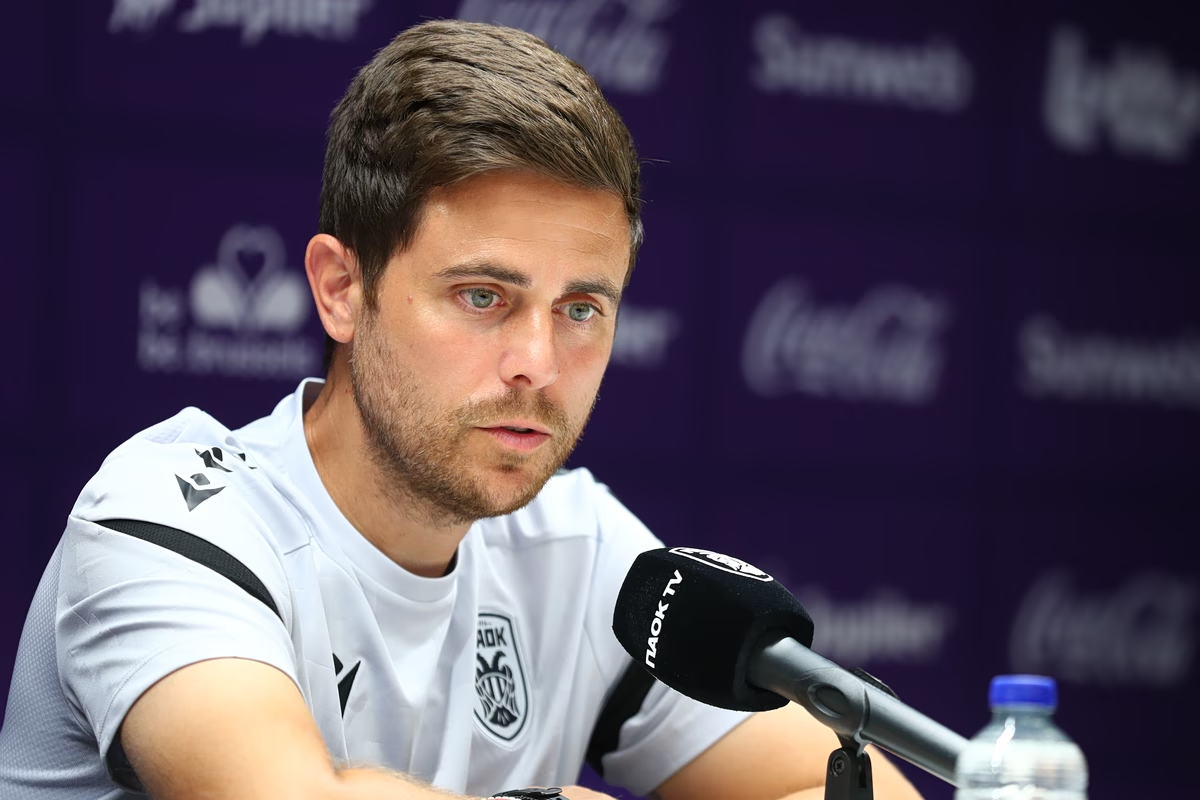
Alessio Lisi, the head coach of PAOK, recently provided insights into the club's transfer strategy, articulating a clear stance of trust in the administrative decisions regarding player acquisitions. His comments come at a pivotal time for the club, as it navigates both domestic league aspirations and the demands of European competition. Lisi's remarks underscore a collaborative philosophy within the organization, where coaching staff and management work in concert to build a competitive squad. This approach is particularly crucial in modern football, where the synergy between on-field tactics and off-field recruitment can significantly influence a team's success. The coach's confidence suggests a shared vision for the team's future, aiming to secure talent that aligns with his tactical framework and the club's long-term objectives.
The transfer market is often a tumultuous arena, filled with speculation, intense negotiations, and high financial stakes. For a club like PAOK, which consistently aims for top-tier performance in Greece and a strong showing in European tournaments, strategic recruitment is paramount. Lisi's public declaration of trust in the management's handling of transfers can be interpreted as a move to foster stability and unity, both internally within the club and externally in its relationship with the fan base. Such statements can help temper expectations and provide a clear message that decisions are made with careful consideration and a holistic understanding of the team's needs.
Furthermore, the timing of these comments is significant, as clubs often engage in crucial transfer activities during the early stages of a new season or leading up to important fixtures. Ensuring that the team remains focused on performance, rather than being distracted by transfer rumors or uncertainties, is a key responsibility of the head coach. Lisi's assertion of trust helps to solidify the narrative that the club's leadership is effectively managing these complex processes, allowing the technical staff to concentrate on preparing the team for upcoming challenges.
The Challenge of European Competition: Facing Brann in the Conference League
Beyond the intricacies of transfer policy, Coach Lisi also turned his attention to the immediate competitive challenge facing PAOK: the upcoming Conference League playoff match against Brann. This encounter represents a significant hurdle in PAOK's European campaign, and Lisi was keen to highlight the specific demands this fixture will place on his squad. His primary message revolved around the necessity for his team to demonstrate resilience and mental fortitude, particularly in the face of anticipated pressure from their Norwegian opponents.
European matches, especially in the playoff stages, are renowned for their intensity and the unique atmospheres they generate. Teams often face unfamiliar playing styles, different climatic conditions, and passionate home crowds. For PAOK, the match against Brann is not merely a test of technical skill but also a rigorous examination of their collective character and ability to perform under duress. Lisi's emphasis on 'withstanding pressure' speaks to the psychological aspect of elite football, where composure and strategic discipline are as vital as physical prowess.
Brann, as an opponent, will undoubtedly present its own set of challenges. While specific tactical details were not publicly disclosed, Lisi's comments suggest an awareness of Brann's potential to exert pressure, perhaps through a high-pressing game, robust physical play, or a direct attacking approach. Preparing a team for such an encounter involves meticulous analysis of the opponent, tailored training sessions, and instilling a tactical game plan that can adapt to various in-game scenarios. The first leg of a two-legged tie is particularly crucial, as it often sets the tone for the entire playoff and can heavily influence the aggregate score.
Tactical Preparation and Player Readiness
The coaching staff's role in preparing the team extends beyond mere physical conditioning. It encompasses detailed video analysis of the opposition, developing specific defensive and offensive strategies, and working on set-piece routines. Lisi's focus on resilience indicates a desire for his players to remain organized and disciplined even when momentum might shift or when the opposition gains an upper hand. This mental toughness is cultivated through rigorous training, tactical drills that simulate match situations, and fostering a strong team spirit.
Moreover, player readiness involves not just the starting eleven but also the entire squad. The ability to make effective substitutions, to bring on players who can maintain or change the game's tempo, and to have depth across all positions, is crucial in demanding European competitions. Lisi's overall management style, as inferred from his statements, appears to prioritize a holistic approach to team development, integrating talent acquisition with tactical preparation and psychological conditioning.
The Conference League offers a significant platform for clubs to test themselves against diverse European opposition and to gain valuable experience. For PAOK, progressing through the playoffs is not just about advancing in the tournament; it also contributes to the club's standing, financial stability, and overall brand. Therefore, Lisi's dual focus on strategic transfers and immediate match performance reflects a comprehensive understanding of the multifaceted responsibilities that come with managing a prominent football club.
The Interplay of Management and Coaching
The relationship between a football club's management and its coaching staff is a delicate yet critical one. Lisi's public statement of trust in the management regarding transfers illustrates a healthy working dynamic. When there is alignment between those responsible for securing talent and those responsible for deploying it on the field, the club is better positioned for sustained success. Disagreements or a lack of communication in this area can lead to disjointed squad building, players who do not fit the coach's system, and ultimately, underperformance.
Modern football increasingly demands a sophisticated understanding of data analytics, scouting networks, and financial planning in the transfer market. Coaches, while primarily focused on tactics and player development, often provide input on the types of players needed to strengthen specific areas of the squad. The management then translates these requirements into actionable targets, navigating the complexities of agent negotiations, transfer fees, and player contracts. Lisi's comments suggest that at PAOK, this process is functioning effectively, with a clear division of labor and mutual respect for each party's expertise.
Ultimately, the success of PAOK in both the transfer market and on the pitch against formidable opponents like Brann will be the true measure of this integrated approach. The club's ability to attract and retain key talent, combined with the coach's capacity to mold these players into a cohesive and resilient unit, will determine their fortunes in the challenging season ahead. Lisi's articulate communication provides a window into the strategic thinking that underpins PAOK's ambitions.