A Club in Transition as the New Super League Season Begins
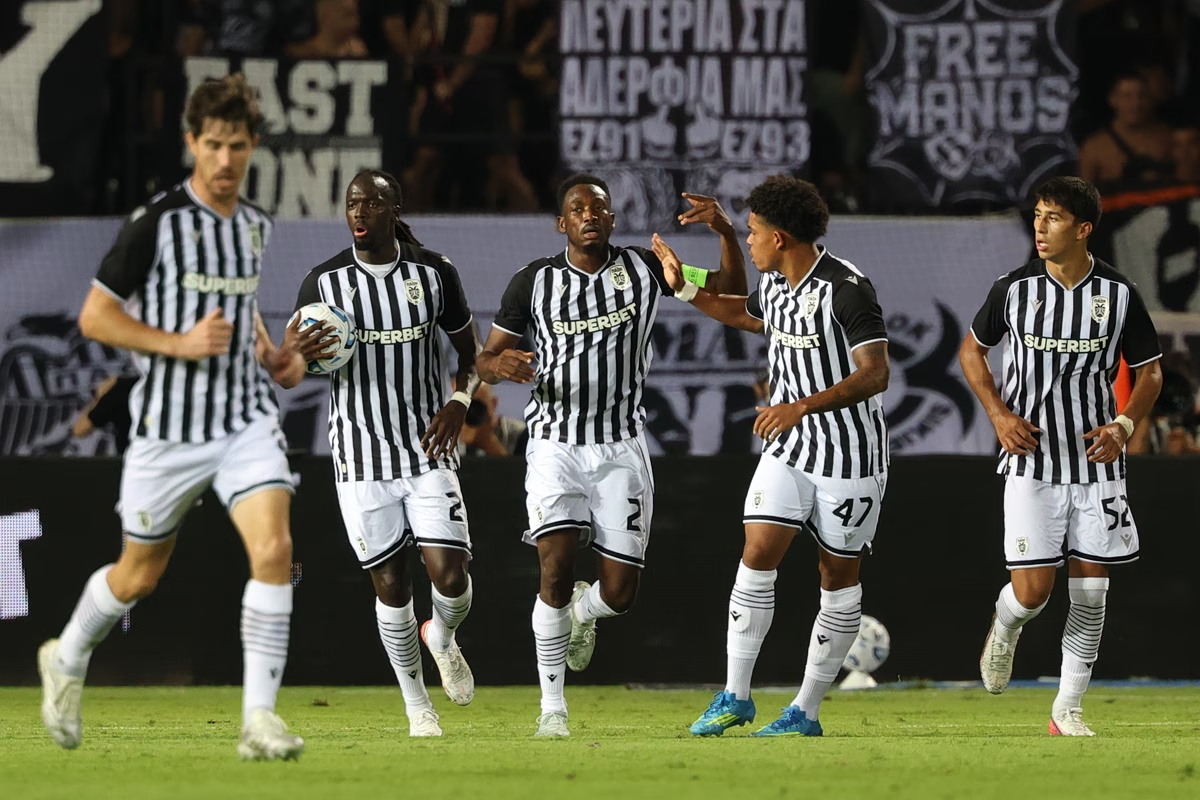
The start of a fresh Super League campaign finds PAOK Thessaloniki at a crossroads. The club, one of the most storied in Greek football, is navigating a period of considerable change following the departures of two individuals who defined much of their recent success: head coach Razvan Lucescu and highly rated forward Evangelos Konstantelias, widely known among fans as "Delia." How the club responds to these losses will likely define the course of their entire season.
For a club of PAOK's stature and expectations, transitions of this magnitude are never straightforward. The dual departure of a transformative manager and a generational talent simultaneously creates a void that few clubs could fill without significant disruption. Yet there are those within the organization and among the fanbase who believe the foundations laid in recent years are strong enough to sustain continued competitiveness at the top of the Greek football pyramid.
The Legacy of Lucescu and What His Departure Means
Razvan Lucescu's tenure at PAOK is widely regarded as the most successful coaching chapter in the club's history. The Romanian tactician guided the Thessaloniki side to multiple championship titles and helped establish the club as a dominant force in domestic football over an extended period. His ability to instill a clear identity, tactical discipline, and a winning mentality transformed PAOK from challengers into consistent title contenders.
His exit, therefore, represents far more than simply losing a coach. It marks the end of an era defined by a specific footballing philosophy and a particular leadership dynamic. Whoever steps into that role — whether an established name or a rising managerial talent — faces the enormous challenge of establishing authority and trust within a squad that has been accustomed to one way of doing things for several years.
Finding continuity amid such disruption will require careful management both on and off the pitch. The incoming coaching staff must quickly assess the squad's strengths and weaknesses while also earning the confidence of players who thrived under a different system.
Konstantelias Departure Leaves a Creative Gap
Equally significant is the absence of Evangelos Konstantelias, who emerged as one of the most exciting young players to come through PAOK's academy in recent memory. His creative instincts, technical ability, and capacity to perform in high-pressure situations made him a fan favorite and a crucial component of the team's attacking play.
Young talents of his caliber are not easily replaced, particularly within the confines of the Greek transfer market. Clubs often spend considerable time and resources searching for players who can replicate the kind of impact that a homegrown talent provides — someone who not only understands the club's culture but is also deeply invested in its success.
His departure raises questions about PAOK's ability to retain top domestic talent in the face of interest from larger European clubs. It is a challenge that many ambitious clubs outside the top five European leagues consistently face, and one that requires a robust and forward-thinking recruitment strategy to manage effectively.
PAOK's Ambitions Remain Unchanged Despite the Challenges
Despite these notable departures, PAOK's aspirations for the new season have not diminished. Club officials and supporters alike continue to speak of championship ambitions, and there is a determination within the organization to ensure that the team remains competitive at the very top of the Super League standings.
This unwavering ambition is itself a reflection of how far PAOK has come in recent decades. The club has cultivated a culture that demands excellence, and those within it appear reluctant to accept anything resembling a rebuilding year or a reduction in expectations.
To back up these ambitions with tangible results, however, the club will need to be strategic and decisive in the transfer market. Identifying players who can not only fill the technical gaps left by departures but also integrate quickly into whatever tactical system the new coaching staff implements will be paramount.
Recruitment and Squad Building Under the Microscope
The summer transfer window has naturally attracted considerable scrutiny from PAOK supporters eager to see how the club plans to address its needs. Recruitment decisions made in the coming weeks will be closely examined as indicators of the club's long-term vision and short-term priorities.
- Finding an experienced replacement or multiple players to cover the creative roles previously held by Konstantelias
- Identifying a coaching candidate capable of inheriting and potentially evolving the tactical framework built under Lucescu
- Strengthening squad depth to cope with the demands of both domestic competition and potential European commitments
- Retaining current key players who may attract interest from clubs abroad following the club's recent successes
Each of these tasks carries its own complexity, and the manner in which PAOK addresses them collectively will shape not just this season, but the club's trajectory over the medium term.
The Broader Context: Super League Competition Intensifies
PAOK's internal challenges come at a time when competition across the Super League continues to evolve. Rival clubs are investing in their own squads and infrastructure, making the task of maintaining dominance increasingly difficult for any single club.
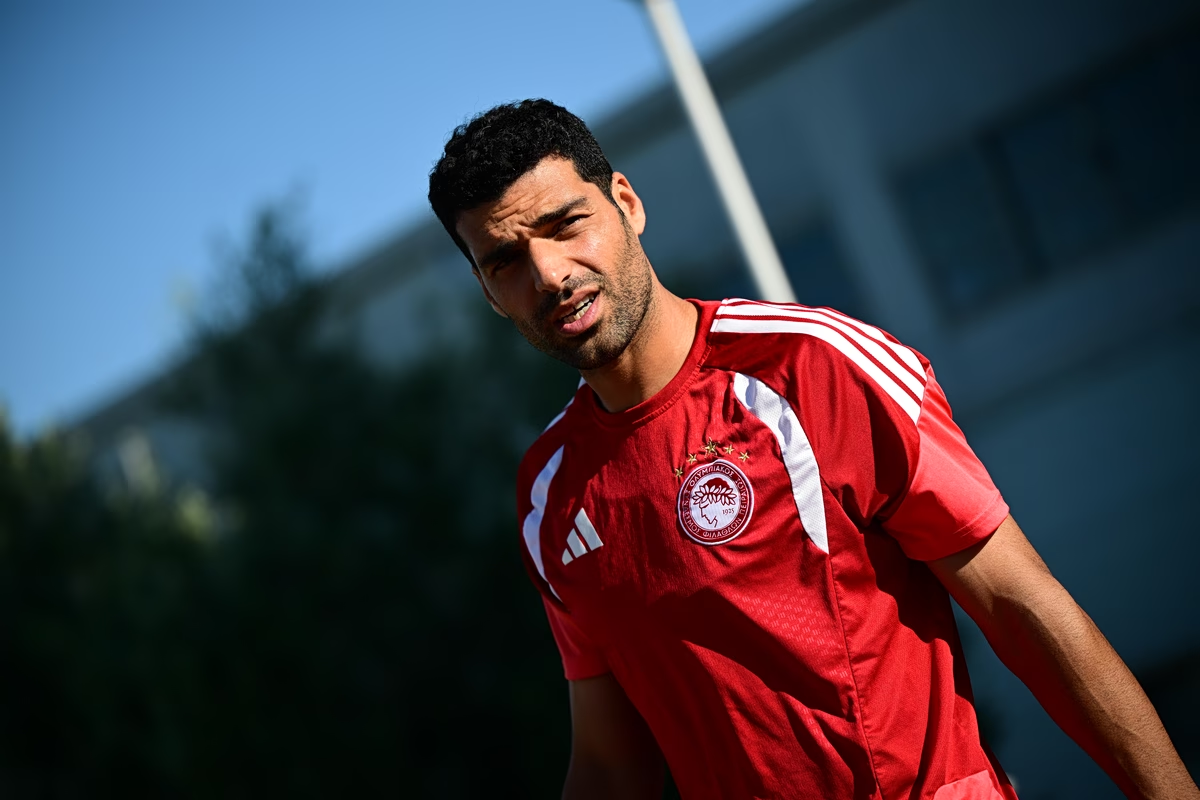
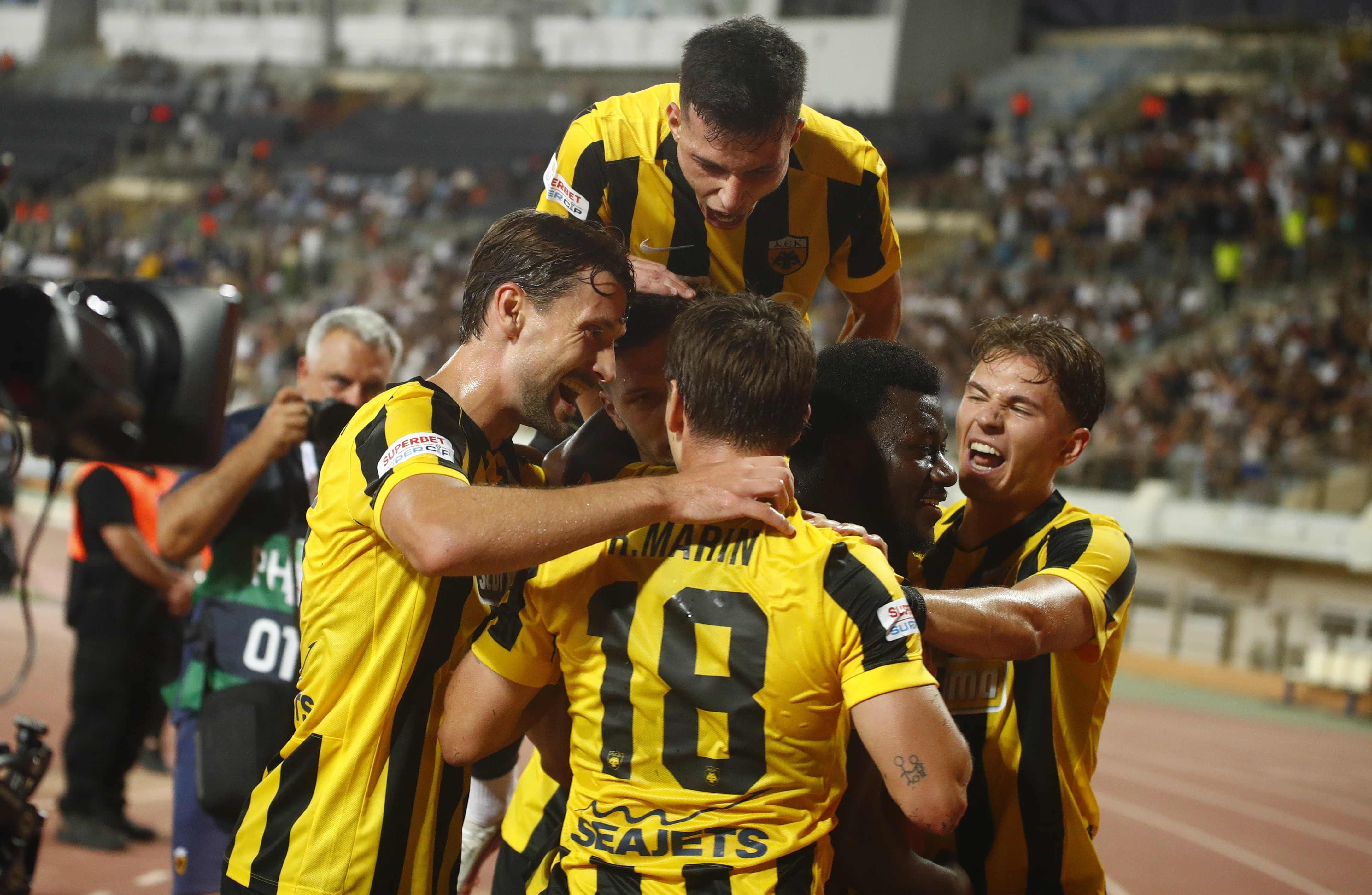
Olympiacos, Panathinaikos, and AEK Athens remain perennial contenders capable of capitalizing on any instability within PAOK's ranks. The Greek top flight, while not always receiving the international recognition it deserves, is a genuinely competitive environment where margins between success and failure are often razor-thin.
This competitive landscape means that PAOK cannot afford an extended settling-in period. Results will be expected from the very beginning of the campaign, placing immediate pressure on the new coaching staff and the players tasked with delivering performances worthy of a title challenge.
Fan Expectations and the Pressure to Deliver
PAOK's passionate and vocal fanbase will be watching the early weeks of the season closely. The club's supporters have been accustomed to success in recent years, and their expectations are calibrated accordingly. Any early stumbles could quickly generate scrutiny and debate around the decisions made during the off-season.
That said, football fans are often more understanding of transitions than critics suggest, provided they can see evidence of genuine effort, tactical clarity, and a coherent plan. If the new management can communicate a convincing vision and the team can demonstrate competitive spirit early in the campaign, patience is likely to follow.
Looking Ahead
As PAOK navigate this pivotal moment in their recent history, the coming months will provide a revealing test of the club's institutional strength. Losing a legendary coach and a beloved young talent within the same window would challenge any club, regardless of size or resources.
Whether PAOK can successfully reinvent themselves while maintaining their championship-level competitiveness remains to be seen. What is clear is that the club's ambition has not wavered, and the determination to remain among Greece's footballing elite is as strong as it has ever been. The new Super League season, for PAOK, is not simply about winning matches — it is about proving that the club's recent era of success was built on something lasting.