Why is the 'art of the feasible' limiting political progress?
The concept of politics as the 'art of the feasible' has functioned as a strategic boundary for mainstream political actors seeking to project responsibility. Rather than simply promising achievable goals, this philosophy often serves to restrict political discourse to a narrow range of 'sensible' policies that do not deviate from established norms. These norms typically prioritize European Union fiscal discipline and the interests of global capital markets.
In practice, this approach enforces a specific political agenda characterized by:
- Strict adherence to austerity and fiscal constraints.
- The promotion of privatization and flexible labor markets.
- Tax concessions for high earners and large corporations.
- A reluctance to disrupt the interests of major financial entities.
This framework has been reinforced by public discourse, where any attempt to propose radical alternatives is frequently dismissed under the label of 'populism.' By branding transformative ideas as unrealistic or dangerous, the political establishment maintains a cycle of management rather than one of true leadership or progress.
How has neoliberalism impacted the European and Greek economies?
The prevailing neoliberal model in Europe, which was heavily imposed on Greece through various bailout programs and mandated 'reforms,' is currently facing a profound crisis of legitimacy. Despite the significant resources provided by European programs, the economic results have often been characterized by stagnation rather than robust growth. While Greece has seen higher growth rates recently, this is largely attributed to a recovery from a period of deep crisis rather than the success of the underlying economic model.
The structural issues resulting from this economic approach include:
- A failure to invest adequately in infrastructure, particularly regarding climate change resilience.
- The replacement of stable, well-paid industrial roles with precarious, low-wage service sector jobs.
- A persistent lack of upward social mobility through traditional institutions.
The erosion of the social contract
The social welfare state, which historically ensured a degree of social cohesion within Europe, is being treated increasingly as a mere cost to be minimized. As governments prioritize fiscal surpluses and market stability, the foundational elements of the social contract—healthcare, education, and social security—are being undermined. This shift creates a society of diminished expectations, where the benefits of economic activity are not broadly shared, leading to widespread social discontent.
What is the impact of current policies on education and social mobility?
Education is undergoing a significant crisis as it ceases to function as a reliable mechanism for upward social mobility. Historically a point of pride for European societies, the sector now faces waves of underfunding that threaten its ability to prepare future generations for a changing world. This decline is not merely an academic concern but a driver of social instability.
The consequences of this educational decline are visible in several areas:
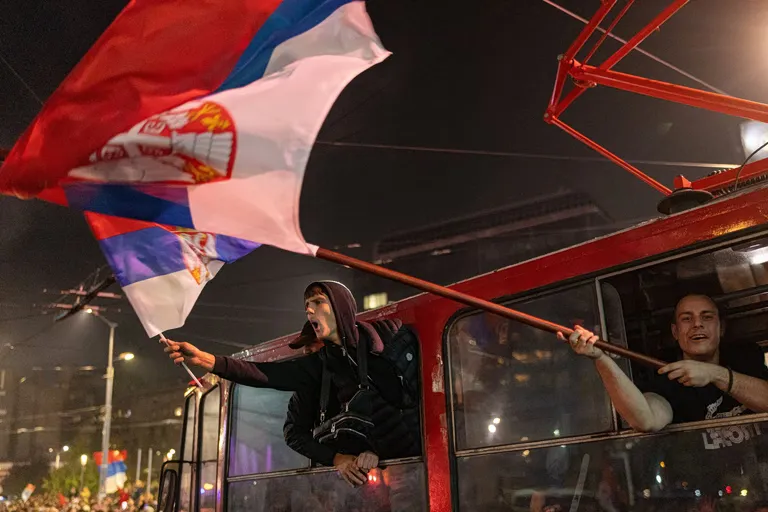
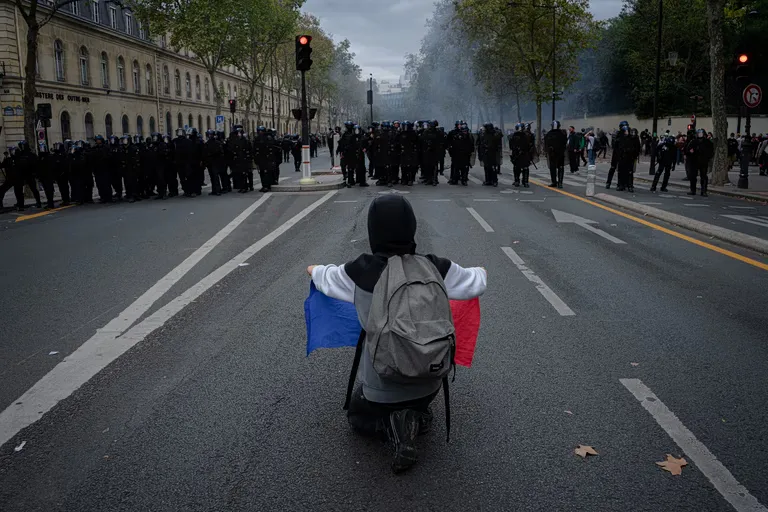
- The emergence of large-scale youth movements protesting systemic failures.
- A growing gap between the skills required by the modern economy and the quality of available training.
- The commodification of learning, where education is treated as a market product rather than a public good.
When education fails to provide a path for advancement, the resulting frustration often manifests in political volatility, as younger generations seek alternatives to the systems that have failed to offer them a viable future.
How are democratic institutions and the rule of law being challenged?
Democratic tolerance and the rule of law are facing unprecedented pressure as systemic forces increasingly align with far-right and neo-fascist agendas. This erosion of democratic norms is not confined to the fringes but is often facilitated by the concessions made by mainstream political powers. The result is a weakened institutional framework that struggles to protect individual rights and maintain social stability.
This institutional decay is compounded by several factors:
- The prioritization of market-friendly policies over the protection of democratic integrity.
- The rise of political rhetoric that seeks to divide rather than unite the citizenry.
- The failure of mainstream parties to provide a robust defense of democratic values against extremist encroachment.
Can transformative politics overcome the current stagnation?
Addressing the deep-seated problems facing Greece and Europe—ranging from the cost-of-living crisis to geopolitical instability—requires more than just administrative management; it requires structural disruption. The current political discourse often attempts to frame any departure from the status quo as a path to 'chaos,' yet the reality is that maintaining the current trajectory is what leads to systemic failure.
True progressive politics must be willing to engage in the following:
- Redistribution: Moving away from tax models that favor the wealthy and toward systems that alleviate the burden on the working classes.
- Public Goods: Resisting the privatization of essential services like health and education to ensure they remain accessible to all.
- Proactive Foreign Policy: Moving beyond passive alignment with global powers toward a more multi-dimensional and autonomous diplomatic strategy.
The demand from the citizenry is not for the certainty of the 'feasible,' but for the capacity to enact real change. Political forces that wish to represent this change must demonstrate that they possess the strategic planning, political will, and concrete tools necessary to break the current downward spiral.
FAQ: Progressive Politics and Reform
What is the difference between management and progressive politics?
Management focuses on maintaining existing systems and operating within established constraints to ensure stability. In contrast, progressive politics seeks to identify and implement fundamental changes to the economic and social structures that cause inequality and stagnation, aiming for transformative rather than incremental results.
Why is the 'art of the feasible' criticized?
The 'art of the feasible' is criticized because it is often used as an excuse to avoid necessary but difficult reforms. By limiting the scope of political action to what is currently acceptable to markets and existing power structures, it prevents the implementation of policies that could provide genuine social progress.
How does neoliberalism affect the working class?
Neoliberalism often leads to the erosion of labor protections and the replacement of stable industrial employment with precarious service-sector jobs. It frequently prioritizes tax cuts for high earners and corporate interests, which can exacerbate income inequality and reduce the overall social safety net for workers.
Is political change considered dangerous by the current establishment?
Yes, many mainstream political actors frame transformative change as a risk to economic stability or a precursor to social chaos. This framing is used to discourage voters from supporting policies that might disrupt the interests of major economic players or traditional power structures.
Can education restore social mobility?
Education can restore social mobility only if it is adequately funded and treated as a public good. Current trends of underfunding and privatization threaten this potential, making it harder for individuals to improve their socio-economic status through academic and professional achievement.
Key takeaways
- The 'art of the feasible' often serves to protect the status quo and market interests.
- Neoliberal economic models have contributed to stagnation and social inequality in Europe.
- The social welfare state is facing a crisis due to systematic underfunding.
- True progressive politics requires the capacity for structural and transformative change.
- Citizens are increasingly seeking political agency rather than mere administrative stability.
Conclusion
The current political landscape in Greece and across Europe is defined by a tension between the cautious management of the status quo and the urgent need for structural reform. Relying on the 'art of the feasible' has proven insufficient to address the deepening crises in education, social welfare, and economic equality. As democratic institutions face mounting pressure, the necessity for a politics capable of genuine disruption becomes clear. Ultimately, the greatest risk to society lies not in the pursuit of change, but in the continued adherence to a failing model that prioritizes stability over progress.