How is social unrest shaping the European political context?
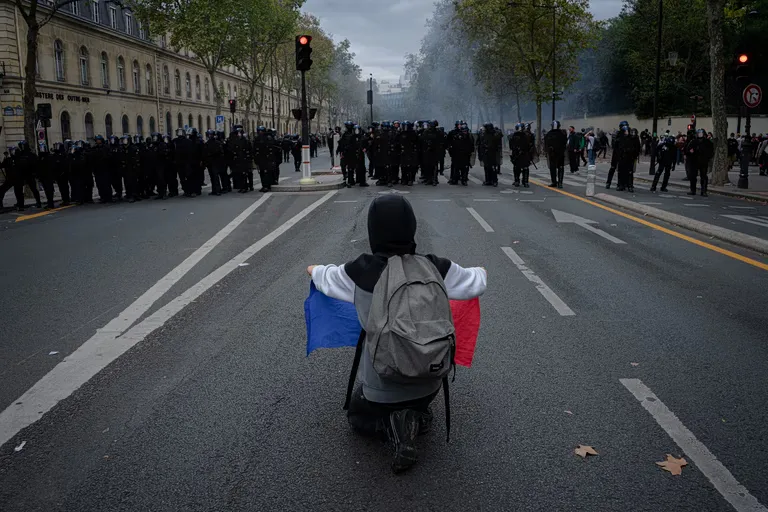
Social unrest is increasingly challenging the stability of established political elites across Europe, creating a climate of unpredictability for sitting governments. In France, the tension is palpable as citizens react to perceived authoritarian measures, including the deployment of 70,000 police officers and military units to manage protests. Despite these measures, including restrictions on gatherings, the social 'engine' continues to drive movements such as the general strike scheduled for November 5.
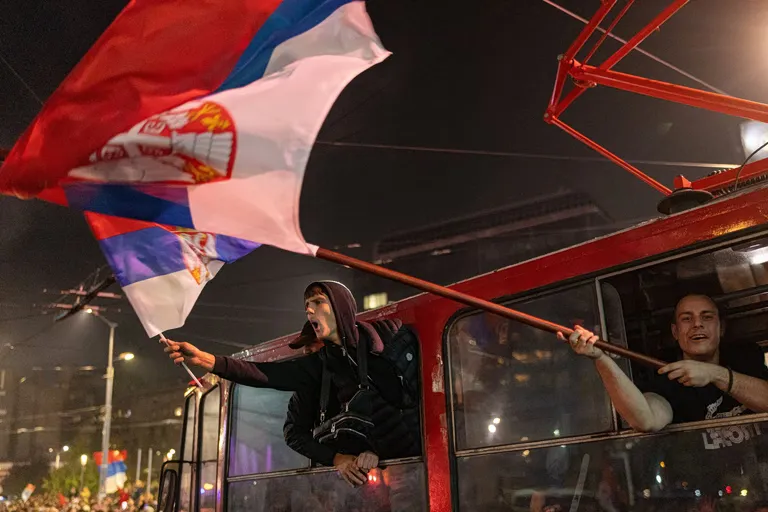
The situation in Serbia offers a different perspective on how social movements can achieve political shifts. After a 12-year tenure, President Vučić faced a significant setback when student-led electoral movements challenged his dominance. While the leadership attributed these shifts to external 'deep state' influences, the outcome demonstrated a clear appetite for change within the electorate. These international examples serve as a backdrop to the growing anxieties within Greek society, where citizens are increasingly questioning the long-term economic and social trajectories set by the current leadership.
What is the impact of the Karamanlis-Samaras alliance?
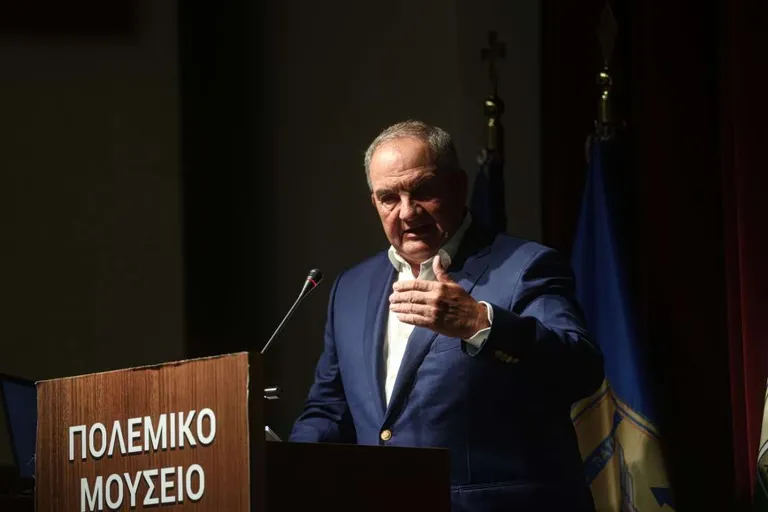
The unexpected alignment between former Prime Ministers Kostas Karamanlis and Antonis Samaras is creating a significant political challenge for the Mitsotakis administration. Traditionally seen as distinct political figures, the two have demonstrated a complementary approach to criticizing the government's current direction. This 'double strike' was evidenced by Samaras's recent editorial in 'Estia' followed closely by Karamanlis's speech at the War Museum.
The core of their criticism focuses on the perceived erosion of national interests. By coordinating their messaging, they have moved beyond mere partisan disagreement to present a unified critique of the state's strategic posture. This synergy suggests a broadening of the opposition that transcends individual political legacies, forcing the government to defend its policies against a more cohesive front of veteran political expertise.
The strategic divergence in Greek foreign policy
The primary point of contention for this alliance is the government's approach to regional geopolitics, specifically regarding Turkey and the Mediterranean. The former Prime Ministers argue that the current administration is sliding into a de facto acceptance of Turkish interests, a move they describe as a fundamental error in national strategy.
Why are Greece-Turkey relations a focal point of criticism?
Greece-Turkey relations have become the central battlefield for the opposition, with critics arguing that the 'calm waters' doctrine is failing the nation. Antonis Samaras has explicitly called for the resignation of Foreign Minister Giorgos Geropetritis, asserting that the current policy of 'calm waters' and the existing friendship treaties are major mistakes that have allowed Ankara to gain undue influence.
The criticism extends to several specific geopolitical developments:
- The Turkish-Libyan Memorandum: Both Samaras and Karamanlis view the ratification of the Turkish-Libyan agreement by the Libyan Parliament as a provocative display of power that creates a fait accompli in the Mediterranean.
- Maritime Infrastructure: Karamanlis has warned that seeking permission from Turkey for undersea cable projects or other maritime infrastructure could effectively grant Ankara veto power over Greek activities in the Aegean.
- The 'Calm Waters' Doctrine: The opposition argues that the government's attempt to frame diplomatic dialogue as a sign of stability is actually a form of political propaganda that masks a loss of sovereignty.
This unified stance places Prime Minister Mitsotakis in a difficult position, as he must navigate these accusations of weakness while maintaining the diplomatic stability his administration claims to pursue.
How does the 'woke agenda' fit into the political discourse?
The political discourse in Greece is expanding to include cultural and identity-based critiques, with Karamanlis linking geopolitical pressures to a broader shift in societal values. In a notable segment of his speech, Karamanlis argued that Greece is being pressured by international partners to adopt specific ideological stances that he claims undermine national identity.
He specifically cited the following pressures as part of a broader trend driven by a 'cosmopolitan elite':
- The requirement to support Albania's EU integration despite perceived disadvantages to the Greek minority.
- The acceptance of the Prespa Agreement and the recognition of Kosovo.
- The adoption of what he termed the 'woke agenda,' which he suggests lacks respect for historical roots and national identity.
By framing these issues together, the opposition is attempting to connect traditional security concerns with contemporary cultural anxieties, creating a multi-layered critique of the government's perceived subservience to international norms at the expense of Greek sovereignty.
What are the key takeaways?
Key takeaways
- The alliance between Kostas Karamanlis and Antonis Samaras represents a unified critique of current Greek foreign policy.
- Opposition leaders argue that the 'calm waters' doctrine regarding Turkey undermines Greek sovereignty in the Aegean.
- The Turkish-Libyan memorandum is viewed by veteran politicians as a significant geopolitical provocation.
- Social unrest in France and Serbia provides a broader European context for rising anti-elite sentiment.
- Political discourse in Greece is increasingly incorporating critiques of international cultural agendas.
Frequently asked questions
What is the main criticism regarding Greece-Turkey relations?
The main criticism is that the Greek government is pursuing a policy of 'calm waters' that effectively allows Turkey to dictate terms. Former leaders argue this approach leads to a de facto acceptance of Turkish interests and undermines Greek maritime and national sovereignty.
Who are the key figures in the new political alliance?
The alliance is characterized by the coordinated critiques of former Prime Ministers Kostas Karamanlis and Antonis Samaras. They have moved in tandem to challenge the Mitsotakis administration on matters of foreign policy and national security.
How does the Turkish-Libyan memorandum affect Greece?
Critics argue the memorandum is a demonstration of Turkish influence and a provocation that creates a fait accompli in the Mediterranean. They believe it challenges Greece's ability to act independently within its own maritime zones.
What role does social unrest play in this context?
Social unrest in countries like France and Serbia serves as a warning of growing public dissatisfaction with established elites. This atmosphere of instability influences the Greek political landscape by highlighting the potential for rapid shifts in public sentiment.
Why is the 'woke agenda' mentioned in political speeches?
The 'woke agenda' is cited by opposition figures like Karamanlis to argue that international pressure is forcing Greece to adopt certain cultural norms. They frame this as a threat to the country's historical identity and national roots.
Conclusion
The Greek political landscape in 2026 is defined by a convergence of domestic criticism and complex geopolitical pressures. The unexpected unity between Kostas Karamanlis and Antonis Samaras has elevated the debate over foreign policy, specifically regarding Turkey and the Mediterranean, from partisan disagreement to a fundamental question of national sovereignty. As social tensions rise across Europe, the Greek administration faces the dual challenge of managing internal stability and defending its strategic decisions against a cohesive and experienced opposition. The intersection of traditional security concerns and modern cultural critiques suggests a period of significant political volatility ahead.