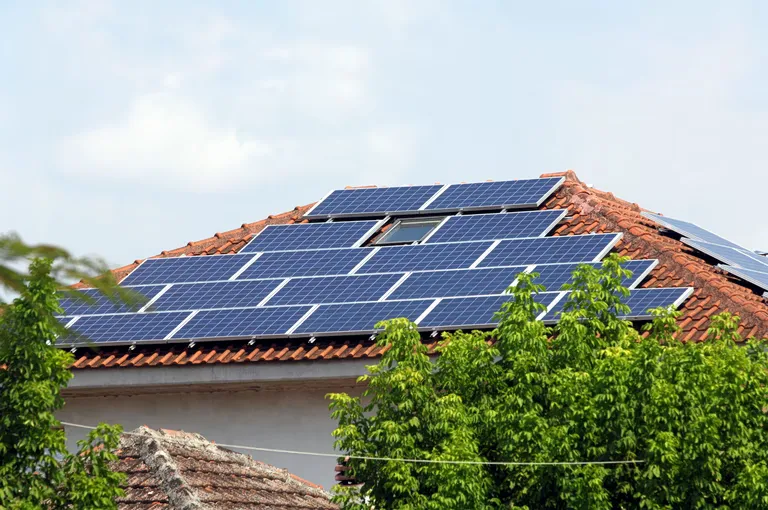
Quantifying the solar capacity of Athens and other major capitals
The city of Athens possesses an estimated 24.5 square kilometers of suitable roof surface for photovoltaic installation, which could yield an annual electrical energy production of approximately 1.8 terawatt-hours (TWh). This localized capacity represents a significant resource for both residential households and commercial enterprises within the Greek capital. Beyond raw energy output, the deployment of such systems in Athens is projected to avoid approximately 512,000 tonnes of CO2 equivalent emissions every year and generate potential annual economic revenues of €117.39 million.
While Athens shows strong promise, the study reveals a wide spectrum of production capabilities across the European Union's capital cities. The scale of potential generation is heavily influenced by urban density, available surface area, and local solar irradiance. The following table compares the projected annual energy production for several key European cities identified in the research:
| City | Estimated Annual Production (TWh) |
|---|---|
| Paris | 3.81 |
| Berlin | 2.55 |
| Budapest | 2.55 |
| Athens | 1.80 |
The total estimated annual production capacity for all 27 examined EU capitals ranges from a low of 0.2 TWh to a high of 3.8 TWh. This variation underscores the necessity of tailored urban energy strategies that account for specific geographic and architectural constraints.
Analyzing the energy autonomy index across Europe
The energy autonomy index, which measures the ratio of potential photovoltaic production against total local electricity consumption, varies drastically between southern and northern European cities. This metric provides a clearer picture of how much a city can truly rely on its own rooftops to meet its needs. For instance, Luxembourg demonstrates an exceptional autonomy index of 180%, followed by Warsaw at 170% and Budapest at 120%. These figures suggest that in these specific urban environments, the available roof space could theoretically produce far more energy than the city currently consumes.
In contrast, northern cities face much lower autonomy levels due to a combination of limited solar radiation and high per capita energy consumption. Helsinki shows an index of only 18%, while Stockholm sits at 10%. This discrepancy highlights the challenge of relying solely on solar power in higher latitudes where daylight hours and sun intensity are more seasonal and restricted.
The impact of latitude and consumption on solar viability
The disparity in the energy autonomy index is not merely a matter of sunlight availability. The study suggests that high per capita consumption in certain regions can dilute the effectiveness of rooftop solar, even when the sun is present. In northern climates, the energy requirements for heating and lighting often outpace the seasonal production capacity of photovoltaic systems, creating a structural reliance on the wider grid or other energy sources.
Methodology and environmental variables in solar modeling
The research utilized a comprehensive framework to evaluate the production potential of the 27 EU capitals, relying on atmospheric data spanning from 2008 to 2023. To ensure accuracy, the researchers integrated satellite information from Copernicus services, urban fabric data, and photovoltaic system simulations via the PVGIS model. The study specifically accounted for three critical environmental factors that directly influence solar irradiance and, consequently, electricity generation: cloud cover, the presence of atmospheric aerosols, and shading caused by neighboring buildings and the specific characteristics of the urban environment.
By incorporating these variables, the model moves beyond theoretical maximums to provide a more realistic assessment of what urban rooftops can actually deliver. Shading, in particular, remains a major hurdle in dense metropolitan areas where high-rise structures can significantly reduce the effective surface area of solar panels on lower or adjacent buildings. The inclusion of aerosol data also acknowledges how urban pollution can impact the efficiency of light reaching the photovoltaic cells.
The limitations of rooftop solar in meeting total urban demand
Despite the high potential in cities like Paris, which leads in absolute production with 3.81 TWh, rooftop solar alone cannot satisfy the entirety of a city's energy requirements. In Paris, the solar potential covers only 6% of the total electricity demand, a limitation driven by the city's massive population and high overall energy consumption. This finding suggests that while rooftop solar is a vital component of the energy transition, it serves as a supplementary rather than a primary source for large-scale urban centers.
The study concludes that for rooftop solar to be an effective part of a sustainable urban energy strategy, several supporting infrastructures must be developed in tandem. These include:
- Energy Storage Systems: To manage the intermittency of solar production and ensure supply during non-sunny periods.
- Grid Flexibility: To handle the bidirectional flow of electricity as homes transition from consumers to producers.
- Hybrid Energy Mixes: The integration of various renewable sources to ensure a stable and continuous energy supply.
Without these advancements, the massive potential of urban rooftops remains underutilized or unable to be integrated effectively into the existing electrical architecture of modern cities.