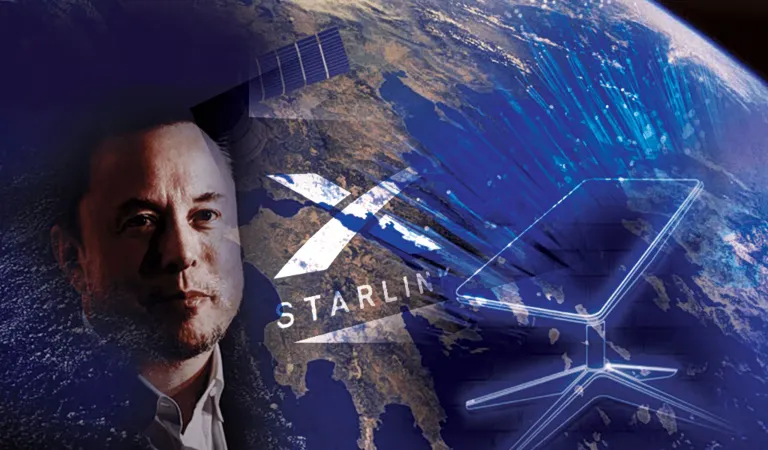
Why is the Starlink dominance a strategic concern for Europe?
The reliance on a single, privately-owned American satellite network creates significant geopolitical and operational risks for European interests. Recent events have demonstrated that access to critical communication infrastructure is not guaranteed and can be subject to external restrictions. For Ukraine, these limitations have had direct consequences on military operations, affecting air defense capabilities and the effective use of unmanned aerial vehicles (UAVs).
Beyond immediate military concerns, the dependence extends to the economic and regulatory spheres. The United States, under the administration of Donald Trump, has actively sought to protect American technology firms from European regulatory frameworks. This tension was highlighted by US Ambassador to the EU, Andrew Funter, who warned of "catastrophic" repercussions if the EU implements policies that favor domestic European companies during the renewal of satellite communication frequency licenses.
This pressure creates a dual challenge for Brussels: maintaining open markets while ensuring that the continent is not left vulnerable to decisions made by foreign entities or private individuals. The ability to control the flow of information and connectivity is now a cornerstone of national and regional security, making technological sovereignty a matter of urgent necessity rather than a long-term aspiration.
How wide is the gap between SpaceX and European space providers?
The technological and industrial divide between the United States and Europe is most visible in the sheer scale of launch operations and orbital presence. SpaceX has secured a dominant position in Low Earth Orbit (LEO) by investing early and leveraging massive economies of scale to drive down costs.
The disparity in activity is stark when comparing annual launch figures. According to the Financial Times, SpaceX conducted 170 launches in 2025, whereas European providers completed only eight during the same period. This massive gap is not merely a matter of numbers; it represents a fundamental difference in industrial capacity, including satellite manufacturing, launch frequency, and cost competitiveness.
The economic implications of launch frequency
The ability to launch frequently allows companies like SpaceX to iterate on technology rapidly and lower the cost per kilogram of payload. For European firms, the lack of frequent, reliable, and affordable access to space makes it difficult to compete in the burgeoning market for high-speed satellite internet. This creates a cycle where the lack of scale prevents the very investment needed to achieve that scale.
What is the impact of US diplomatic pressure on EU regulations?
US diplomatic efforts are increasingly focused on preventing the European Union from creating a regulatory environment that provides an advantage to local firms. The core of this dispute lies in the management of the radio spectrum, which is essential for direct-to-device satellite communications.
European telecommunications giants are attempting to use the strength of the Single Market to bridge the gap. On a recent Monday, four major European telecommunications groups announced plans to jointly claim specific radio frequencies. This move is intended to ensure that European providers can offer similar satellite-to-device services, potentially reducing the continent's reliance on American constellations.
However, the US response suggests that such moves will be met with significant resistance. The threat of "catastrophic" retaliation indicates that the battle for the space economy is moving from the technical realm into the heart of diplomatic relations. The EU must navigate these waters carefully to avoid trade wars while still pursuing its goal of strategic autonomy.
How is Europe attempting to build its own space infrastructure?
The European Union is pursuing several initiatives to foster a more autonomous and competitive space industry, though these projects face the challenge of fragmentation. The goal is to transition from isolated national projects to a unified industrial powerhouse.
Key initiatives include:
- IRIS² Program: A flagship project designed to create a secure, sovereign European satellite communication network.
- Arctic Strategy: A new EU strategic focus that emphasizes the importance of space-based services and launch facilities in the northern regions.
- Increased Funding: Growing budgetary allocations for European space programs aimed at boosting manufacturing and launch capabilities.
Despite these efforts, experts argue that market access alone is insufficient. To truly compete with the likes of SpaceX, Europe requires greater production capacity, a more diverse array of competitive launch providers, and better coordination in procurement processes. There is also a growing consensus that targeted public funding may be necessary to overcome the initial cost disadvantages faced by European companies.
What are the necessary steps for European technological sovereignty?
Achieving true autonomy does not require Europe to replicate every aspect of the American space model or to completely exclude foreign competitors. Instead, the focus should be on building reliable alternatives for technologies that are deemed critical to security and economic resilience.
The path forward involves several strategic shifts:
- Moving beyond fragmentation: Ensuring that national space programs align under a cohesive European industrial strategy.
- Scaling production: Investing in the industrial infrastructure required to produce satellites at a competitive volume and cost.
- Securing the spectrum: Successfully navigating the regulatory battle for radio frequencies to allow local providers to compete in the mobile satellite market.
The Starlink situation serves as a definitive wake-up call. The era where space technology was viewed as a distant scientific endeavor is over; it is now a central pillar of modern geopolitical and economic stability.
Frequently asked questions
Why is Starlink important for military operations?
Starlink provides high-speed, low-latency satellite internet that is essential for modern warfare. It enables real-time communication, the coordination of drone strikes, and the management of air defense systems. When access to this network is restricted, it can directly degrade a military's operational effectiveness on the battlefield.
What is the IRIS² program?
IRIS² is a European Union initiative aimed at establishing a sovereign satellite constellation. Its primary goal is to provide secure, resilient, and high-speed communications for both government and commercial users across Europe, reducing the continent's strategic dependence on non-European providers like SpaceX.
How does SpaceX maintain its lead in space?
SpaceX maintains its lead through massive economies of scale, frequent launch capabilities, and early investment in Low Earth Orbit infrastructure. By conducting significantly more launches than its competitors, as seen in the 2025 data, it can lower costs and iterate on technology much faster than European rivals.
Can the EU protect its companies from US pressure?
The EU can use the size and regulatory power of its Single Market to support domestic firms. However, this is difficult because the US has signaled it will respond aggressively to any regulations that appear to favor European companies over American ones in the satellite sector.
What is the main difference between SpaceX and European space industry?
The primary difference lies in scale and frequency. While SpaceX operates with a massive, integrated launch and satellite production system, the European space sector is characterized by more frequent use of various providers and a higher degree of fragmentation between national programs.
Key takeaways
- SpaceX conducted 170 launches in 2025, compared to only eight by European providers.
- The US has warned of "catastrophic" retaliation against EU policies favoring local space firms.
- The IRIS² program is a key EU effort to build sovereign satellite communications.
- Dependence on Starlink creates strategic risks for European military and economic security.
Conclusion
The widening gap between American satellite dominance and European capabilities presents a profound challenge to the EU's strategic autonomy. The disparity in launch frequency and the pressure from Washington highlight that space technology is no longer just a scientific frontier, but a critical arena of geopolitical competition. While initiatives like IRIS² offer a roadmap toward sovereignty, Europe must overcome industrial fragmentation and cost disadvantages to succeed. Building a resilient, independent space ecosystem is essential to ensure that Europe's security and economic interests are not subject to the decisions of external actors or private entities.