Mechanical failure triggers emergency in the Corinthian Gulf
A mechanical breakdown left a sailing vessel adrift in the Corinthian Gulf during a period of intense weather on Thursday afternoon. The incident began when the vessel, measuring approximately 13 meters in length, suffered a technical malfunction that rendered it unable to navigate or approach the shore safely. The crew and passengers were forced to call for immediate assistance as the vessel lost its ability to maneuver under its own power.
The situation was exacerbated by the sudden onset of severe weather across the Corinthia region. According to reports from korinthostv.gr, the vessel was unable to reach the harbor or secure itself to a dock due to the combination of its mechanical state and the environmental conditions. The emergency was escalated by the fact that the vessel was at the mercy of the elements, making any attempt at self-rescue impossible for the occupants.
Severe weather conditions complicate maritime rescue
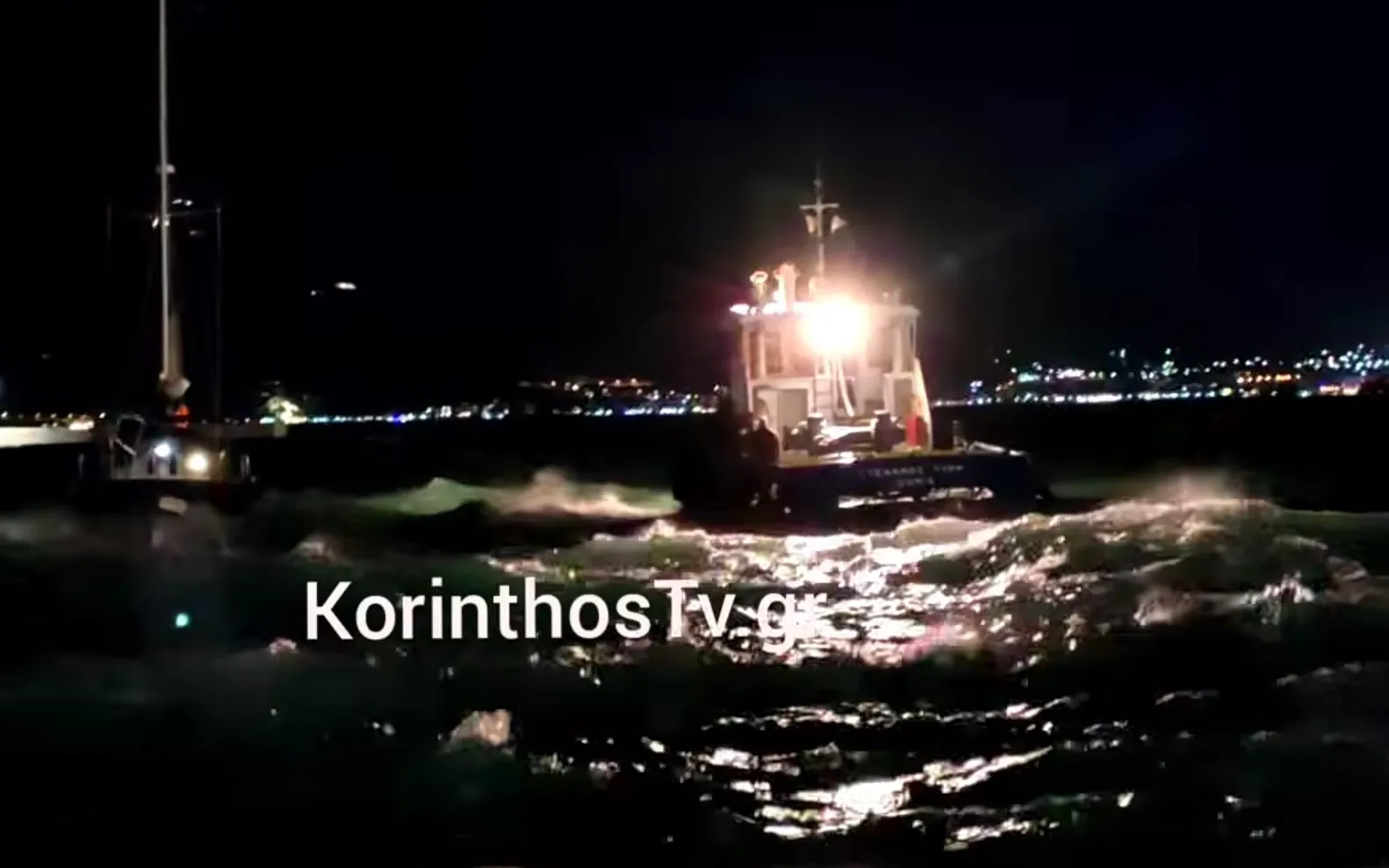
Stormy winds reaching up to 9 Beaufort significantly hindered the efforts of emergency responders during the rescue operation. The weather conditions in the Corinthian Gulf were described as tempestuous, creating dangerous swells and unpredictable gusts that made approaching a drifting boat extremely hazardous. These high wind speeds meant that standard docking procedures were unfeasible for the vessel's crew.
The rescue mission required specialized equipment and high-level coordination to manage the risks posed by the gale-force winds. Rescuers had to account for the 13-meter vessel's lack of propulsion while fighting against the force of the wind, which threatened to push the boat into more dangerous waters or against coastal obstacles. The intensity of the storm meant that every movement by the rescue tugs had to be calculated to prevent further accidents.
Two-hour rescue operation and successful towing
A coordinated maritime response involving local authorities and private tugboats ensured the safety of the four Italian nationals on board. Upon receiving the distress call, the Port Authority mobilized immediately to coordinate the intervention. To provide necessary support, two tugboats from the Diorygas Corinthou were dispatched to the scene to assist in the recovery process.
The operation lasted approximately two hours as crews struggled to close the distance between the tugs and the drifting sailboat. Despite the difficulty of the approach, the tugboat crews successfully reached the vessel, managed to secure it, and moved it away from the perilous location where it had been drifting. The operation concluded with the vessel being towed safely into the port of Corinth, ensuring that all passengers were brought to land without reported injuries.
Safety implications for small vessels in storm conditions
The incident highlights the significant risks faced by smaller sailing vessels when mechanical failures coincide with rapid weather deterioration. In the Corinthian Gulf, where wind speeds can escalate quickly, a loss of propulsion can immediately transform a manageable situation into a life-threatening emergency. The 13-meter size of the vessel made it particularly vulnerable to the 8 to 9 Beaufort winds reported during the event.
Maritime experts often emphasize the necessity of redundant systems and emergency communication tools for small craft. The ability of the four Italian nationals to successfully call for help was a critical factor in the positive outcome of this event. This case serves as a reminder of the importance of rapid response capabilities, such as the immediate mobilization of the Port Authority and the availability of local tugboat services, in mitigating the impact of maritime accidents during severe weather.
Frequently Asked Questions
What caused the sailing vessel to become adrift?
The vessel became adrift due to a mechanical failure that occurred on a Thursday afternoon. This technical breakdown left the 13-meter sailboat unable to maneuver or approach the port of Corinth safely, necessitating an emergency call for assistance from the passengers on board.
How many people were involved in the rescue?
There were four passengers on board the vessel, all of whom were Italian nationals. They were successfully rescued by the combined efforts of the Port Authority and two tugboats from Diorygas Corinthou, ensuring all individuals reached the harbor safely.
What were the weather conditions during the operation?
The rescue took place during a period of severe weather in the Corinthia region. Winds were reported to be between 8 and 9 Beaufort, creating tempestuous conditions in the Corinthian Gulf that made the two-hour rescue operation particularly difficult for the tugboat crews.
How long did the rescue operation last?
The rescue operation lasted approximately two hours. This duration was primarily due to the difficulty encountered by the tugboat crews when attempting to approach the drifting sailboat amidst the high winds and challenging sea conditions present in the Corinthian Gulf.