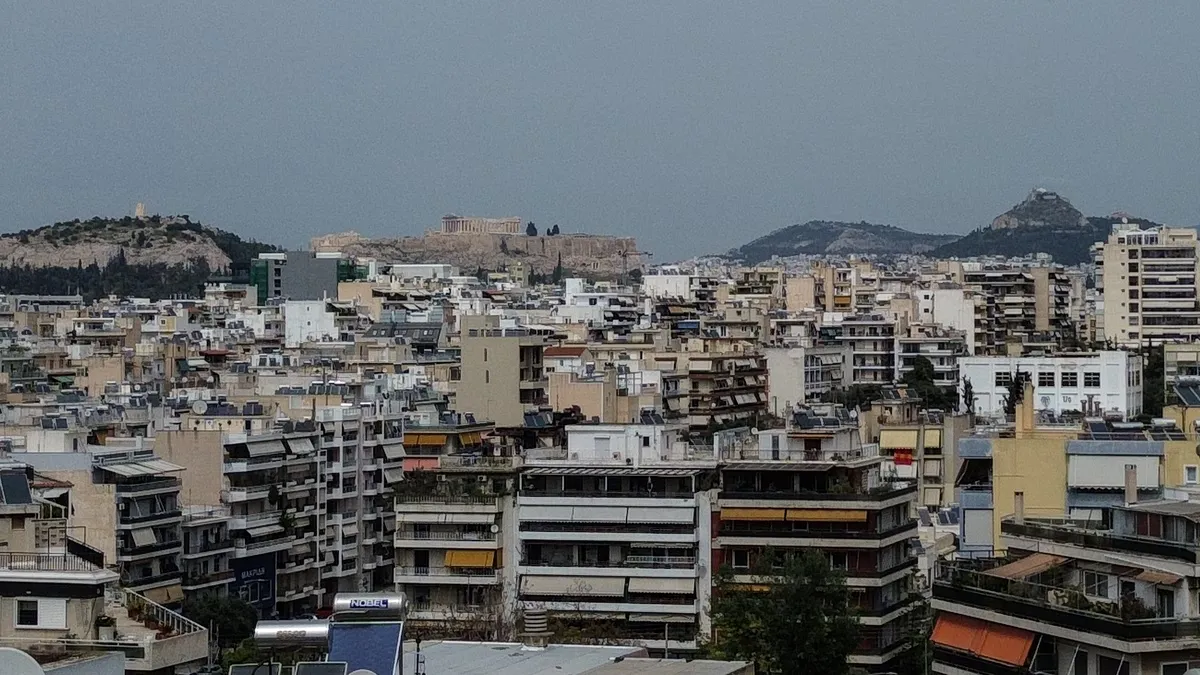
Why is the Bank of Greece ruling out a real estate bubble?
The Bank of Greece maintains that the current upward trajectory in the Greek real estate market is a structural phenomenon rather than a temporary, speculative surge. Giorgos Chondrogiannis, Director of Analysis and Studies at the Bank of Greece, emphasized during an EU event on Greek economic attractiveness that the rise in property values is grounded in fundamental economic realities.
A key metric used to debunk the bubble theory is the long-term comparison with the pre-crisis era. Chondrogiannis noted that the increase in property prices relative to 2009 levels has not surpassed 17%. This relatively moderate growth, when viewed over a decade and a half, suggests that the market is not experiencing the rapid, unsustainable inflation typically associated with asset bubbles.
Furthermore, the Bank's research indicates that since 2017, there has been a persistent and intense upward shift in the long-term trend of housing prices. This is not viewed as a fleeting spike but as a permanent repositioning of the market caused by deep-seated changes in the Greek economy.
Analyzing the 17% growth threshold
By comparing current prices to the 2009 baseline, the Bank of Greece provides a stabilizing perspective. While recent annual increases might seem high to individual buyers, the cumulative growth since the peak of the financial crisis remains controlled. This prevents the market from entering a cycle of hyper-inflation that would inevitably lead to a crash.
What are the primary drivers of rising property prices?
The rise in housing costs is attributed to several intersecting structural factors that affect supply, demand, and financing. According to the Bank of Greece, the transition in the market is driven by a combination of increased costs and improved economic stability.
The main factors identified by Chondrogiannis include:
- Increased construction costs: The rising expense of materials and labor has naturally pushed the floor of property pricing higher.
- Limited construction activity: A scarcity of new building projects has constrained the supply of available housing, creating upward pressure on prices.
- Improved credit and financial conditions: Better access to financing and a more stable banking environment have bolstered purchasing power.
- Economic recovery: The broader resurgence of the Greek economy has increased overall demand and confidence in long-term investments.
These elements work in tandem to create a market where supply is tight and demand is supported by a more robust macroeconomic environment than was seen in the previous decade.
How does the Golden Visa program influence market geography?
The Golden Visa program, which provides five-year residency permits to non-EU investors, has significantly shaped the distribution of real estate transactions across Greece. Originally launched in 2013 during the debt crisis to attract foreign capital, the program's investment thresholds have undergone several major reforms that have redirected investor interest.
Initially, with a minimum investment requirement of €250,000—one of the lowest in the European Union—investments were heavily concentrated in high-demand areas such as Athens and coastal regions. However, legislative changes have altered this landscape:
- 2022 Reform: Introduced a €500,000 threshold in specific selected areas.
- 2024 Reform: Further increased thresholds to €800,000 in certain zones.
These changes have not eliminated demand but have instead caused a geographic shift. In areas where the investment threshold was raised, the demand directly linked to the Golden Visa threshold slowed down, which in turn moderated the pace of price increases. Conversely, a new concentration of transactions emerged in regions where the lower €250,000 threshold remained applicable.
The redistribution of investor capital
The Bank of Greece research highlights that investors are highly sensitive to these thresholds. When the cost of entry increases in premium locations, the capital does not disappear; it migrates. This migration helps prevent extreme overheating in the most expensive zones while providing liquidity to secondary markets that were previously less prominent in the foreign investment sector.
Is there any evidence of market overvaluation?
While the Bank of Greece rejects the notion of a bubble, its research does suggest limited evidence of overvaluation in certain segments. The study indicates that the actual increase in housing prices in some areas is slightly lower than what would be expected based solely on fundamental market drivers.
The Bank suggests that evaluating potential imbalances requires looking at long-term trend shifts rather than relying on fixed historical benchmarks. A static reference point may fail to capture how much the market's underlying structure has evolved. Therefore, while some specific pockets might show signs of being slightly overpriced, the market as a whole remains anchored by economic fundamentals.
FAQ: Greek Real Estate Market
Is there a housing bubble in Greece right now?
No, according to the Bank of Greece, there is no evidence of a real estate bubble. The current price increases are considered structural changes driven by rising construction costs and economic recovery, with total growth since 2009 remaining below 17%.
How has the Golden Visa program changed property demand?
The Golden Visa program has shifted the geography of real estate investment. As thresholds increased from €250,000 to €800,000 in certain areas, investors moved their capital toward regions where the lower investment requirements still apply, moderating price growth in high-threshold zones.
What is driving the increase in Greek property prices?
The price increases are driven by increased construction costs, limited new building activity, improved access to credit, and the general recovery of the Greek economy. These factors collectively influence the supply and demand dynamics of the housing market.
Why are property prices rising despite higher investment thresholds?
Higher thresholds in the Golden Visa program have slowed price growth in specific premium areas by limiting demand at those price points. However, this demand often migrates to other regions where the entry cost remains lower, maintaining overall investment activity.
Are Greek house prices significantly higher than in 2009?
While prices have risen, the Bank of Greece notes that the increase compared to 2009 levels has not exceeded 17%. This suggests a controlled growth pattern rather than the rapid, unsustainable inflation seen in speculative bubbles.
Key takeaways
- The Bank of Greece confirms no real estate bubble exists, citing a maximum 17% growth since 2009.
- Price increases are driven by structural factors like rising construction costs and limited supply.
- Golden Visa threshold increases have caused investors to shift from premium zones to lower-cost regions.
- Improved credit conditions and economic recovery are supporting long-term housing price trends.
The future of the Greek property landscape
The Greek real estate market appears to be transitioning into a more mature phase characterized by structural stability rather than speculative volatility. The interplay between legislative changes, such as the Golden Visa reforms, and macroeconomic factors like construction costs is creating a more geographically diverse market. While specific areas may face localized overvaluation, the broader trend remains supported by a recovering economy and improved financial conditions. For investors and residents alike, the focus is shifting from rapid capital appreciation to a market defined by fundamental economic shifts and evolving regulatory landscapes.