Why is protesting so deeply embedded in French culture?
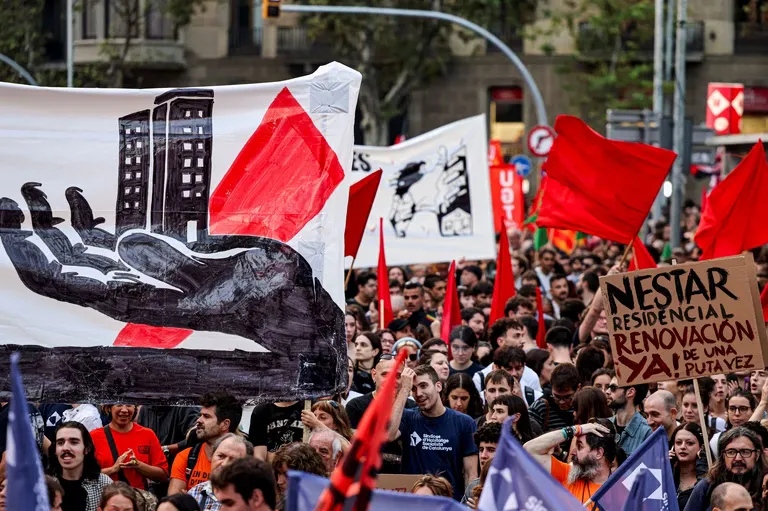
Protesting in France is not merely a reaction to specific laws but is a fundamental component of the nation's social fabric. This tradition finds its earliest roots in medieval practices known as "charivari," where local communities would publicly mock individuals accused of moral transgressions by singing derisive songs and banging pots and pans outside their homes. Over centuries, these communal rituals evolved from social shaming into organized political tools used to target unpopular officials and policymakers.
Modern French identity is inextricably linked to this history of defiance. Activist Alexis Pouillard notes that the French tendency to protest is a direct legacy of monumental historical shifts, including the French Revolution and the 1871 Paris Commune. For many citizens, the streets serve as a continuous forum for democratic engagement. As Pouillard suggests, in France, people protest whenever they experience collective sorrow or anger, viewing the act as a legitimate way to signal dissatisfaction with government direction.
The historical evolution of dissent
The transition from spontaneous communal outbursts to structured political movements has defined the French democratic model. Unlike systems that rely almost exclusively on periodic elections, the French model acknowledges that the vote is not the sole instrument of popular will. This perspective views street demonstrations as a vital check on executive power, ensuring that the government remains responsive to the immediate concerns of the populace between election cycles.
What are the primary drivers of recent civil unrest?
Economic pressures, particularly the rising cost of living, act as a primary catalyst for large-scale mobilization in France. While inflation rates in France have historically been lower than those of its neighbors—for instance, standing at 5.5% in October 2023 compared to 10% in Germany and 8.9% in Italy—the perceived impact on daily life remains a potent mobilizer. In October 2026, protests transitioned from specific student grievances regarding education funding into a nationwide movement against economic instability.
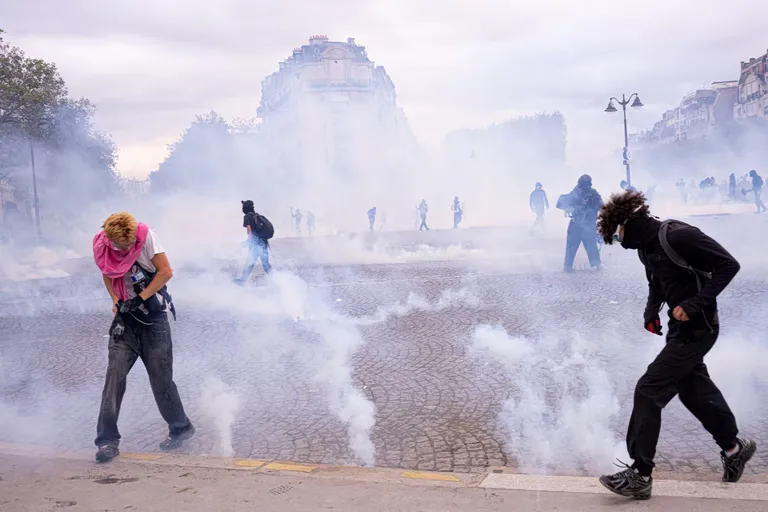
The intersection of different social groups has recently strengthened the impact of these movements. During the weekend of October 17, 2026, labor unions joined forces with the "gilets jaunes" (yellow vests) to demonstrate against economic hardship. This convergence of diverse interests—from students to working-class citizens—creates a broad front that is difficult for the state to ignore. The movement is often characterized by intense confrontations with law enforcement, reflecting the high stakes perceived by those participating.
Comparing economic responses: France vs. the UK
The way different nations handle economic crises reveals much about their social contracts. In the United Kingdom, where inflation reached a 40-year high of 10.1% in October 2022, the response was largely framed through the lens of individual responsibility. Media discourse often focused on personal energy-saving tips or individual financial management. In contrast, the French approach tends to frame systemic economic issues as collective problems requiring collective political solutions, preventing the individualization of systemic failure.
How do protests influence French government policy?
Historical evidence suggests that mass mobilization in France frequently results in tangible policy shifts or political changes. The efficacy of the French protest tradition is visible in several landmark moments throughout the 20th and 21st centuries. For example, the violent police crackdown on students in May 1968 triggered a general strike and massive uprising that ultimately led to President Charles de Gaulle leaving the country. Similarly, the massive waves of strikes in 1995 successfully pressured the government to increase the minimum wage.
More recently, the "gilets jaunes" movement played a crucial role in halting President Emmanuel Macron's attempt to introduce a carbon tax that would have disproportionately affected lower-income households. These instances demonstrate that when the French public reaches a certain threshold of dissatisfaction, the resulting collective action can force the state to reconsider or abandon controversial legislative agendas. This ability to influence policy through direct action is a cornerstone of the French political landscape.
The tension between democracy and executive power
A significant point of friction in French politics is the use of constitutional tools to bypass legislative debate. In 2023, the government under Prime Minister Élisabeth Borne utilized Article 49:3 of the French Constitution to pass unpopular pension reforms—increasing the retirement age from 62 to 64—without a formal vote in the National Assembly. Such moves are often viewed by the public as undemocratic, serving as a primary trigger for the massive street demonstrations that follow.
What is the "radical flank effect" in social movements?
The "radical flank effect" is a sociological phenomenon where the presence of more extreme elements within a movement can actually increase the influence and legitimacy of moderate factions. Research indicates that while radical groups often face harsher criticism or state repression, they shift the "Overton Window," making the demands of moderate reformers appear more reasonable and acceptable to the government and the broader public. This dynamic helps transform fringe concerns into mainstream political priorities.
This effect is visible in various global contexts. For instance, although the "Extinction Rebellion" movement faced significant media scrutiny, its high-profile actions contributed to a massive surge in general environmental concern. Similarly, the evolution of public perception regarding Martin Luther King Jr. in the United States—moving from a 63% negative view in 1966 to a 94% positive view in 2011—illustrates how radical movements can eventually reshape the social conscience. In France, this effect helps sustain the momentum of various social causes by keeping them at the forefront of national discourse.
The cost of state repression
Despite the potential effectiveness of radical flanks, the ability of the state to respond with force remains a significant hurdle. As noted by Zeynep Tufekci in 2020, the state often possesses a much greater capacity to impose costs on protesters than the protesters can impose on the state. Heavy-handed police tactics and legal repercussions can dampen the enthusiasm of even the most dedicated activists, creating a constant struggle between the power of collective action and the authority of the state.
Key takeaways
- French protest culture is rooted in historical traditions like the medieval charivari and the French Revolution.
- Protests are viewed as a legitimate democratic tool in France, supplementing the traditional voting process.
- Economic instability and inflation remain primary drivers for large-scale social mobilization.
- The "radical flank effect" suggests that extreme movements can increase the success of moderate reformers.
- Direct action has historically forced significant policy changes, such as the 1995 minimum wage increases.
FAQ: French protests
Why do French people protest so often?
Protesting is a deeply ingrained cultural tradition in France, stemming from historical events like the French Revolution. It is viewed as a legitimate way for citizens to express dissatisfaction with government policies and to hold leaders accountable between elections, acting as a vital part of the democratic process.
Is protesting effective in France?
Yes, history shows that mass demonstrations in France can lead to significant changes. Notable examples include the 1968 uprisings that impacted the presidency, the 1995 strikes that raised the minimum wage, and the "gilets jaunes" movement which halted specific tax reforms.
How does the French approach to inflation differ from the UK?
While the UK often treats economic struggles like inflation as individual responsibilities, the French tendency is to view them as systemic issues. This leads to collective political action and street demonstrations rather than focusing solely on individual cost-saving measures or personal financial management.
What is the "radical flank effect"?
The radical flank effect occurs when the actions of more extreme members of a movement make the goals of moderate members appear more reasonable. This can increase overall support for the movement's core objectives by shifting the boundaries of what is politically acceptable.
What role do students play in French protests?
Students often act as early catalysts for broader social movements. In October 2026, for example, student protests regarding school funding and teacher shortages evolved into a much larger national movement focused on the rising cost of living for all citizens.
Conclusion
The prevalence of protests in France is not a sign of social instability, but rather a reflection of a robust, albeit often turbulent, democratic culture. By treating the streets as an extension of the political arena, French citizens ensure that their grievances are heard even when legislative channels feel closed. While the state's power to repress remains a constant challenge, the historical success of collective action continues to fuel a cycle of engagement. Ultimately, this tradition of dissent serves as a powerful mechanism for demanding social accountability and driving systemic change.