A Moment That Went Beyond the Final Whistle
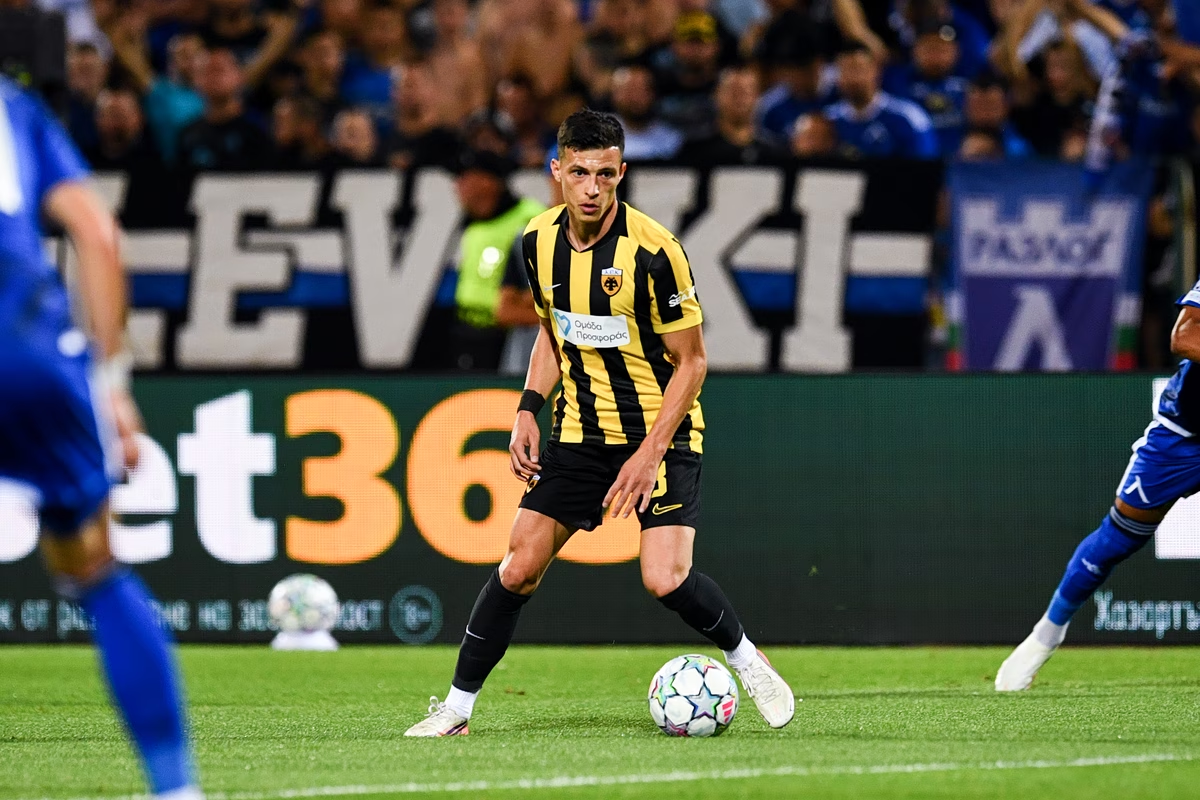
Football is often celebrated for the drama that unfolds on the pitch — the goals, the tactical battles, and the moments of individual brilliance. Yet some of the sport's most memorable scenes take place away from the action, in the quiet interactions between players and supporters. One such moment occurred recently after AEK Athens secured a victory over Iraklis, when midfielder Stavros Pilios made a gesture that touched the hearts of many who witnessed it.
Following the final whistle, Pilios approached a young fan of the club who has mobility difficulties and handed over the jersey he had worn throughout the match. It was a simple act, but one that carried significant emotional weight — both for the child who received it and for those who were present to see it happen.
Who Is Stavros Pilios?
Stavros Pilios is a professional footballer who plays for AEK Athens, one of Greece's most storied and widely supported football clubs. While his performances on the field have drawn attention from fans and analysts alike, it is moments like this one that reveal a different dimension of an athlete's character — one that extends well beyond technical ability or competitive instinct.
Players who take the time to connect with supporters, particularly those facing personal challenges, often leave a lasting impression that transcends anything achieved in a league table or a cup run. Pilios's decision to seek out this particular young fan and offer him a tangible piece of the match speaks to the kind of human awareness that many supporters hope to see from the athletes they admire.
The Significance of the Gesture
Gifting a match-worn jersey to a fan is not an uncommon practice in professional football. Players frequently toss shirts into crowds or exchange them with opponents after a game. However, the circumstances surrounding this particular handover gave it a special quality that resonated widely.
For a child living with mobility challenges, attending a live football match and watching their favorite team win is already an experience filled with meaning. To then be personally acknowledged by one of the players — and to receive that player's shirt as a keepsake — adds a layer of significance that is difficult to quantify. Such moments can shape how a young person relates to sport, to inclusion, and to the idea that they are seen and valued as a fan.
In a broader social context, gestures like this one also serve as a reminder of the responsibilities that come with visibility. Professional athletes, particularly those who compete at the top levels of domestic football, occupy a prominent place in public life. Their actions, both on and off the pitch, carry the potential to influence attitudes and set examples — especially for younger audiences who look up to them.
Fan and Community Reactions
News of Pilios's gesture spread quickly among supporters and within the Greek football community. Reactions were largely positive, with many praising the player for demonstrating empathy and thoughtfulness in a spontaneous manner. On social media, comments highlighted the warmth of the moment, with several users noting that such behavior reflects well not only on the individual player but also on the club he represents.
AEK Athens has a substantial and passionate fanbase, and moments that humanize its players tend to resonate deeply within that community. Supporters often form strong emotional bonds with the clubs they follow, and when a player reinforces those bonds through direct, meaningful interaction, it strengthens the sense of belonging that lies at the heart of football culture.
- The gesture occurred after AEK Athens defeated Iraklis in a recent competitive fixture.
- Pilios personally approached the young fan and handed over his match-worn jersey.
- The recipient was a child with physical mobility challenges who was present at the match.
- The moment attracted significant attention and praise from fans and media observers.
Sport as a Vehicle for Inclusion
At a time when conversations about accessibility and inclusion in sport are becoming increasingly prominent, individual acts of kindness from players can play a meaningful role in shaping the culture around professional football. Ensuring that fans with disabilities feel welcomed, respected, and genuinely part of the experience is an ongoing challenge for clubs, governing bodies, and stadiums across Europe and beyond.
While structural changes — such as improved stadium accessibility, dedicated seating areas, and enhanced support services — are essential for long-term progress, the attitudes and behaviors of the players themselves also matter. When a footballer takes a moment to acknowledge a young fan with a disability in such a personal and generous way, it sends a message about dignity and respect that goes well beyond the boundaries of a single match.
Small gestures can carry enormous meaning, particularly for those who may not always feel fully included in the world of professional sport.
Looking Ahead
As AEK Athens continues its campaign in the Greek football calendar, the performances of players like Stavros Pilios will naturally remain under scrutiny from a sporting perspective. Yet it is worth acknowledging that what a footballer contributes to the wider community — through moments of generosity, empathy, and human connection — represents a dimension of their impact that statistics and match reports rarely capture.
The image of Pilios handing his jersey to that young fan will likely remain with those who witnessed it long after the result of the match against Iraklis has faded from memory. In that sense, the gesture achieved something that goals and assists cannot always manage: it created a lasting, personal memory for a child, and reminded those watching that sport, at its best, is about far more than competition.
Whether or not Pilios intended the moment to draw wider attention, it has resonated as an example of the kind of compassion that fans across all walks of life can appreciate — regardless of which team they support.