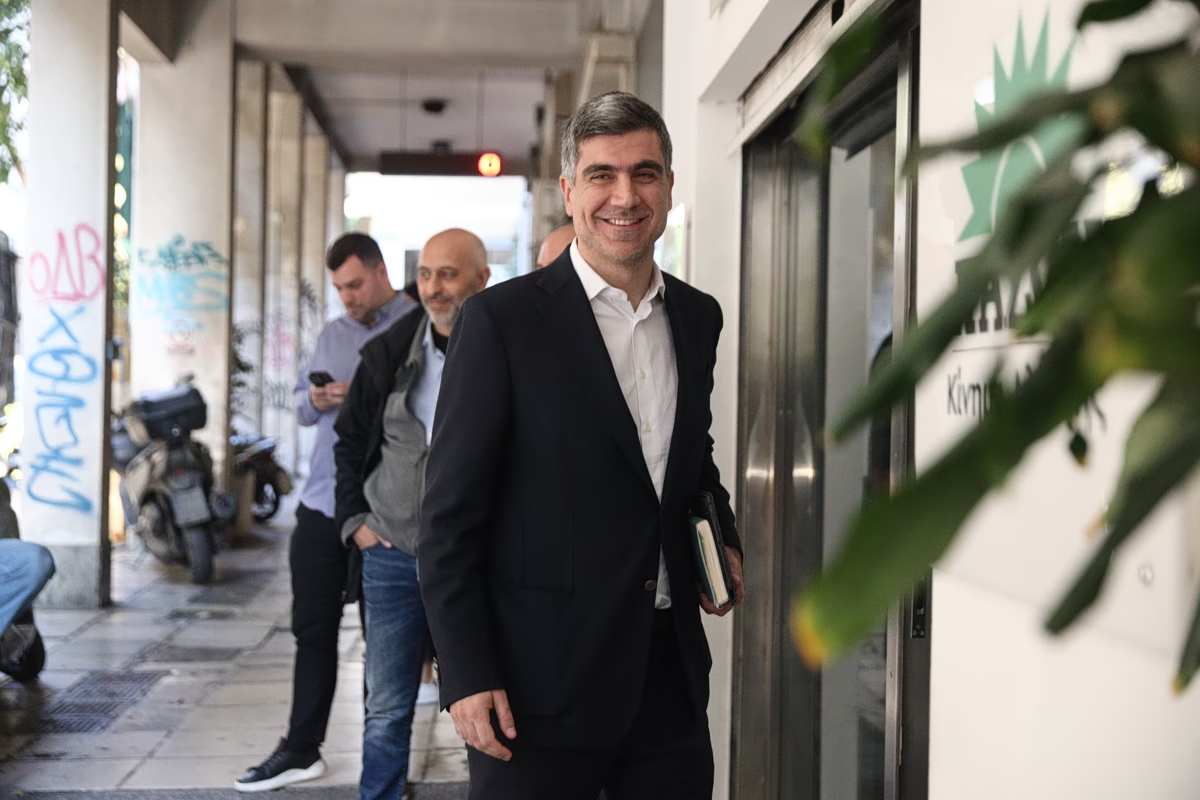
PASOK Sets Its Sights on Thessaloniki as a Key Political Battleground
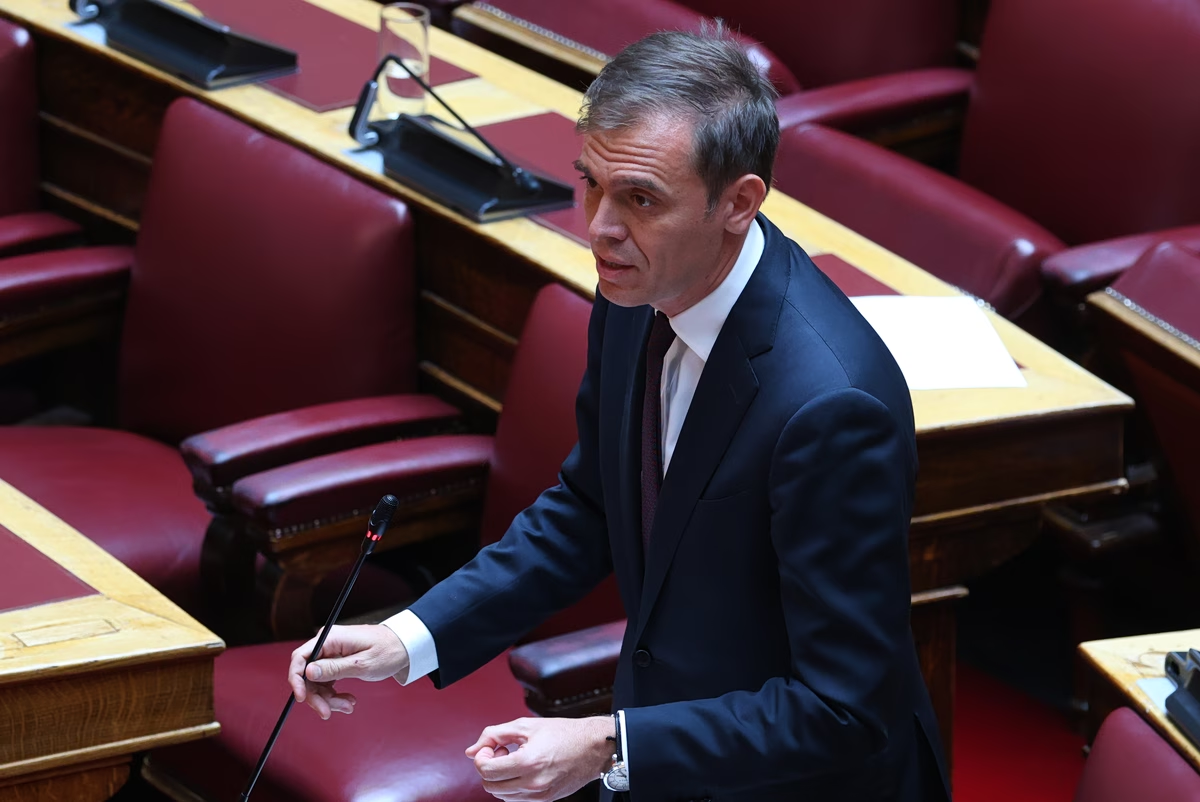
A prominent member of PASOK's Political Council has characterized this year's Thessaloniki International Trade Fair (TIF) as an event that carries unmistakable pre-election significance. According to the official, the party intends to use the high-profile platform to showcase what it describes as its programmatic superiority, with a particular focus on proposals related to reducing indirect taxation for Greek households and businesses.
The Thessaloniki International Trade Fair, traditionally one of Greece's most prominent annual economic and political events, has long served as a stage where political parties outline their visions for the country's future. This year, however, the political stakes appear to be considerably higher, with multiple parties treating the fair as an unofficial launchpad for electoral positioning ahead of a potential national vote.
Communicating Policy to a Broader Audience
The PASOK council member stressed that the party's primary objective at this year's fair is to reach as wide an audience as possible, ensuring that its programmatic positions are clearly communicated to citizens across the political spectrum. The emphasis, he noted, will be placed not merely on political messaging but on presenting concrete and substantive policy proposals that address the everyday economic concerns of Greek society.
Central among these proposals is the reduction of indirect taxation — a policy area that has drawn growing attention amid ongoing concerns about the cost of living in Greece. Indirect taxes, which include value-added tax (VAT) and various levies on goods and services, have been widely criticized for placing a disproportionate burden on lower- and middle-income households. PASOK appears to be positioning this issue as a flagship element of its broader economic platform.
The party's goal is to emerge as the political force capable of genuinely competing for the governance of the country, presenting voters with a credible and comprehensive programmatic alternative.
Indirect Taxation: A Central Policy Debate
The question of indirect versus direct taxation has been a recurring theme in Greek economic policy discussions for well over a decade. Critics of the current tax structure argue that Greece's reliance on indirect taxes — particularly VAT, which stands among the highest in the European Union — places an undue strain on consumers, especially those with modest incomes who spend a larger proportion of their earnings on taxable goods and services.
Proponents of reducing indirect taxes contend that such a move would not only alleviate financial pressure on households but could also stimulate consumer spending and provide a modest boost to economic activity. The debate, however, is not without complexity. Opponents caution that cutting indirect tax revenues without a corresponding increase in direct taxation or significant improvements in tax collection efficiency could create fiscal gaps that might ultimately prove difficult to manage.
PASOK's decision to place indirect tax reduction at the center of its TIF agenda suggests the party believes this issue resonates strongly with voters and represents a point of clear differentiation from its political rivals.
Positioning for Governance
Beyond the specific policy details, the rhetoric employed by PASOK's Political Council member signals a broader strategic ambition. By framing the party's participation in the Thessaloniki fair in terms of demonstrating governance readiness, PASOK appears to be signaling that it views itself not merely as an opposition force but as a credible contender for national leadership.
This positioning reflects an effort to consolidate support among voters who may be dissatisfied with the current government but have yet to commit to an alternative. The Thessaloniki Trade Fair, with its extensive media coverage and national visibility, offers a valuable opportunity to make precisely that case to a broad and diverse audience.
The Broader Political Landscape
Greece's political environment heading into the TIF season is characterized by a degree of fluidity, with polling suggesting that while the governing New Democracy party retains a lead, opposition parties are actively competing for the support of undecided voters. PASOK, which has been working to rebuild its national profile following years of decline, has in recent electoral cycles made notable progress in recapturing some of its historical voter base.
The party's performance in the 2023 national elections, where it managed to consolidate its position as a significant opposition force, has provided momentum that its leadership is clearly hoping to build upon. The Thessaloniki International Trade Fair represents one of the most visible opportunities before any future election to reinforce that trajectory and present a polished, policy-driven image to the electorate.
What to Expect at This Year's Fair
In practical terms, PASOK's presence at the Thessaloniki Trade Fair is expected to include a series of policy presentations, panel discussions, and public engagements designed to highlight the party's programmatic agenda. Indirect tax reform is expected to feature prominently, but party officials have indicated that a range of economic and social policy issues will also be addressed, including proposals related to wages, public investment, and healthcare.
The fair's traditional format — which sees the prime minister deliver a keynote address outlining government policy for the coming year — also provides opposition parties with a natural moment to respond and contrast their own visions with those of the ruling administration. PASOK is expected to use that window strategically, seeking to maximize media attention and voter engagement during what is shaping up to be one of the more politically charged editions of the event in recent memory.
As Greece navigates ongoing economic pressures and a competitive electoral landscape, the Thessaloniki International Trade Fair once again finds itself at the intersection of economics and politics — a platform where policy ideas meet electoral ambition, and where parties across the spectrum will be working hard to define the terms of the debate that could ultimately shape the country's next government.