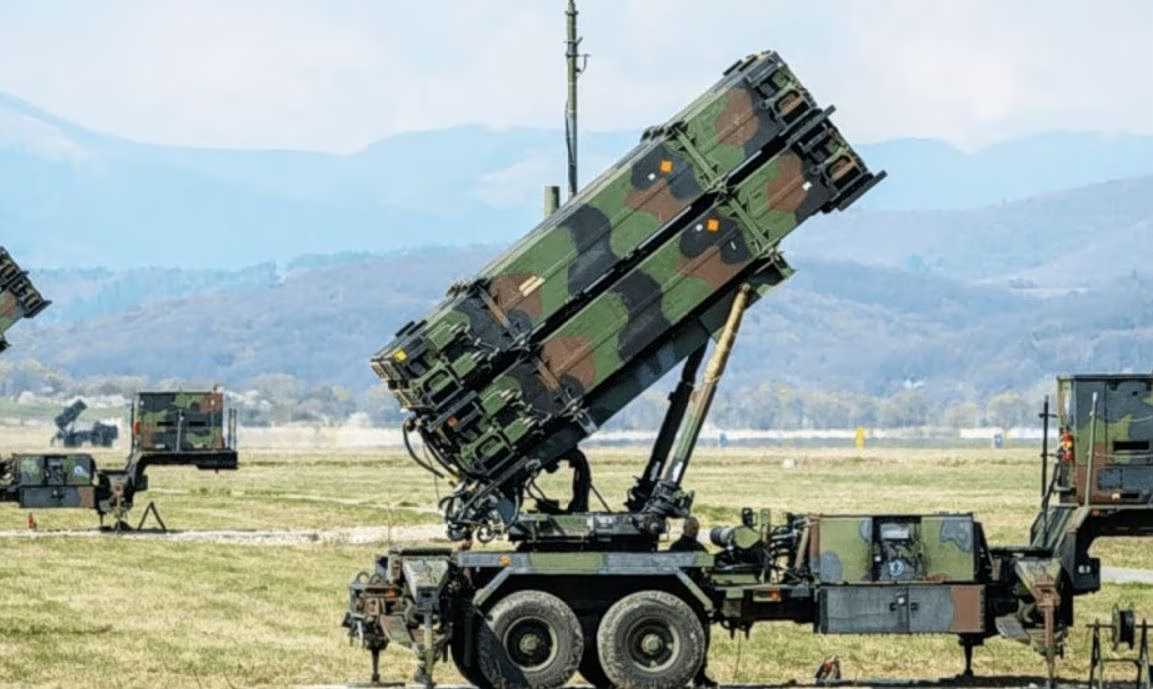
Patriot Air Defense Systems Depart Karpathos in Early Morning Transfer
Greek military authorities have initiated the relocation of Patriot missile defense systems from the Aegean island of Karpathos, with a tank landing ship departing the island's port during the early morning hours. The systems are being transported westward to the Souda Bay base on the island of Crete, one of Greece's most strategically significant military installations.
The movement of the advanced air defense equipment marks a notable shift in the deployment posture of Greek military assets in the southeastern Aegean region. The decision to redeploy the Patriot batteries comes amid ongoing strategic assessments by Greek defense planners regarding the optimal placement of high-value air defense assets across the country's extensive island territories.
Strategic Significance of Souda Bay as a Destination
Souda Bay, located on the northwestern coast of Crete, is widely regarded as one of the most important naval facilities in the Eastern Mediterranean. The base hosts both Greek and NATO allied forces and has long served as a critical hub for military logistics and operations in the broader region. Transferring the Patriot systems to this location would consolidate advanced defensive capabilities at an already well-protected and well-equipped military complex.
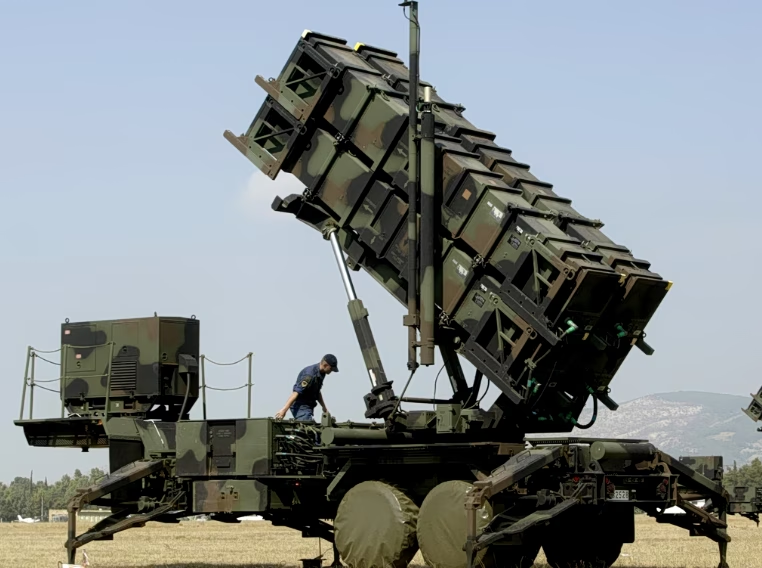
The Patriot missile defense system is a long-range, all-altitude, all-weather air defense solution capable of countering tactical ballistic missiles, cruise missiles, and advanced aircraft. Its presence at any given location significantly enhances the air defense envelope for surrounding areas, making the choice of deployment site a matter of considerable strategic weight.
Karpathos: A Forward Position in the Southeastern Aegean
Karpathos is a Greek island situated between Rhodes and Crete in the southeastern Aegean Sea. Due to its geographic position, it has historically held a degree of strategic relevance, lying relatively close to areas of regional tension and maritime activity. The stationing of Patriot systems on the island had positioned Greece's air defense capabilities at a forward point in this sensitive corridor.
The rationale behind the original deployment to Karpathos, as well as the current decision to withdraw and relocate the systems, has not been officially elaborated upon in detail by the Greek Ministry of National Defense. However, such decisions are typically driven by a combination of operational assessments, maintenance cycles, threat evaluations, and broader defense planning priorities.
Logistical Operation Underway
The use of a tank landing ship — a vessel specifically designed for the transport of heavy military equipment — underscores the scale and complexity of the logistical operation involved in moving Patriot battery components. These systems consist of multiple interconnected elements, including radar units, engagement control stations, power generation equipment, and the missile launching stations themselves, all of which require careful handling and secure transport.
Early morning departures are commonly chosen for sensitive military transfers to minimize public visibility and reduce potential disruptions. The port of Karpathos served as the embarkation point, with the vessel expected to complete its journey to Souda Bay following the sea route through the southern Aegean and around the eastern tip of Crete.
Context Within Greek Defense Policy
Greece has been actively modernizing and repositioning its military capabilities in recent years against a backdrop of persistent regional tensions, particularly with neighboring Turkey. The two NATO allies have maintained a complex and at times contentious relationship, with disputes over airspace, maritime boundaries, and island sovereignty continuing to shape Greek defense priorities.
The Patriot system has been a cornerstone of Greece's layered air defense architecture. Greece operates the PAC-2 variant of the Patriot system, which provides substantial capability against ballistic and aerodynamic threats. The maintenance and strategic positioning of these batteries are closely watched developments in regional security circles.
Beyond bilateral dynamics with Turkey, Greece's defense posture is also influenced by its commitments to NATO collective defense arrangements and the evolving security landscape across the broader Eastern Mediterranean and Middle East regions. Souda Bay, as a NATO-affiliated installation with deep logistical infrastructure, represents a natural consolidation point for assets that may need to be rapidly deployed or sustained over extended periods.
No Official Statement on Permanent Redeployment
As of the time of the transfer, Greek defense authorities had not issued a formal statement clarifying whether the relocation of the Patriot systems from Karpathos to Souda Bay represents a permanent redeployment or a temporary measure tied to maintenance, training, or a specific operational requirement. Military asset movements of this nature are sometimes rotational, with equipment returning to forward positions after scheduled servicing or crew rotations.
Observers and defense analysts will likely follow subsequent developments closely to determine the longer-term implications of the move for Greece's air defense coverage in the southeastern Aegean. The absence of the Patriot battery on Karpathos, even temporarily, alters the defensive geometry of that part of the Aegean, potentially affecting the coverage provided to nearby islands and sea lanes.
Broader Implications for Regional Security
The movement of advanced air defense assets in the Aegean is rarely a matter of purely domestic logistics. Regional neighbors, including Turkey, routinely monitor such developments as indicators of Greek military posture and intent. Similarly, NATO partners observe the disposition of allied air defense assets as part of their collective situational awareness.
Greece's decision-making regarding the placement of its Patriot systems reflects the delicate balance that Athens must maintain between forward deterrence and the practical requirements of maintaining a geographically dispersed and operationally sustainable military force. With a coastline and island chain spanning thousands of kilometers, Greece faces unique challenges in achieving comprehensive coverage with a finite inventory of high-end systems.
The transfer from Karpathos to Souda Bay is expected to be completed in the coming days, depending on sea conditions and logistical coordination between the relevant military branches. Further official communication from Greek defense authorities may provide additional clarity on the purpose and duration of the redeployment as the operation concludes.