A Historic Club Facing an Uncertain Future
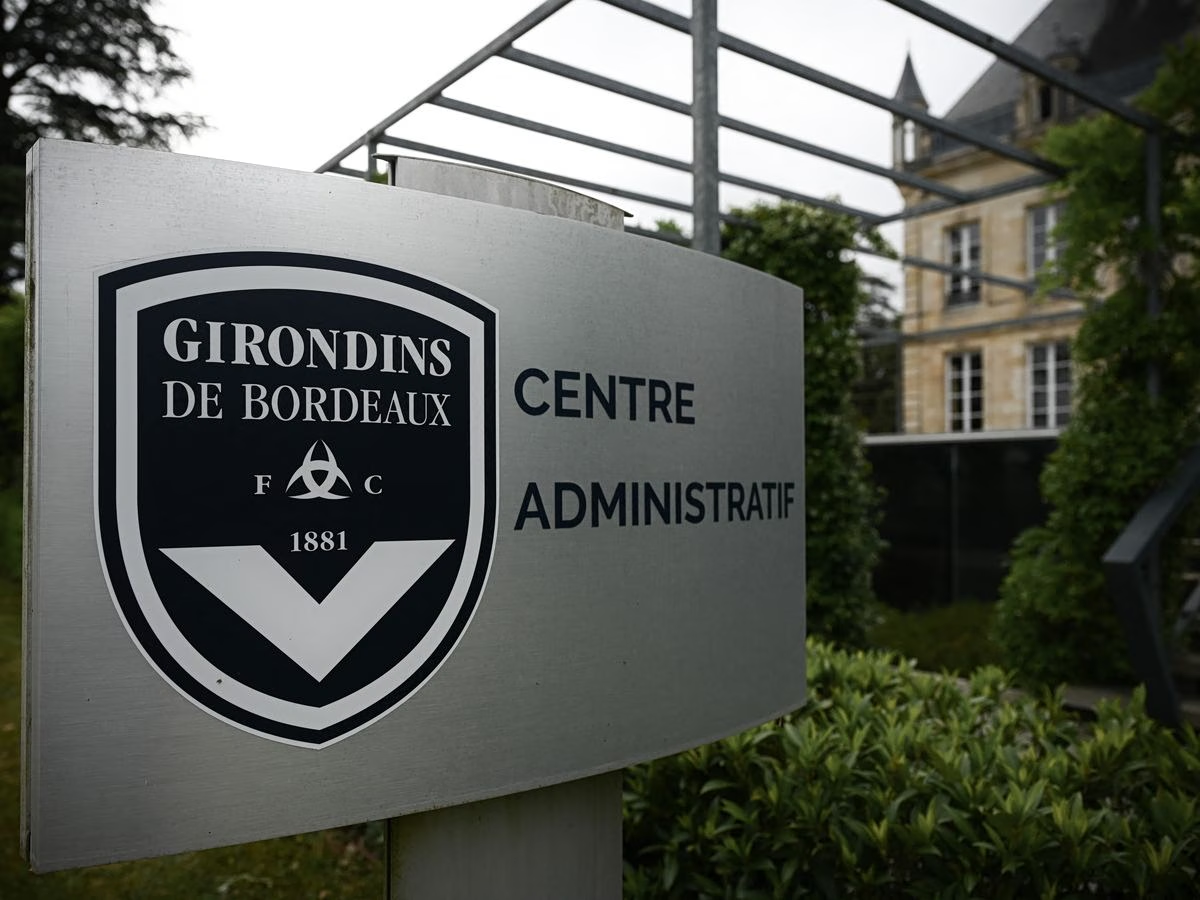
Girondins de Bordeaux, one of France's most storied football clubs, finds itself at what may be its darkest hour. Following its exclusion from national league competitions, the club is now confronting the prospect of full judicial liquidation — a legal process that could ultimately mean the permanent dissolution of an institution with well over a century of footballing history behind it.
The situation has sent shockwaves through the French football community, provoking raw emotions among supporters, former players, and club officials alike. Scenes of tears and anger have characterized the reaction from those who have dedicated years — in some cases, entire lifetimes — to the Bordeaux cause.
How Bordeaux Arrived at This Crisis Point
The club's descent into financial and administrative chaos did not happen overnight. Bordeaux has been grappling with severe economic instability for several years, a period marked by ownership disputes, mismanagement, and an inability to meet basic financial obligations. The club was previously relegated from Ligue 1, France's top football division, and its subsequent struggles in lower divisions only compounded existing difficulties.
Regulatory authorities within French football have repeatedly flagged the club's precarious financial situation. Failure to comply with league financial requirements ultimately led to the decision to bar the club from participating in nationally organized competitions. This exclusion effectively severed Bordeaux's connection to the formal French football pyramid — a devastating blow for a club that has won six French league titles and one UEFA Cup throughout its history.
The Legal Dimension: Judicial Liquidation
Beyond the sporting ban, the legal dimension of Bordeaux's crisis carries equally grave consequences. Judicial liquidation, when ordered by a court, involves the forced winding-up of a company's assets to repay creditors. In the context of a football club, this process can spell permanent closure, with the club's name, badge, and history potentially consigned to memory alone.
French courts have been monitoring the club's financial situation, and proceedings are ongoing. Legal experts note that while judicial liquidation represents the most severe outcome, there remain possibilities for last-minute interventions — whether through the emergence of a credible investor, a debt restructuring agreement, or other legal mechanisms designed to allow the club to continue operating in some form.
However, with each passing week, those windows of opportunity narrow considerably. The clock is ticking for Bordeaux, and those closest to the club are acutely aware of the stakes involved.
Emotional Fallout: Supporters and Staff Left in Limbo
For the thousands of supporters who have followed Girondins de Bordeaux through decades of triumph and disappointment, the current situation is almost unimaginable. The club represents far more than a football team to the people of the Bordeaux region in southwestern France — it is a source of communal identity, local pride, and shared memory.
Supporters' groups have been vocal in expressing both their grief and their frustration. Many fans have directed their anger at those they hold responsible for the club's mismanagement, while others have channeled their energy into campaigns aimed at saving the institution by attracting new investment or rallying local authorities to intervene.
Players and staff members, meanwhile, face profound personal uncertainty. Many have contracts that may become void depending on the outcome of legal proceedings, and finding new employment at short notice presents serious challenges, particularly for those who had committed to the club during a period when its future seemed, however tentatively, more stable.
The Wider Implications for French Football
The Bordeaux crisis raises broader questions about the governance and financial sustainability of professional football in France. The club is not the first high-profile French side to encounter severe financial difficulties in recent years, and concerns about the regulatory frameworks designed to prevent such collapses have grown louder as a result.
Critics argue that the mechanisms intended to protect clubs from financial mismanagement have repeatedly proven insufficient, allowing problems to fester until they reach a point of no return. Supporters of tougher oversight contend that more rigorous financial monitoring and earlier intervention could prevent future cases from reaching the catastrophic stage now witnessed at Bordeaux.
French football's governing bodies have indicated that the Bordeaux situation will be examined carefully, with a view to understanding what systemic lessons can be drawn. Whether meaningful reforms emerge from this review remains to be seen, but the pressure from within the game to act is considerable.
Precedents and Possible Outcomes
French football has seen clubs face dissolution before, though few at the level and with the historical significance of Bordeaux. Some clubs have re-emerged from administration or liquidation in reformed versions, beginning again at the lowest levels of the football pyramid and working their way back up over years or decades. Others have simply ceased to exist.
The outcome for Bordeaux will depend on a complex interplay of legal decisions, financial negotiations, and the willingness of potential investors to commit to what would be a significant and uncertain turnaround project. Local politicians have also been drawn into the debate, with some calling for regional or municipal involvement in any rescue effort, though the practicalities and legality of such intervention remain subjects of discussion.
For now, the club and its supporters are left to wait, navigating a period of profound anxiety and sorrow. Every court date, every boardroom meeting, and every public statement carries enormous weight for those whose hopes rest on Bordeaux's survival.
A Legacy at Stake
Girondins de Bordeaux has produced some of the finest players ever to represent French football. The club's history includes memorable European campaigns and domestic glories that have left a lasting mark on the sport in France. To see that legacy threatened by financial collapse is a painful reminder of how quickly fortune can turn in the modern game.
Whether Bordeaux will find a way to survive — in whatever form — or whether it will become a cautionary tale about the vulnerabilities of professional football clubs, remains an open question. What is beyond doubt is that the coming weeks will be decisive in determining the fate of one of France's most historic sporting institutions. The tears and the anger evident among supporters reflect not merely the loss of a club, but the potential erasure of a living piece of French cultural and sporting heritage.