What triggered the crisis at the Gravas school complex?
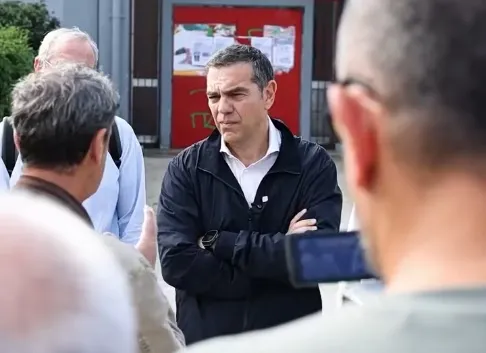
The crisis at the Gravas school complex was precipitated by reports of a gas odor, which necessitated immediate safety concerns for students and staff. Alexis Tsipras visited the site on Friday, October 24, 2026, to meet with parents and educators regarding the disruption to learning and the physical safety of the facilities. The incident has prompted a call for intensified inspections to identify the exact cause of the gas smell and to ensure that the environment is safe for the return of students.
The Technical Chamber of Greece (TEE) has issued a report that serves as a critical baseline for understanding the technical failures present at the site. Tsipras emphasized that the findings of this report should not be viewed as an isolated incident but rather as a "wake-up call" for the entire country. He argued that the technical deficiencies identified at Gravas are indicative of broader structural issues within the Greek educational system.
The role of the Technical Chamber of Greece
According to the statements made during the visit, the TEE report provides the necessary technical evidence to demand a nationwide audit. Tsipras suggested that the findings necessitate a comprehensive check of all school complexes across Greece to prevent similar occurrences. The goal is to move beyond reactive measures and toward a proactive maintenance strategy that ensures the structural integrity of all public educational buildings.
Why does Tsipras claim there are "thousands of Gravas" across Greece?
Alexis Tsipras argued that the situation in Gravas is not an anomaly but a representative example of a widespread national problem. While acknowledging that the scale of the Gravas incident might be unique, he maintained that the underlying issues—neglected infrastructure and safety risks—are present in "thousands" of other locations throughout the country. He characterized these locations as "thousands of Gravas," implying that many schools suffer from similar levels of decay or unaddressed maintenance needs.
This comparison aims to shift the narrative from a local municipal issue to a national policy failure. By framing the crisis as a systemic pattern, Tsipras is highlighting what he perceives as a chronic lack of investment in the resilience of public infrastructure. He argued that the average citizen should not feel that the state is an adversary or an absent entity, but rather a supportive presence that ensures the safety of essential public services.
How has the Recovery and Resilience Facility been utilized?
A central pillar of Tsipras's criticism involves the management of the €36 billion Recovery and Resilience Facility. He alleged that the Mitsotakis government has failed to leverage these significant funds to modernize and strengthen the nation's infrastructure, specifically targeting the needs of the school system. Instead of focusing on long-term resilience and the modernization of educational facilities, Tsipras claimed that a significant portion of these funds was directed toward "close associates" and through direct assignments.
The crux of the argument is that the opportunity provided by the EU-backed recovery funds was squandered. Rather than addressing the tangible needs of the population—such as safe schools and robust public works—the administration is accused of prioritizing political patronage. This alleged misuse of funds represents a missed opportunity to build the "resilience" that the fund was specifically designed to foster within the Greek economy and its social infrastructure.
Who bears the responsibility for the current school safety issues?
The question of accountability remains a point of intense political contention, with Tsipras distributing responsibility between local and national authorities. He noted that while both the municipal government and the central government hold some degree of responsibility, their approaches to the crisis differ significantly. He observed that the municipal authorities are actively attempting to take responsibility and take action to resolve the immediate issues at the school.
In contrast, Tsipras accused the central government of "hiding" and avoiding its duties. He criticized the administration for "passing the ball" to whoever is most convenient rather than facing the systemic failures head-on. This distinction is intended to paint the central government as an entity that avoids accountability for the broader lack of investment, while local authorities struggle to manage the consequences of that neglect.
Comparing local and national responses
The distinction between the municipal and national response is vital to the political argument being made. By praising the municipal authority's attempt to act, Tsipras isolates the central government as the primary obstacle to systemic change. He suggests that local efforts are merely band-aids on a wound caused by national-level fiscal mismanagement and a lack of strategic oversight regarding the €36 billion recovery budget.
Frequently asked questions
What is the main cause of the school closure in Gravas?
The immediate cause for the concern at the Gravas school complex was the detection of a gas odor. This prompted calls for urgent investigations and inspections to ensure the safety of students and staff before they are permitted to return to the classrooms.
What did the Technical Chamber of Greece report?
The Technical Chamber of Greece (TEE) issued a report detailing the technical issues at the school. Alexis Tsipras has urged that this report be used as a catalyst to inspect all school buildings across Greece to ensure they meet safety and resilience standards.
How much money was allocated in the Recovery and Resilience Facility?
The Recovery and Resilience Facility consists of €36 billion. Tsipras has criticized the government for failing to use these funds for infrastructure modernization, alleging instead that they were used for direct assignments to political associates.
Is the Gravas incident a national issue?
Yes, according to Alexis Tsipras, the Gravas crisis is a symptom of a much larger problem. He stated that there are "thousands of Gravas" across Greece, referring to the widespread state of neglect in school infrastructure nationwide.
Who is being held accountable for the infrastructure neglect?
Tsipras has placed responsibility on both municipal and national levels. However, he specifically accused the central government of hiding from its responsibilities, whereas he noted that the municipal authorities are attempting to take action.
Key takeaways
- Alexis Tsipras claims the Gravas school crisis reflects a nationwide pattern of infrastructure neglect.
- The €36 billion Recovery and Resilience Facility is allegedly being misused for political patronage.
- A Technical Chamber of Greece report has called for urgent inspections of school facilities.
- Tsipras accuses the central government of avoiding accountability for school safety issues.
Conclusion
The crisis at the Gravas school complex has evolved from a local safety concern into a significant national debate regarding infrastructure and political accountability. While the immediate priority remains the safe return of students following the gas odor report, the broader implications of Alexis Tsipras's criticisms cannot be ignored. The allegations regarding the mismanagement of the €36 billion Recovery and Resilience Facility suggest a deep-seated tension between the need for modernization and the realities of political patronage. Ultimately, the situation demands a transparent investigation into both the technical failures of the school buildings and the fiscal management of the nation's recovery funds.