Why is youth social unrest accelerating across Europe?
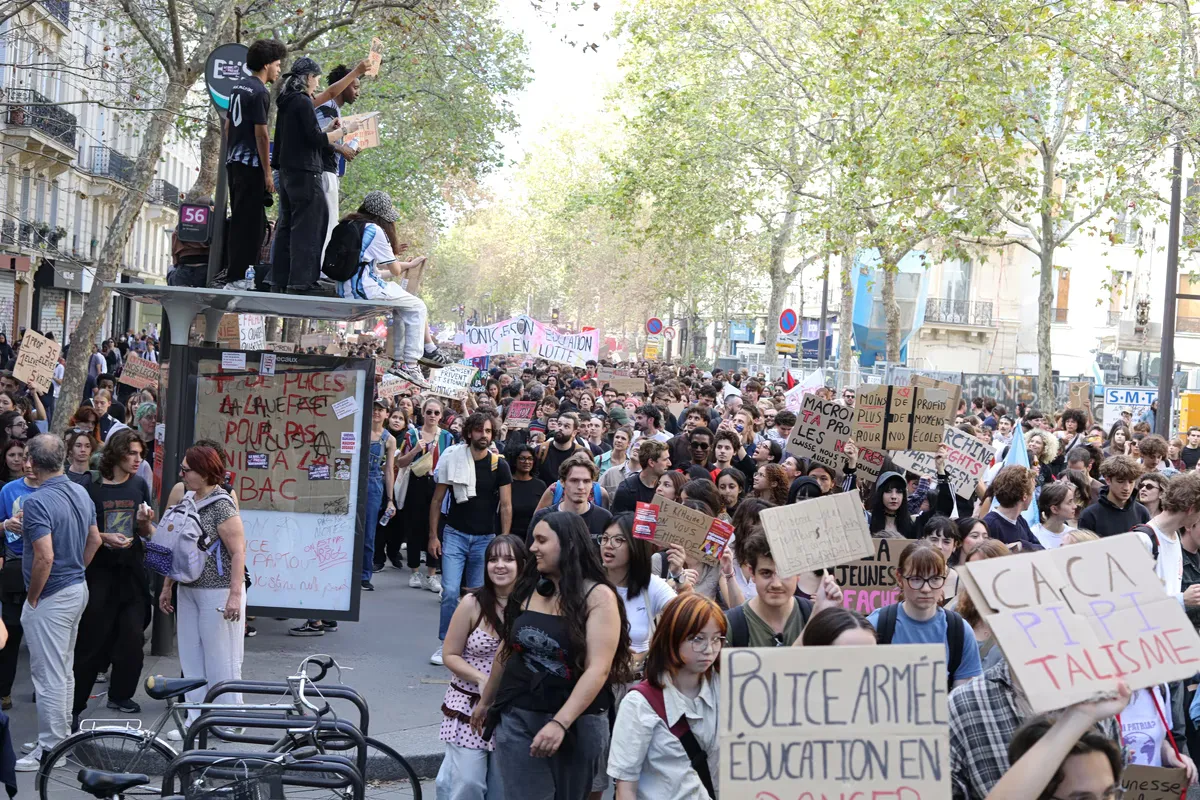
The acceleration of youth social unrest is not a spontaneous phenomenon but a response to a widening gap between societal promises and lived realities. For many young people, the traditional milestones of adulthood—stable education, meaningful employment, and environmental security—are becoming increasingly unattainable. This frustration is manifesting in student unions in Athens, street protests in Spain, and widespread discontent across the continent.
The core of the issue lies in how modern societies treat their youngest members. Instead of being viewed as the foundation of future prosperity, the youth are frequently perceived as a demographic burden or a cost to be managed. This perception creates a friction point where the energy and ideals of the young clash with the cynical, profit-driven structures of the old. When young people take to the streets, they are often met not with dialogue, but with the tools of order, such as tear gas and police intervention, further radicalizing a population that feels unheard.
The disconnect between generations
The disconnect is rooted in a fundamental difference in priorities. While older political and economic elites often focus on incremental growth and wealth preservation, the younger generation is prioritizing quality of life, social justice, and environmental sustainability. This mismatch ensures that even when economic indicators appear positive, the youth experience a sense of profound insecurity and lack of agency.
How are educational and economic failures driving protest?
Educational and economic failures act as the primary catalysts for systemic discontent. Many students currently navigate underfunded public universities that struggle to balance academic research with the demands of a society that often rewards cronyism over genuine creativity. This educational crisis leaves graduates ill-equipped for a complex world, or worse, prepares them for a job market that offers only seasonal, low-skill service roles.
The economic outlook for the 15-25 age bracket is characterized by a transition from promised stability to perpetual debt. Many young professionals realize that despite their qualifications, they may spend their entire lives servicing loans, potentially living in worse conditions than their parents. This sense of economic regression is a powerful motivator for social mobilization.
The myth of meritocracy
A significant driver of unrest is the perceived death of meritocracy. In many modern economies, the path to success is increasingly blocked by social inequality and the concentration of wealth. When young people see that 'growth' is merely a synonym for expanding social divides and rewarding the well-connected, the social contract is effectively broken. This leads to a belief that the existing democratic structures are merely hollow shells used to facilitate transactions between political and business elites.
What role does climate anxiety play in modern activism?
Climate anxiety plays a central role in shaping the political consciousness of today's youth. For those aged 16 to 20, the prospect of living in a world where vast geographical areas become uninhabitable by their mid-40s is a constant, looming reality. This is not a theoretical concern but a perceived existential threat that dictates their long-term planning and worldview.
The frustration stems from the perceived hypocrisy of global leadership. While international declarations promise climate action, the actual implementation is seen as insufficient to halt environmental catastrophe. This creates a sense of urgency that older generations, who may not face the same direct biological or geographical consequences, often fail to grasp. Consequently, climate activism becomes a fight for survival rather than just a policy preference.
How do political elites respond to youth demands?
Political elites often respond to youth demands with dismissal or condescension rather than engagement. A common trope used to delegitimize young activists is the claim that they are 'distracted by screens' or 'lack depth' due to their immersion in digital realities. However, this ignores the fact that the digital sphere is where much of the modern social and political discourse actually occurs.
By failing to listen, leaders miss the opportunity to understand that the youth are not just 'complaining'; they are articulating a demand for a different kind of society. They are seeking a world where social connection, free time, and justice are valued over mere income increases. When the political response to these demands is repression or avoidance, the result is a more explosive and unmanageable form of social unrest.
The perception of the 'problematic' youth
Instead of being integrated into the decision-making processes, the youth are often framed as 'problems' to be solved or 'nuisances' to be managed. This framing justifies the use of heavy-handed policing and the marginalization of their voices in the public square. This cycle of marginalization and subsequent protest only reinforces the youth's view that the current system is fundamentally broken.
Key takeaways
- Youth unrest is a systemic response to the failure of social contracts regarding education and employment.
- Economic insecurity, characterized by debt and low-wage service work, drives intergenerational resentment.
- Climate change acts as an existential motivator, creating a profound sense of urgency among the 15-25 demographic.
- Political dismissal of youth concerns often leads to increased radicalization and more frequent protests.
- The perceived loss of meritocracy undermines faith in democratic and economic institutions.
FAQ: Youth social unrest
Why are young people protesting more frequently?
Young people are protesting more frequently because they face a convergence of systemic crises, including economic instability, climate change, and failing educational systems. The lack of a clear, prosperous future makes collective action feel like a necessary tool for survival rather than a choice.
Is the economic situation for youth actually worsening?
Yes, in many regions, the economic outlook for the younger generation involves higher levels of debt, lower job security, and a higher cost of living compared to previous generations. This creates a sense of permanent precariousness that fuels social discontent.
How does climate change affect youth activism?
Climate change provides a sense of existential urgency. Unlike previous generations, today's youth face the prospect of living in an uninhabitable world, making environmental protection a primary driver of their political and social engagement.
Why do leaders often dismiss youth protesters?
Leaders often dismiss youth movements by labeling them as inexperienced or distracted by technology. This dismissal is frequently a way to avoid addressing the substantive, structural issues—such as inequality and environmental decay—that the protesters are actually raising.
What are the main goals of modern youth movements?
Modern youth movements generally seek social justice, economic stability, environmental sustainability, and a more meritocratic society. They prioritize quality of life and long-term security over the short-term economic growth models favored by current political elites.
Conclusion
The rising tide of youth social unrest is a clear signal that the current societal models are failing to provide a foundation for the next generation. From the erosion of educational quality to the looming threat of climate collapse, the challenges facing those aged 15 to 25 are unprecedented. When political and economic systems prioritize wealth concentration and stability for the existing elite over the needs of the future, unrest becomes inevitable. Addressing these grievances requires more than superficial concessions; it demands a fundamental restructuring of how society values, listens to, and invests in its youth.