Why does Céline Spector believe sovereignty is becoming an illusion?
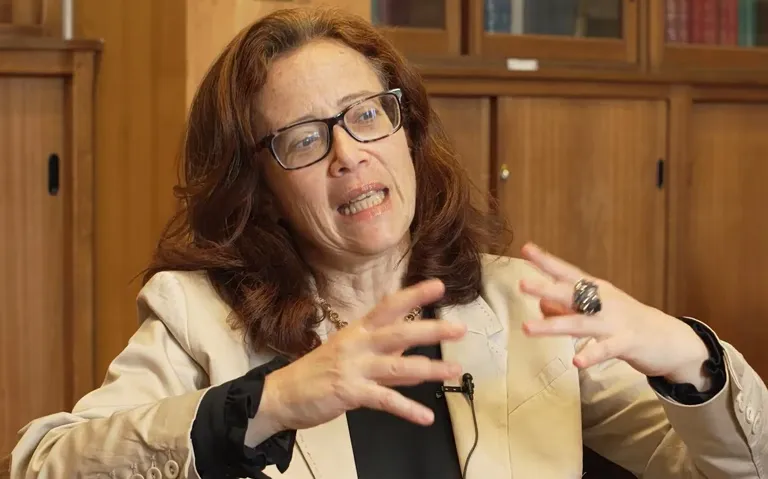
Céline Spector, a political philosophy professor at Sorbonne, argues that sovereignty is becoming a mere illusion in the face of global challenges. She suggests that traditional notions of sovereignty are inadequate when nations cannot independently address issues like climate change, multinational taxation, and migration. According to Spector, sovereignty becomes a 'ghost' when it fails to influence such developments.
How does nationalism impact European sovereignty?
Spector highlights that nationalism, while gaining ground in Europe, does not guarantee true sovereignty. She explains that the European Union was initially designed to make war between member states unthinkable, fostering prosperity and democracy. However, the perception that strengthening EU institutions undermines national sovereignty has fueled nationalist sentiments. These parties often present themselves as defenders of popular will, despite their misleading claims.
What are the consequences of rising nationalism?
The rise of nationalism threatens to weaken democratic institutions and social policies. Spector notes that nationalist parties exploit fears of globalization and inequality, positioning themselves as protectors of national interests. This trend challenges the EU's ability to safeguard citizens from global economic pressures and social insecurities.
What is the role of democracy in addressing these challenges?
Spector argues that democracy must defend itself against forces that seek to undermine it. She cites historical examples, such as the Weimar Republic, where democratic institutions were eroded by social crises and weakened checks and balances. Spector emphasizes the need for legal and institutional safeguards to prevent temporary majorities from dismantling the rule of law.
What is Spector's vision for a new European social contract?
Spector advocates for a more federal, social, and ecological Europe with a common fiscal policy. She envisions a European community that transcends economic and legal frameworks, becoming a true political entity. Her proposed social contract includes three dimensions: social, fiscal, and environmental.
How would this social contract function?
The social dimension emphasizes solidarity, supporting free movement through European public services that actively combat inequality and insecurity. The fiscal aspect calls for shared resources and effective measures against tax evasion and competition among states. The environmental dimension ensures that the burdens and benefits of ecological transition are distributed fairly, fostering democratic acceptance.
How does Spector's vision differ from a centralized superstate?
Spector clarifies that her vision for a federal Europe is not a centralized superstate. Instead, she advocates for shared sovereignty that protects democracy and fundamental rights at a supranational level. This approach aims to enhance democratic experiences at local and national levels, ensuring freedom through equality and fraternity.
Frequently asked questions
What is Céline Spector's main argument about sovereignty?
Spector argues that sovereignty is becoming an illusion when nations cannot influence global challenges like climate change and migration.
How does nationalism affect the European Union?
Nationalism challenges the EU by promoting the idea that strengthening EU institutions undermines national sovereignty, despite fostering democracy and prosperity.
What are the risks of rising nationalism in Europe?
Rising nationalism threatens to weaken democratic institutions and social policies, exploiting fears of globalization and inequality.
What does Spector propose for a new European social contract?
Spector proposes a social contract with social, fiscal, and environmental dimensions to create a more federal, social, and ecological Europe.
How does Spector's vision differ from a centralized superstate?
Her vision emphasizes shared sovereignty, protecting democracy and fundamental rights at a supranational level, rather than creating a centralized superstate.
Key takeaways
- Céline Spector argues that sovereignty is an illusion without global influence.
- Nationalism challenges the EU's ability to protect citizens from global pressures.
- Democracy must defend itself with legal and institutional safeguards.
- Spector advocates for a federal Europe with a new social contract.
- Her vision emphasizes shared sovereignty, not a centralized superstate.
Conclusion
Céline Spector's insights into the challenges facing Europe highlight the complexities of sovereignty and nationalism in a globalized world. Her advocacy for a new European social contract underscores the need for a more integrated and democratic Europe that can effectively address social, fiscal, and environmental issues. By emphasizing shared sovereignty, Spector envisions a Europe that protects democracy and fundamental rights, ensuring freedom through equality and fraternity.