Why is EU decision-making often seen as ineffective?
The European Union's decision-making process is frequently criticized for its inherent inefficiency. As noted in recent critiques of the European Council, summits often conclude with various conclusions and necessary statements intended for domestic consumption, yet they fail to produce substantial action. While leaks often highlight dramatic moments during these meetings, the reality is that very little is actually achieved regarding the most critical issues facing the bloc.
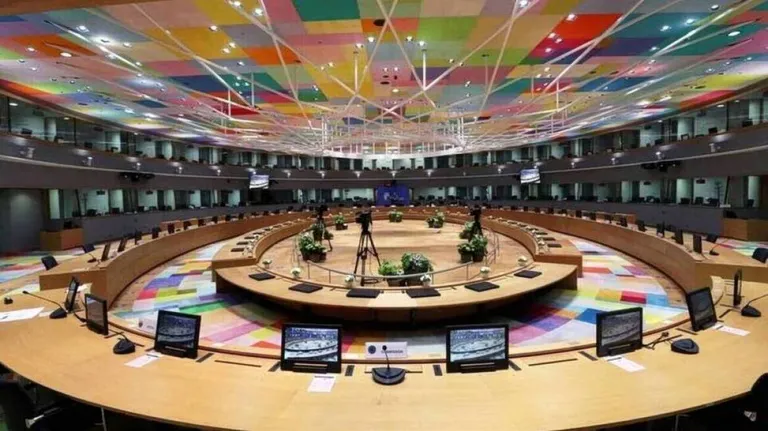
The structural reason for this failure is found in where power truly lies. Critical decisions are not made within the sessions of the European Parliament, despite its upgraded responsibilities, nor are they solely the domain of the European Commission, which manages daily affairs. Instead, the most vital decisions are made at the level of heads of state through intense negotiations between sovereign nations. It is at this stage that the process falters. History, particularly during the pandemic, has shown that while leaders may profess solidarity in theory, they revert to national priorities the moment it is time to bear the actual costs of collective action.
How do national priorities impact EU cohesion?
National priorities act as a persistent barrier to European cohesion. The current political landscape lacks leaders who view the progress of their own country as being inextricably linked to the depth of European integration. This disconnect is most visible in the debate surrounding the EU budget. For countries like Greece, the budget is not an abstract figure but a vital source of agricultural subsidies and ESIF (European Structural and Investment Funds) support.
Despite the budget representing only a small percentage of the total European GDP, the internal debate within larger nations is often dominated by reflexive arguments. For instance, discussions frequently revolve around the idea that "the German taxpayer will not pay for the lazy Greek," ignoring the fact that even the wealthiest nations—those that contribute more than they receive—benefit immensely from EU policies through exports and access to a massive single market. This focus on symbolic nationalist rhetoric, fueled by the rise of far-right populism, prevents the budget from functioning as a true mechanism for solidarity. Consequently, the Recovery Fund risks becoming a mere flash in the pan rather than a repeatable model for cohesion.
What are the implications of the EU's budgetary constraints?
The budgetary constraints of the EU have profound implications for its ability to act as a unified force. Because the budget is often subject to compromise only after significant delays, the resulting figures are typically lower than original proposals. This delay and reduction mean that the EU misses critical opportunities to use its financial resources to maintain social and economic stability across the continent.
The reluctance of wealthier nations to commit funds is not just a matter of economics but of political survival in an era of growing polarization. When the budget is treated as a zero-sum game between nations rather than a collective investment, the entire European project suffers. This inability to commit resources effectively leaves the union vulnerable to economic disparities that could have been mitigated through more robust, proactive financial planning.
How does the energy crisis affect EU decision-making?
The energy crisis and the rising cost of living represent another area where the EU fails to find a common footing. Instead of implementing immediate, decisive measures to protect citizens, the union tends to defer action to an uncertain "when and if it becomes necessary." This lack of foresight has direct consequences: citizens bear the brunt of the crisis through increased costs and rising inflation.
Furthermore, the EU's inability to act as a stable force is tied to its response to global conflicts. The ongoing wars in Ukraine and the Middle East have exacerbated fuel price volatility. There is a growing concern that the EU, rather than leading the effort toward peace, behaves in a way that suggests a desire for the conflict in Ukraine to persist. This lack of geopolitical agency undermines the union's credibility as a global power and leaves it reacting to crises rather than shaping the international order.
What role does leadership and political ideology play in the EU's challenges?
The challenges facing the EU are not merely a matter of leadership, though the current crop of leaders often appears to fall short of the occasion. The problem is deeper, rooted in the inability of European political elites—ranging from political parties and think tanks to the media—to think effectively beyond clichés. There is a failure to redefine essential concepts like democracy, the social state, and an international rules-based order for the modern era.
This intellectual and political vacuum is being filled by shifting ideological tides. Christian Democracy is increasingly transforming into a version of authoritarian neo-liberalism with strong far-right elements. Simultaneously, Social Democracy is struggling to remain the voice of workers and the masses with a vision of social justice. This leaves a void in the "Extreme Center," whose policies often inadvertently pave the way for the far-right. This far-right movement successfully exploits the EU's failure to live up to its own rhetoric. Even on issues like migration, the consensus among leaders appears to be moving toward the far-right agenda, adopting harsher rhetoric and policies. This is evidenced by the treatment of Spain—the only European country actively trying to integrate refugees and migrants—which is often treated as a "black sheep" by its peers.
Can the EU navigate future technological and geopolitical shifts?
As the EU faces massive challenges such as Artificial Intelligence, geopolitical divisions, and the need for industrial sovereignty, its current trajectory is worrying. While there are declarations about boosting domestic production and limiting imports from China, the EU remains heavily dependent on critical imports of technology and raw materials. Without a fundamental shift in how the union approaches long-term strategic planning, it remains ill-equipped to handle the complexities of the coming decades.
FAQ: European Union decision-making
Why does the EU struggle with decision-making?
The EU struggles because critical decisions are made through negotiations between heads of state, where national interests and domestic political pressures frequently override collective European goals.
How does the EU budget affect its cohesion?
The budget is often limited by the reluctance of wealthier nations to contribute, which prevents it from serving as a meaningful mechanism for solidarity and economic cohesion between member states.
What impact does the energy crisis have on the EU?
The lack of a unified, proactive response to the energy crisis leads to higher inflation and increased costs for citizens, while also weakening the EU's position as a global stabilizer.
How does leadership influence the EU's effectiveness?
Current leadership often lacks the vision to prioritize European integration, frequently succumbing to nationalistic pressures and failing to address long-term challenges like AI and geopolitical shifts.
What are the consequences of national priorities in the EU?
National priorities lead to delayed decisions, reduced budgetary effectiveness, and a tendency to adopt more restrictive, far-right-aligned policies on issues like migration.
Key takeaways
- EU decision-making is hampered by the tension between national interests and collective European needs during head-of-state negotiations.
- Budgetary debates are often derailed by nationalist rhetoric, limiting the EU's ability to act as a tool for solidarity.
- The EU's reactive approach to the energy crisis and global conflicts undermines its role as a global force for stability.
- A vacuum in political leadership and the shifting of traditional parties toward the far-right or neo-liberalism are weakening the union's ideological foundation.
- The EU faces significant difficulty in balancing industrial sovereignty with its continued dependence on external technology and raw materials.