Why are scientists calling for a global climate change health emergency?
The demand for a global declaration stems from the rapid acceleration of climate-driven health risks observed in the most recent decade. The tenth Lancet Countdown on Health and Climate Change report indicates that the period between 2016 and 2025 saw a significant intensification of severe health impacts compared to the previous decade of 2006-2015.
Researchers, coordinated by University College London in collaboration with the World Health Organization, argue that current mitigation efforts are being outpaced by the damage caused by fossil fuel consumption. While investments in clean energy and improved air quality legislation have yielded measurable benefits, they have not yet been sufficient to offset the escalating threats to human life and stability.
The disconnect between progress and risk
Despite record-breaking investments in renewable energy, the fundamental drivers of the crisis remain largely intact. The report highlights a critical gap: while the world is attempting to transition, the physical reality of a warming planet is manifesting in health crises faster than policy can respond. This gap is the primary driver behind the call for an emergency designation, which would mandate that health protection becomes the core priority in every climate-related decision, from emission reductions to financial resource allocation.
How is rising heat impacting global mortality rates?
Heat-related mortality has reached unprecedented levels, with climate change now serving as a primary driver of these deaths. Between 2016 and 2023, an estimated 540,800 deaths occurred annually on average due to heat, with 68% of those cases directly attributable to climate change. This represents a marked increase from the 55% attribution rate recorded during the 2006-2015 period.
The year 2023, identified as the hottest year in the studied period, saw a record 710,000 deaths globally linked to heat. In that specific year, more than 70% of these fatalities were attributed to anthropogenic climate change. Cumulative data suggests that nearly three million heat-related deaths occurred globally between 2016 and 2023 due to the shifting climate patterns.
What is the economic cost of extreme heat on the global workforce?
Extreme temperatures are significantly reducing human productivity, leading to massive financial losses for the global economy. In 2025, heat-related limitations on labor capacity resulted in an estimated loss of $1.07 trillion in potential income. This figure represents approximately 0.91% of total global economic production, marking the third consecutive year in which climate-driven labor losses exceeded the $1 trillion threshold.
The economic burden is not distributed equally across the globe, with developing regions facing much higher proportional impacts:
- Southeast Asia: Losses equal to 3.9% of GDP.
- Africa: Losses equal to 3.2% of GDP.
- Americas: Losses equal to 1.5% of GDP.
- Europe: Losses equal to 0.2% of GDP.
The sectors most heavily affected are agriculture and construction, as these industries rely heavily on outdoor and physically demanding labor, making workers particularly vulnerable to thermal stress.
How do droughts and rainfall patterns threaten food security?
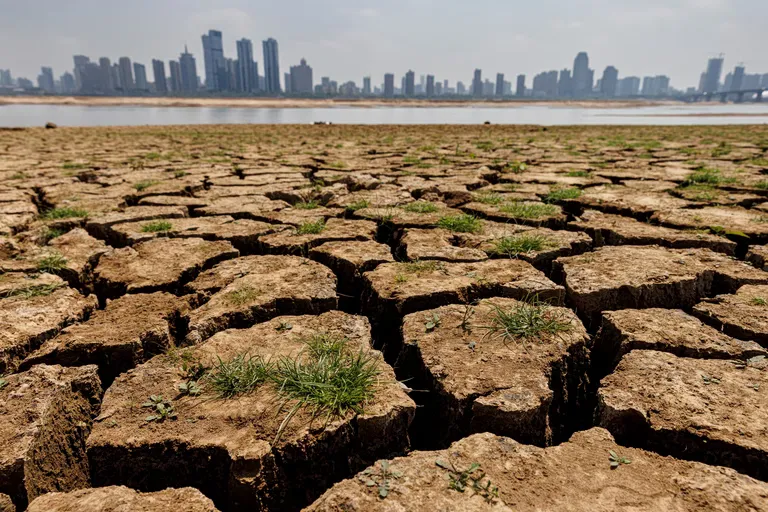
Shifting hydrological cycles are creating a dual threat of extreme dryness and intense flooding, both of which undermine global food security and sanitation. In 2025, extreme drought affected nearly 52% of the Earth's land surface for at least one month, the second-highest percentage recorded since 2023.
The scale of the drought crisis is expanding rapidly. Since 2016, the area affected by drought has been increasing at a rate more than 700% faster than the rate observed during the 2006-2015 period. Furthermore, satellite analysis reveals that since 2003, 80% of the Earth's land surface has experienced significant changes in soil moisture patterns, oscillating between extreme wet and dry conditions.
The impact of extreme precipitation
In addition to drought, the frequency of extreme rainfall events is rising. Between 2016 and 2025, extreme precipitation affected an average of 17.2% of the global land surface annually, up from 14.8% in the previous decade. This increase heightens the risk of catastrophic flooding, landslides, and the spread of waterborne diseases, creating a complex landscape of environmental and health hazards.
Why do fossil fuels continue to dominate the energy landscape?
Despite a massive surge in clean energy investment, fossil fuels still account for more than 80% of global energy needs. In 2025, global investments in clean energy reached a record $2.1 trillion, nearly double the amount invested in fossil fuels. However, the scale of existing fossil fuel infrastructure and future production plans remains a major obstacle to meeting climate targets.
The report highlights a concerning trend among the world's largest energy producers. The 100 largest oil and gas companies are currently planning to produce fossil fuel quantities through 2040 that are 150% higher than what would be required to align with the 1.5°C warming limit. This is an increase from the 138% figure reported the previous year, suggesting that production trajectories are moving further away from international climate goals.
Frequently asked questions
What is the Lancet Countdown?
The Lancet Countdown is a leading global research initiative that tracks the health impacts of climate change. It provides scientists and policymakers with data on how rising temperatures, extreme weather, and changing environmental patterns affect human mortality, disease spread, and economic stability worldwide.
How much does climate change cost the economy?
Climate change causes massive economic disruptions, specifically through labor productivity losses. In 2025, heat-related productivity declines cost the global economy an estimated $1.07 trillion, which is nearly 1% of global economic output, with the highest proportional impacts felt in Southeast Asia and Africa.
Can clean energy investments stop the health crisis?
While clean energy investments are growing—reaching $2.1 trillion in 2025—they are currently insufficient to offset the rapid damage caused by fossil fuel use. The report suggests that while these investments provide benefits, they must be paired with more aggressive policies to address the 80% of energy still provided by fossil fuels.
What is the link between drought and food security?
Droughts reduce the availability of water necessary for crops, while the rapid increase in drought frequency—700% faster than in previous decades—destabilizes agricultural yields. Combined with extreme rainfall and soil moisture volatility, these patterns make it increasingly difficult to maintain stable global food supplies.
Why is a health emergency declaration important?
Declaring a global health emergency would shift the focus of climate policy from purely environmental concerns to human survival. It would mandate that health protection becomes a primary driver in all climate-related decisions, including how much funding is allocated to mitigation and how emissions are regulated.
Key takeaways
- Heat-related deaths attributed to climate change rose to 68% of annual averages between 2016 and 2023.
- Extreme heat caused an estimated $1.07 trillion in global economic losses in 2025.
- Drought-affected areas are expanding 700% faster than they did during the 2006-2015 period.
- Fossil fuels still provide over 80% of the world's total energy requirements.
Conclusion
The findings of the tenth Lancet Countdown report present a stark reality: the climate crisis is no longer just an environmental issue, but an escalating global health emergency. With heat-related mortality rising and economic losses from labor disruptions exceeding $1 trillion annually, the human cost is becoming impossible to ignore. While the transition to clean energy is accelerating, the continued dominance of fossil fuels and the massive production plans of major energy companies threaten to undermine global stability. Addressing these challenges requires a fundamental shift in priority, placing human health at the very center of all future climate and economic policies.