What is the role of Comando the Chihuahua in the National Guard?
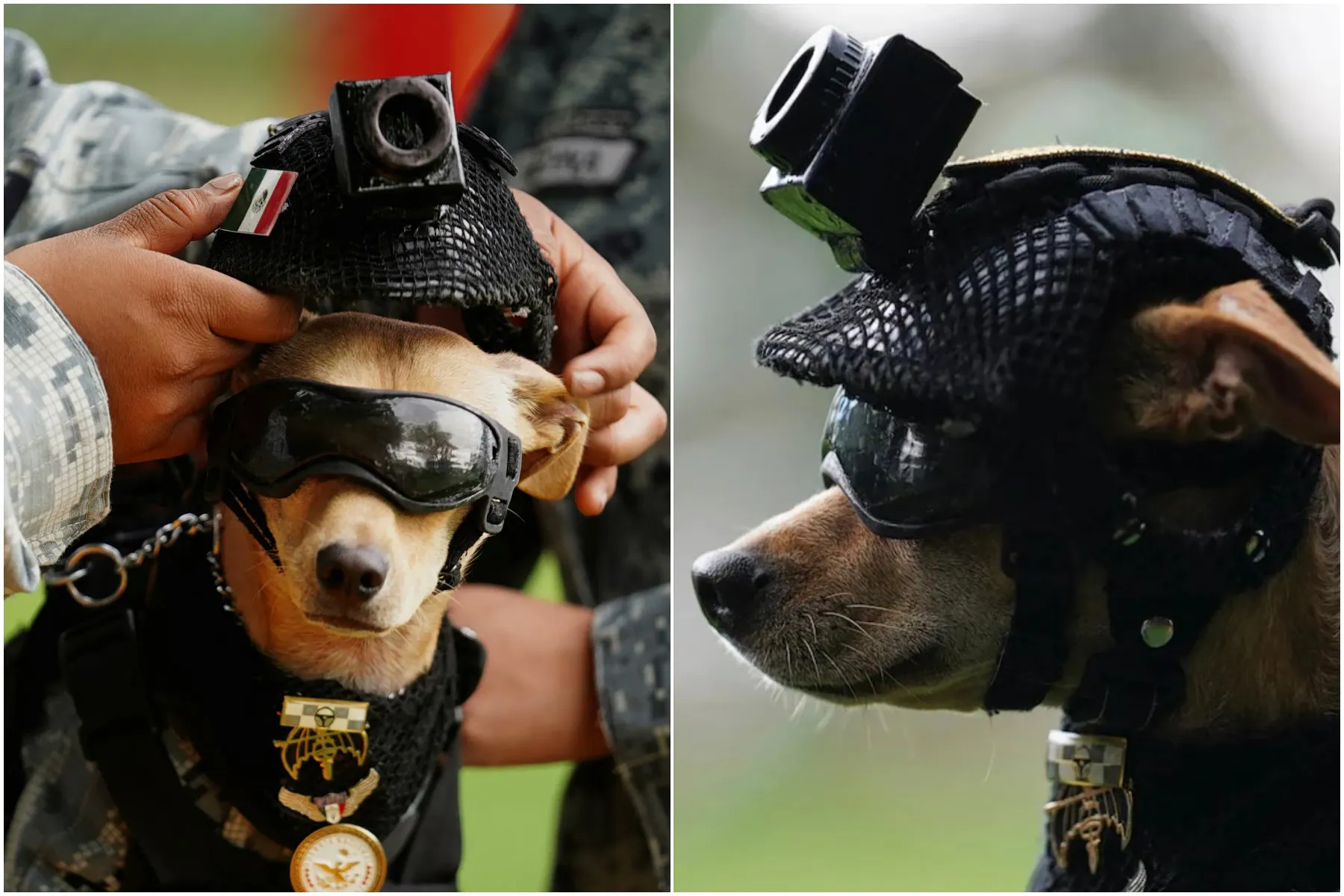
Comando is being specifically prepared for search and rescue operations within the Mexican National Guard. While his small stature might suggest a role limited to morale boosting, officials have confirmed that his training is functional and mission-oriented. He is equipped with specialized gear, including custom-made camouflage combat vests, miniature sunglasses, and a helmet integrated with a camera to assist in tactical data gathering.
His recruitment marks a departure from the standard profile of a military working dog. In Mexico, as in many other nations, canine units are almost exclusively composed of large, powerful breeds capable of high-intensity physical tasks. Comando’s inclusion suggests a niche application for his breed's specific attributes in specialized environments where larger dogs might struggle to navigate. The 13-month-old recruit is proving that size is not the only metric for utility in the field.
Specialized Equipment and Tactical Gear
To facilitate his training, the National Guard has invested in bespoke equipment tailored to his 7-kilogram frame. This includes a combat vest that provides protection while allowing for mobility, and a camera-mounted helmet. These tools are not merely symbolic; they are designed to turn even the smallest recruit into a mobile sensory platform for rescue teams. By utilizing miniature sunglasses and specialized vests, the institution ensures that Comando can operate with a level of professional readiness comparable to his larger counterparts, despite the unique engineering required for his scale.
How does Comando compare to the rest of the canine unit?
Comando is a significant outlier within a large and diverse canine department. The Mexican National Guard maintains a unit of approximately 350 dogs, the vast majority of which are German Shepherds or Labradors. These breeds are the industry standard for police and military work due to their size, strength, and established training protocols.
The physical contrast between Comando and his peers is stark. During training sessions in the capital, Comando has been observed navigating obstacles alongside Rocco, a much larger and fully trained veteran dog. While Comando has faced challenges with physical tasks—such as climbing stairs or jumping over hurdles—his presence provides a unique perspective on the capabilities of smaller breeds in professional service. The comparison highlights the diversity of roles available within the unit, from the heavy-duty apprehension capabilities of a Labrador to the potential niche agility of a Chihuahua.
| Feature | Comando (Chihuahua) | Standard Unit (Shepherds/Labradors) |
|---|---|---|
| Typical Weight | ~7 kg | 25–40+ kg |
| Primary Role | Search & Rescue / Community Engagement | Patrol, Detection, and Apprehension |
| Unit Size | 1 Recruit | ~350 Members |
| Key Attribute | Agility in small spaces / Public relations | Strength and endurance |
Why did the National Guard recruit a Chihuahua?
The decision to recruit Comando, who was adopted approximately six months ago in the state of Chihuahua, serves two primary institutional objectives. First, it challenges the technical stereotype that only large-bodied dogs are suitable for National Guard service. Second, it aims to humanize the security forces through community engagement.
Lieutenant Débora Hernández, an officer involved with the program, noted that Comando helps break down the perceived barrier between the military and the civilian population. By appearing at public ceremonies, school events, and community outreach programs, the dog serves as a bridge. His presence reinforces the idea that "under the uniform, we remain humans," providing a more approachable face for the institution. This strategic use of a non-traditional recruit allows the National Guard to engage with the public on a more personal level while simultaneously testing new operational boundaries.
The Origin of the Recruit
Comando’s journey began in his namesake state, Chihuahua. He was adopted after his previous elderly companions were no longer able to provide the level of care and active management required for a growing dog. His transition from a domestic pet to a state recruit has been managed through a structured integration process within the National Guard's specialized training facilities. This background adds a layer of relatability to his story, as he moved from a home where he needed care to an institution where he is being trained to provide it.
What impact has Comando had on public perception?
Comando has rapidly become a social media sensation, gaining significant traction on digital platforms. His participation in high-profile events, such as the Mexican Independence Day military parade, has cemented his status as a public figure. This digital visibility serves as a soft-power tool for the National Guard, allowing them to reach a broader audience through non-traditional means.
Beyond the internet, his role in school visits and community programs provides a tangible way for citizens to interact with the institution. While the primary focus remains on his search and rescue training, his secondary function as a symbol of accessibility is clearly being utilized by the National Guard to foster a more positive institutional image. The contrast between his tiny size and his serious military duties has created a unique brand for the recruit that resonates across social media.
Frequently asked questions
Is Comando just a mascot for the National Guard?
No, Comando is being actively trained for functional search and rescue missions. While his presence at public events and on social media serves a morale and community engagement purpose, his core training involves specialized tasks designed to assist in rescue operations in environments where his small size is an advantage.
How many dogs are in the Mexican National Guard's unit?
The National Guard's canine unit consists of approximately 350 dogs. Most of these members are large, traditional working breeds such as German Shepherds and Labradors, which are standard for military and police operations globally due to their strength and reliability.
What kind of gear does a small dog like Comando use?
Comando uses custom-fitted tactical equipment designed for his 7-kilogram weight. This includes a miniature camouflage combat vest, specialized sunglasses, and a helmet equipped with a camera to assist in his training and operational capabilities.
Where was Comando originally from?
Comando was recruited from the state of Chihuahua, Mexico. He was adopted by the National Guard about six months ago after his previous elderly owners were no longer able to provide the necessary care for him.
Does Comando face difficulties during training?
Yes, due to his small size, Comando has faced challenges during training exercises, such as navigating stairs and jumping over obstacles. He often trains alongside much larger, more experienced dogs like Rocco to develop his skills.
Key takeaways
- Comando is a 13-month-old, 7kg Chihuahua being trained for search and rescue.
- The Mexican National Guard canine unit comprises approximately 350 dogs.
- Comando uses specialized gear, including a camera-mounted helmet and custom vests.
- The recruitment aims to improve community relations and challenge military stereotypes.
Conclusion
The integration of Comando into the Mexican National Guard represents a dual-purpose strategy of specialized utility and social engagement. While his physical training for search and rescue presents unique challenges compared to the unit's larger German Shepherds and Labradors, his role is clearly defined. By leveraging his small stature for niche operations and using his public appeal to humanize the force, the National Guard is testing a new model of canine service. Whether through tactical assistance or community outreach, this tiny recruit is making a significant impact on the institution's public and operational profile.