How is the French government managing the upcoming demonstrations?
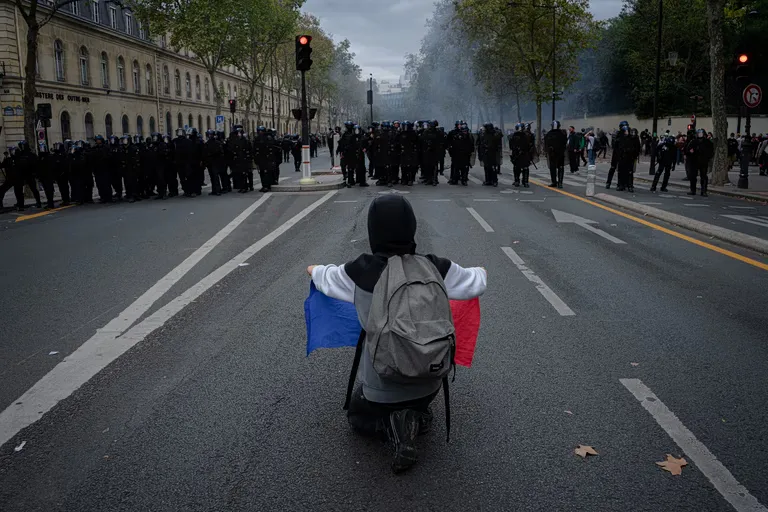
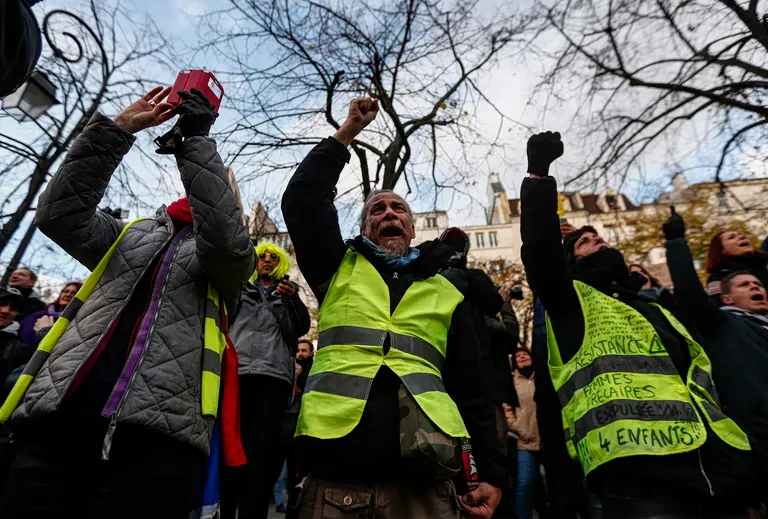
The French government is implementing a strategy of controlled mobilization to prevent the widespread chaos witnessed in previous weeks. President Emmanuel Macron and Prime Minister Sebastien Lecornier are attempting to find a compromise between the Right's demand for decisive repression and the Left's accusations of a "provocative police state" that incites rather than deters violence.
According to reports from Les Echos, the government has mobilized significant resources to avoid a descent into national uncertainty. A key component of this strategy involves a 20% increase in security personnel compared to the previous Saturday's deployment. Furthermore, the Ministry of the Interior has sought to "legitimize" the movement by only permitting marches organized by recognized trade unions.
Strategic route planning in Paris
In an effort to protect high-value targets, authorities have released specific "road maps" for protesters in Paris. The planned route for the upcoming march begins at Place de la Bastille and moves toward Place de la Nation. This direction is intentionally designed to lead protesters toward the northeast of the city, away from the luxury fashion houses and high-end boutiques located on the Champs-Élysées. By steering the crowds away from these tourist attractions and the Left Bank's university districts, the state hopes to minimize property damage and looting.
What are the security risks for local businesses in Paris?
Local businesses in certain districts remain highly vulnerable despite the government's strategic routing. While the official route avoids the luxury sectors, the 11th Arrondissement—which protesters are expected to traverse—contains numerous local shops, bakeries, and restaurants that fear being caught in the crossfire.
The tension is palpable among shopkeepers, some of whom have expressed a sense of abandonment. While Paris Police Chief Patrice For has stated that the protection of establishments is a state responsibility and that private security is merely a complement to official action, many business owners are taking no chances. Some reports indicate that certain shopkeepers have even equipped themselves with rubber bullet launchers to defend their premises, a move that highlights the underlying lack of confidence in public security measures.
Why is there political disagreement over the handling of unrest?
The Lecornier administration is facing a pincer movement of criticism from both ends of the political spectrum. The Left, including the Socialist Party and Mélenchon's La France Insoumise, argues that restricting the right to protest to only union-led groups is a violation of the rule of law. Socialist MP Arthur Delaporte has explicitly criticized this move as being contrary to democratic principles.
Conversely, the Right views the government's response as dangerously insufficient. Bruno Retailleau, a candidate for the upcoming presidential elections, has criticized President Macron for failing to adopt a consistent and firm policy. Retailleau has even proposed declaring a state of emergency to restore order. This political friction was evident during a recent inter-party meeting at the Matignon residence, which, despite high expectations of volatility, ended in a quiet but profound sense of disappointment across all factions.
The failure of the inter-party dialogue
The meeting at Matignon was intended to foster consensus on public safety and the upcoming presidential elections. However, the results left most participants feeling unheard. Manuel Bompard, the national coordinator for La France Insoumise, expressed disappointment that the Prime Minister focused heavily on public order while neglecting pressing issues such as the cost of living and the demands of high school students. This lack of meaningful engagement has left the government in a precarious position, caught between explosive domestic dissatisfaction and market uncertainty.
Where have protests been banned and where is tension rising?
To maintain order, authorities have proactively banned all public gatherings in several major French cities. Protests are currently prohibited in Marseille, Lyon, Nice, Toulon, and Grenoble. These bans are part of a broader attempt to limit the number of demonstrations and reduce opportunities for vandals and looters.
However, significant tension is brewing in Orléans. While all gatherings are banned in the city, the Rassemblement National (RN) is holding its convention there. Marine Le Pen, a leading figure in the far-right party and a potential successor to Macron, is expected to draw large crowds of supporters. This has prompted fears of massive counter-demonstrations by opponents of the far-right, creating a potential flashpoint for violence in a city where public assembly is technically restricted.
Key takeaways
- The French Ministry of the Interior will increase security forces by 20% to manage upcoming protests.
- Authorities are restricting permitted marches in Paris to union-led routes to protect luxury districts.
- Protests have been officially banned in several cities including Lyon, Marseille, and Nice.
- Political leaders from the Left and Right have both criticized the government's current security strategy.
- The government is attempting to steer protesters away from the Left Bank and the Champs-Élysées.
Frequently asked questions
How is the government controlling the protest routes in Paris?
The government has issued specific road maps to direct protesters from Place de la Bastille toward Place de la Nation. This route is designed to move crowds toward the northeast, effectively keeping them away from the luxury shopping districts on the Champs-Élysées and the university areas on the Left Bank.
Why are some protests being banned in France?
Protests are being banned in cities like Marseille and Lyon to prevent the recurrence of violence and widespread vandalism. By prohibiting gatherings in certain high-risk areas, the state aims to limit the opportunities for looting and maintain general public order during periods of high tension.
What is the reaction of the French political opposition?
The opposition is divided; the Left argues that limiting protests to unions violates the rule of law, while the Right claims the government's response is too weak. This has led to calls for more decisive action or even a state of emergency to manage the unrest.
Are private security measures recommended for shopkeepers?
Yes, the Paris Police Prefecture has advised shopkeepers to hire private security to protect their premises. Although the Police Chief emphasized that state protection is the primary responsibility, many business owners are taking additional precautions to safeguard their property from potential damage.
What is happening in Orléans regarding the protests?
Orléans is a point of high tension because the Rassemblement National is holding its convention there despite a ban on public gatherings. This is expected to trigger large-scale counter-demonstrations by opponents of the far-right, creating a volatile situation for local authorities.
Conclusion
The French government finds itself in an extremely difficult position, attempting to manage intense social unrest while balancing conflicting political demands. By increasing security forces and carefully directing protest routes, the administration hopes to prevent widespread destruction and protect the nation's economic interests. However, the dissatisfaction expressed by both the Left and the Right suggests that these tactical measures may not resolve the deeper political and social fractures within the country. As the nation moves toward upcoming elections, the ability of the state to maintain order without infringing on democratic rights will remain a critical test for the leadership.