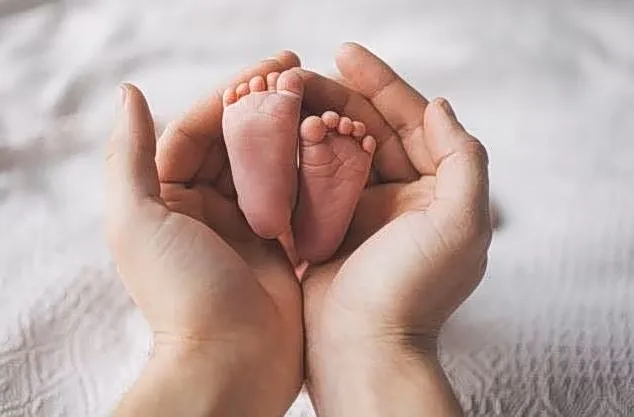
How has the Greek birth rate evolved since the post-war era?
The number of births in Greece has undergone a dramatic and sustained contraction since the mid-20th century, transitioning from post-war stability to a modern period of rapid decline. Historical data indicates that for approximately thirty years between 1951 and 1980, the country maintained a relatively stable average of roughly 150,000 births per year.
However, this stability was short-lived. By the 1990s, annual births had fallen to approximately 100,000. While there was a minor upward fluctuation during the 2000s, the trajectory has since turned sharply downward. For the year 2026, births are estimated to reach only 65,000, marking a stark contrast to the post-war highs.
Looking at even broader historical comparisons, the decline is even more pronounced when adjusting for total population size. Between 1932 and 1940, despite having a much smaller population, Greece averaged nearly 118,500 births annually. In comparison, the period of 1955–1964 saw an average of 154,000 births. The current decade (2021–2030) is projected to see fewer than 700,000 total births, a 25% decrease from the 920,000 births recorded during the 2011–2020 period.
Why is the Greek decline different from Western and Northern Europe?
Greece exhibits a unique demographic pattern that distinguishes it from its Western and Northern European counterparts, primarily due to the timing and intensity of its fertility decline. While most developed nations began experiencing a reduction in children per household much earlier, Greece's decline started significantly later, following the end of the 19th century.
According to Byron Kotzamanis, the Greek situation is characterized by two specific factors:
- Delayed onset and rapid acceleration: Women born in 1930 in Greece had nearly 2.3 children on average, whereas women born in 1985 are producing fewer than 1.5 children. This represents a much steeper and more recent drop in reproductive behavior.
- The gap between desire and reality: There is a widening chasm in Greece between the number of children women actually have and both their desired number of children and the replacement level of 2.07.
The role of the welfare state and social infrastructure
The divergence is not merely biological or temporal; it is deeply rooted in socio-economic structures. Many Western and Northern European nations have spent decades building environments conducive to family life. These countries have implemented policies that reduce gender discrimination and mitigate the friction between professional careers and family creation.
By contrast, Greece lacks the same level of extensive and effective welfare state support. In several European nations, women born between 1945 and 1985 managed to have between 1.8 and 2.0 children. This figure remains much closer to their desired family size and the replacement threshold than the figures currently seen in the Greek demographic landscape.
What are the long-term projections for Greek births?
The immediate future for Greek demographics appears bleak, with projections suggesting a continued contraction of the incoming generations. Research indicates that the period between 2027 and 2046 will see fewer than 1.4 million births, a sharp drop from the 1.8 million births observed in the preceding twenty-year block (2007–2026).
This decline is expected to persist into the following two decades. The demographic momentum is being pulled down by the cohort of people born between 2009 and 2026, a group that saw a 45% reduction in total births. As this smaller cohort reaches reproductive age, the number of births will likely face even further downward pressure.
While some factors might offer slight mitigation, they are unlikely to reverse the trend. Kotzamanis notes that while the rate of decline among women aged 25–44 might slow down, and the increase in the average age of first-time mothers might decelerate, the overall volume of births remains on a downward path. Without a significant positive net migration balance, the structural contraction of the population appears inevitable.
How have social values influenced reproductive behavior?
The shift in birth rates is inextricably linked to a profound transformation in social institutions and individual life strategies. The transition to the modern family model has involved a complete overhaul of traditional concepts regarding marriage, motherhood, and social roles.
The research highlights that the changes in reproductive behavior observed in post-war generations are accompanied by radical revisions in several key areas:
- The institution of marriage: A shift away from traditional structures toward more varied partnership models.
- Motherhood and sexuality: Evolving perspectives on maternal roles and the integration of individual autonomy.
- Education and socialization: New priorities regarding the intensive investment in a child's education and social development.
These shifts have led to a new family model that differs significantly from previous generations. In this modern context, couples often adopt new strategies to balance the achievement of individual goals with the collective goals of the partnership, often resulting in smaller family units.
Frequently asked questions
What is the replacement fertility rate mentioned in the research?
The replacement fertility rate is the level of fertility required for a population to replace itself from one generation to the next without migration. In the context of Greece, this figure is cited as 2.07 children per woman, a level that current birth trends are failing to reach.
How many births are expected in Greece between 2027 and 2046?
Projections indicate that there will be fewer than 1.4 million births during the 2027–2046 period. This is a notable decrease compared to the 1.8 million births that occurred during the previous twenty-year span from 2007 to 2026.
Why is the decline in Greece considered more severe than in Europe?
The decline is considered more severe because it began much later but is progressing more rapidly. Furthermore, Greek women face a much larger gap between the number of children they actually have and the number they desire, compared to women in countries with stronger welfare support.
What impact does the 2009–2026 cohort have on future demographics?
The cohort born between 2009 and 2026 is significantly smaller, having seen a 45% reduction in births. As these individuals reach the age of starting families, their smaller numbers will naturally lead to even fewer births in the subsequent decades.
Will migration affect these demographic projections?
The current projections of fewer than 1.4 million births assume the absence of a positive net migration balance. A significant influx of migrants could potentially mitigate the decline, but without such a shift, the downward trend in births is expected to continue.
Key takeaways
- Births in Greece are projected to fall below 1.4 million in the 2027–2046 period.
- The period 2007–2026 saw 1.8 million births, highlighting a clear downward trajectory.
- Greece's fertility decline started later than in Western Europe but is accelerating rapidly.
- A 45% reduction in births occurred between 2009 and 2026, impacting future generations.
The demographic outlook for Greece
The data provided by Byron Kotzamanis paints a sobering picture of the Greek demographic future. The transition from the stable birth rates of the mid-20th century to the rapid declines of the 21st century suggests a structural shift that is difficult to reverse. The combination of delayed reproductive onset, a lack of robust social welfare to support working parents, and a shrinking base of potential parents creates a compounding effect. Unless significant changes occur in social support structures or migration patterns, Greece faces a prolonged period of population contraction and aging.