The Changing Landscape of Electricity Pricing
The electricity market has undergone significant changes over the past year, with a notable shift in the cost dynamics between green and fixed-rate electricity tariffs. As energy costs continue to affect household and business budgets alike, consumers are increasingly looking for guidance on which type of electricity plan offers the best value. A study conducted by the Regulatory Authority for Energy, Waste and Water (ΡΑΑΕΥ) sheds light on this evolving situation, providing a clearer picture of what consumers can expect when choosing between these two major tariff categories.
Understanding the Two Tariff Types
What Are Fixed Electricity Tariffs?
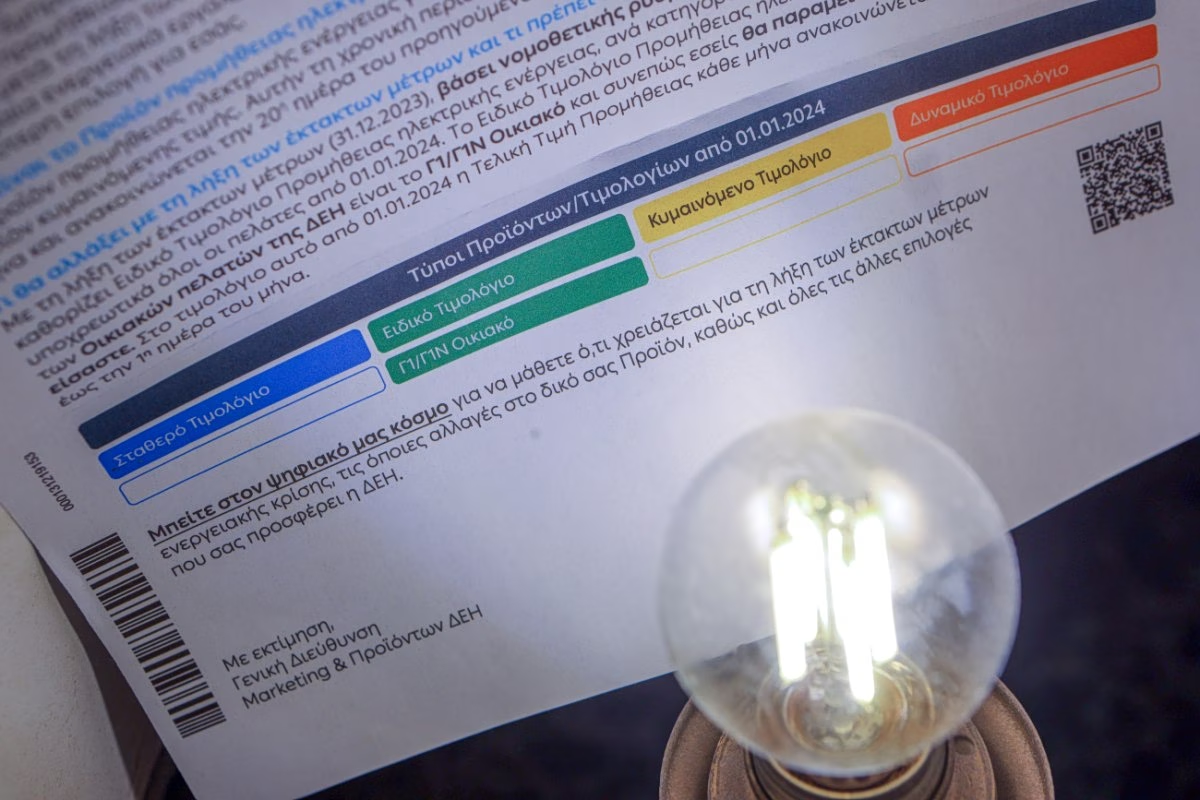
Fixed electricity tariffs are pricing plans in which the cost per kilowatt-hour remains constant for a predetermined period, regardless of fluctuations in the wholesale energy market. These plans offer consumers a degree of financial predictability, making it easier to budget monthly expenses. Historically, fixed tariffs have been popular among households and small businesses that prioritize stability over potential savings.
What Are Green Electricity Tariffs?
Green electricity tariffs, on the other hand, are linked to energy produced from renewable sources such as solar, wind, and hydroelectric power. These plans are often variable in nature, meaning their pricing can shift in response to market conditions, seasonal energy production, and demand levels. While they appeal to environmentally conscious consumers, their financial competitiveness compared to fixed plans has varied considerably over time.
Key Findings From the ΡΑΑΕΥ Study
The regulatory authority's research analyzed pricing data over a twelve-month period, comparing the actual costs incurred by consumers on green tariffs versus those on fixed-rate plans. The findings reveal a meaningful difference in expenditure between the two categories, with the gap having widened considerably in recent months.
According to the study's data, green tariffs have demonstrated a competitive edge in terms of overall cost during certain periods, particularly when renewable energy production was high and wholesale market prices remained relatively low. However, the picture is not uniformly favorable for green plans, as periods of lower renewable output or higher grid demand can result in elevated costs that erode those savings.
- During high renewable energy production periods, green tariffs offered lower average costs per kilowatt-hour compared to fixed plans.
- Fixed tariffs provided more consistent monthly billing, reducing exposure to price volatility.
- The annual cost difference between the two tariff types varied depending on consumption patterns and regional energy availability.
- Consumers with higher daytime energy usage may have benefited more from green tariffs, particularly in areas with strong solar generation.
Which Option Benefits Consumers More?
The question of which tariff type is more advantageous does not have a single straightforward answer, as it depends heavily on individual consumption habits, geographic location, and tolerance for billing variability. The ΡΑΑΕΥ study suggests that, on balance, certain consumer profiles stand to gain more from one type of plan than the other.
Households that consume electricity primarily during daylight hours and live in regions with abundant solar energy output may find green tariffs more cost-effective. In contrast, consumers who rely on a predictable monthly bill — particularly those on fixed incomes or tight budgets — may prefer the financial certainty offered by fixed-rate plans, even if this comes at a marginally higher overall cost.
For businesses, the calculus may be different. Companies with the ability to shift energy-intensive operations to off-peak hours, or those with on-site renewable generation, could leverage green tariffs to reduce their operating costs. However, businesses that require consistent energy expenditure forecasting for planning purposes may still opt for the stability of fixed pricing.
Market Trends and the Broader Energy Context
The comparison between green and fixed tariffs does not exist in a vacuum. Over the past year, energy markets across Europe have experienced considerable turbulence, driven by geopolitical factors, supply chain disruptions, and the broader energy transition underway across the continent. These dynamics have had a direct impact on electricity pricing and have influenced the relative attractiveness of different tariff structures.
Renewable energy capacity has continued to grow, with more solar and wind installations coming online and contributing to periods of lower wholesale electricity prices. This trend has, at times, worked in favor of green tariff holders, who benefit directly when market prices fall. However, the intermittent nature of renewable generation means that such benefits are not guaranteed throughout the year.
At the same time, fixed tariffs are typically priced to reflect suppliers' hedging costs, meaning that the rates offered include a premium to offset the risk of market price increases. When wholesale prices remain stable or decline, consumers on fixed plans may effectively be paying more than the market rate, while those on variable or green tariffs capture the lower costs directly.
Regulatory Oversight and Consumer Guidance
The ΡΑΑΕΥ study is part of a broader effort by the regulatory authority to increase transparency in the electricity market and equip consumers with the information they need to make informed decisions. By publishing comparative data on tariff costs, the regulator aims to foster greater competition among suppliers and encourage consumers to regularly review their energy plans.
Regulators have emphasized that consumers should not remain on a single tariff indefinitely without periodically assessing whether better options are available. With the energy market continuing to evolve and new products regularly entering the market, staying informed about current pricing can result in meaningful savings over time.
Consumers are encouraged to use official comparison tools provided by regulatory bodies to evaluate their current tariffs against available alternatives, taking into account both price and the environmental attributes of the energy supplied.
Looking Ahead
As renewable energy continues to expand its share of the electricity mix, the dynamics between green and fixed tariffs are likely to keep shifting. Analysts expect that the increasing penetration of solar and wind power will exert further downward pressure on wholesale electricity prices during periods of high generation, potentially making green tariffs more competitive over the long term.
However, the transition also brings challenges. Grid stability, storage capacity, and the management of peak demand will all influence how pricing evolves. Consumers and businesses alike will need to stay attentive to these developments to ensure they are on the most suitable and cost-effective electricity plan for their specific needs. In the meantime, the regulatory authority's findings provide a valuable baseline for understanding where the cost advantages currently lie and how they have shifted over the past year.