The Evolving Political Landscape of Venezuela
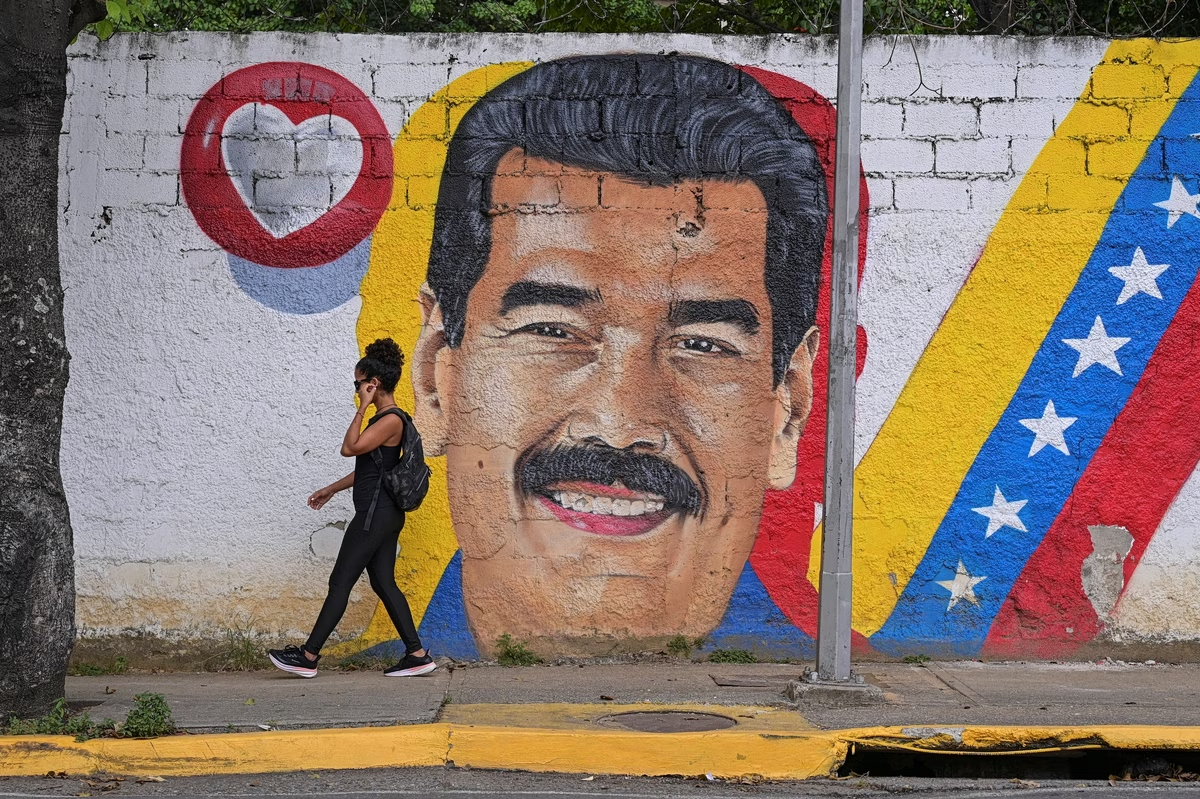
The political trajectory of Venezuela has long been a subject of international scrutiny, characterized by periods of intense ideological fervor, economic volatility, and profound social challenges. In recent times, however, a discernible shift appears to be underway, suggesting a potential re-evaluation of allegiances and priorities within the nation's leadership. This evolving scenario is particularly evident in the context of former President Nicolás Maduro, whose political fate now seems to be increasingly detached from the immediate concerns of the current government. The narrative emerging from Caracas indicates a pragmatic pivot, where the overarching objective of national survival and stability may be superseding past loyalties.
For decades, Venezuela has been at the epicenter of a geopolitical tug-of-war, with its vast oil reserves and socialist policies drawing both strong allies and staunch adversaries. The Bolivarian Revolution, initiated by Hugo Chávez and continued by Nicolás Maduro, fundamentally reshaped the country's political and economic structures. This era was marked by significant social programs, but also by growing authoritarian tendencies, economic mismanagement, and increasing international isolation. The United States, in particular, has maintained a firm stance against the Maduro administration, imposing numerous sanctions and backing opposition movements. This sustained pressure has undoubtedly played a crucial role in shaping the current political calculus within Venezuela.
Internal Dynamics and External Pressures
The internal dynamics of Venezuela are complex, characterized by a populace grappling with hyperinflation, widespread shortages of basic goods, and a significant exodus of citizens seeking better opportunities abroad. Against this backdrop, the government's focus has seemingly narrowed to maintaining a semblance of order and ensuring the continuity of state functions. This pragmatic approach may explain the perceived distancing from Nicolás Maduro, whose continued association could be seen as an impediment to any potential economic recovery or diplomatic re-engagement with key international players. The concept of 'survival' in this context extends beyond mere political longevity; it encompasses the fundamental well-being of the nation and its capacity to navigate an increasingly hostile global environment.
External pressures, particularly from the United States, have been relentless. Sanctions targeting Venezuela's oil industry, financial institutions, and key government officials have severely crippled the nation's economy. The US Department of Justice has also issued indictments against high-ranking Venezuelan officials, including Nicolás Maduro, on charges related to drug trafficking and corruption. These legal actions have created a highly precarious situation for anyone associated with the former leader, raising the stakes for the current administration to demonstrate a clear departure from past practices or affiliations that could further exacerbate international tensions.
The Legacy of Nicolás Maduro and Future Implications
The legacy of Nicolás Maduro is deeply intertwined with the contemporary challenges facing Venezuela. His presidency was marked by a dramatic decline in oil production, a humanitarian crisis, and accusations of human rights abuses. While he initially enjoyed significant support from within the Bolivarian movement, the sustained economic downturn and international condemnation have eroded his political capital. The current government's apparent silence regarding his legal predicament, particularly in the face of potential extradition or legal proceedings in the United States, speaks volumes about the shifting priorities in Caracas.
This shift is not merely about political expediency; it reflects a deeper strategic calculation. By not actively advocating for Nicolás Maduro's release or defending him against international charges, the current administration may be signaling its willingness to turn a new page. Such a move could be interpreted as an attempt to de-escalate tensions with the international community, potentially paving the way for the lifting of sanctions or the re-establishment of diplomatic ties. For a nation struggling with severe economic hardship, any pathway to relief would be a compelling motivator for such a strategic realignment.
The strategic silence surrounding Nicolás Maduro's legal fate underscores a pragmatic shift within Venezuela's leadership, prioritizing national stability and potential international re-engagement over past allegiances.
The implications of this evolving stance are far-reaching. Domestically, it could lead to a further fragmentation of the Bolivarian movement, as factions loyal to Nicolás Maduro might feel marginalized or abandoned. Conversely, it could strengthen the hand of those within the government who advocate for a more pragmatic and less confrontational approach to international relations. Economically, even a subtle change in the international perception of Venezuela could have significant benefits, potentially attracting foreign investment or facilitating access to international financial markets, which have been largely inaccessible due to sanctions.
The Role of International Actors and Regional Dynamics
International actors continue to play a pivotal role in Venezuela's political trajectory. The United States, the European Union, and various Latin American nations have consistently called for democratic reforms, free and fair elections, and an end to human rights abuses. The possibility of a less confrontational Venezuelan government could open new avenues for dialogue and negotiation. However, the deep-seated mistrust and historical grievances between Venezuela and some Western powers mean that any rapprochement would be a slow and arduous process.
Regionally, Venezuela's political shifts have significant implications for its neighbors. The ongoing migration crisis, with millions of Venezuelans seeking refuge in Colombia, Peru, Ecuador, and other countries, has strained resources and created social challenges across the continent. A more stable and economically viable Venezuela could potentially alleviate some of these pressures, fostering greater regional cooperation and stability. Conversely, continued internal strife or a prolonged period of political uncertainty could exacerbate existing regional challenges.
Looking Ahead: A Path Towards Reconstruction?
The current situation in Venezuela presents a complex tableau of challenges and potential opportunities. The apparent distancing from Nicolás Maduro, driven by a calculus of national survival, suggests a potential pivot towards a more pragmatic and less ideologically rigid foreign policy. While the path to full recovery and democratic normalcy remains fraught with obstacles, any indication of a willingness to engage constructively with the international community offers a glimmer of hope.
The coming months will be crucial in determining the true extent and implications of this evolving political landscape. Observers will be closely watching for concrete actions that signal a genuine commitment to reform, economic stabilization, and the restoration of democratic institutions. The question of Nicolás Maduro's fate, while significant, may ultimately be overshadowed by the broader imperative of securing a viable future for the Venezuelan nation. The choices made by the current leadership will not only shape Venezuela's internal trajectory but also its standing on the global stage, potentially redefining its relationships with key international players and its role within the Latin American region.