A Royal Brotherhood Divided
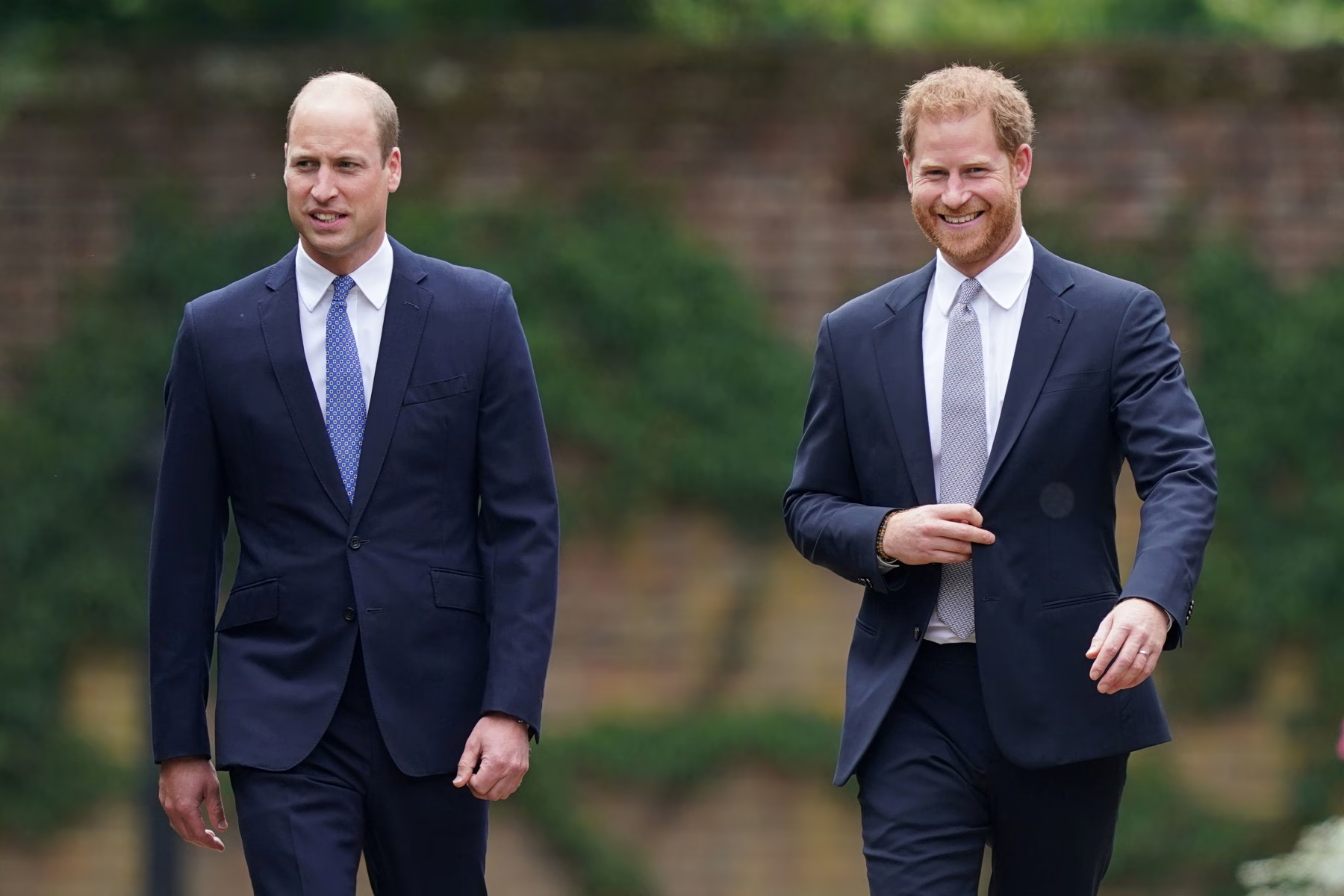
For the better part of six years, the relationship between Prince William and Prince Harry has been defined not by shared royal duties or brotherly camaraderie, but by distance — both literal and emotional. What was once one of the most publicly celebrated sibling bonds in the world has, over time, fractured into something far more complicated, leaving royal observers and the general public wondering whether the breach can ever be fully repaired.
The divide between the two brothers has been well documented. Harry's decision to step back from senior royal duties in early 2020, followed by his relocation to California with his wife Meghan Markle, set in motion a series of events that strained not only his relationship with the institution of the monarchy, but also his personal bond with his elder brother. Since then, interactions between the two have been rare, often confined to significant family events such as the funeral of their grandfather Prince Philip and the late Queen Elizabeth II.
The Weight of Words and Public Revelations
Much of the damage to the brothers' relationship can be traced to a series of highly publicized disclosures. Harry's memoir, released in early 2023 and titled Spare — a word that speaks directly to his own self-described role within the royal family — contained candid and at times unflattering accounts of his relationship with William. The book described physical altercations, deep-seated resentments, and a sense of being treated as secondary to his brother, who is heir to the throne.
The title itself was telling. In royal tradition, the phrase "heir and a spare" refers to the expectation that the monarch will produce at least two children — one to inherit the crown and one as a backup. Harry's choice to name his memoir Spare was widely interpreted as a direct commentary on how he felt perceived within his own family: necessary but secondary, present but overlooked.
William, for his part, has maintained a largely public silence on the matter, consistent with the royal family's general approach of not engaging directly with media controversies. However, sources close to the Prince of Wales have indicated that the revelations in the memoir were deeply hurtful and that the road to reconciliation remains far from straightforward.
What a Return Could Mean
Amid ongoing speculation about Harry's possible return to the United Kingdom — whether temporarily or on a more permanent basis — a central question has emerged: could such a move serve as a catalyst for mending what has become a deeply fractured relationship?
Opinions on the matter are divided. Some royal commentators suggest that physical proximity could create opportunities for informal conversations that public settings or carefully managed meetings simply do not allow. Others caution that geography was never the core issue, and that the underlying grievances — rooted in years of perceived slights, institutional pressures, and differing worldviews — would not dissolve simply because Harry were to spend more time on British soil.
There is also the question of what form any potential reconciliation might take. Observers note that a full restoration of the brothers' former closeness may be unrealistic, given the very public nature of their falling out and the difficulty of retracting statements made in print and in high-profile television interviews. A more pragmatic outcome, some suggest, might be a functional relationship — cordial, professional, and focused on shared interests such as their late mother Princess Diana's charitable legacy — rather than a deeply personal friendship.
The Institutional Dimension
Beyond the personal, there is also an institutional dimension to consider. The monarchy, particularly under King Charles III, has shown a careful interest in projecting an image of family unity. A visible rapprochement between William and Harry could serve that goal, signaling to the public that the royal family is capable of navigating internal conflicts with grace and maturity.
However, Harry's current status — no longer a working royal, residing abroad, and outspoken about his criticisms of the institution — complicates any straightforward narrative of reunion. Any attempt at reconciliation would need to navigate not only personal wounds, but also the broader structural question of what role, if any, Harry might play within or alongside the monarchy going forward.
Palace insiders have suggested that while King Charles remains open to repairing relations with his younger son, the path forward requires a degree of trust-building that has yet to take place. William's position is understood to be more guarded, shaped by a deep sense of loyalty to the institution he is set to lead, as well as by the personal hurt caused by public disclosures.
Public Perception and Media Scrutiny
The British public's view of both princes has shifted considerably over the years. William and his wife Catherine, Princess of Wales, continue to enjoy high approval ratings, bolstered in part by Catherine's public battle with illness and the couple's dignified response to it. Harry, while retaining support from segments of the public who admire his candor and his willingness to speak openly about mental health, has seen his popularity in the UK decline since his departure.
Any move by Harry to return to Britain — even temporarily — would inevitably be subject to intense media scrutiny, which itself presents a challenge. Past attempts at quiet, low-profile visits have not always remained out of the headlines, and the couple's complicated relationship with the British press remains a live issue.
A Long Road Ahead
Ultimately, whether Harry's potential return to the UK could bridge the divide between him and William depends on factors that extend well beyond logistics or proximity. At its heart, any reconciliation would require a willingness from both sides to set aside grievances that have been aired, in some cases, before a global audience of millions.
Those who know both men well suggest that the brotherly affection they once shared has not entirely disappeared, but that it has been buried under layers of hurt, misunderstanding, and institutional pressure. Whether that affection is sufficient to rebuild what has been lost remains, for now, an open question — one that only time, and perhaps a series of private conversations far from the public eye, can answer.
What is clear is that the stakes are high — not only for William and Harry as individuals, but for a royal family navigating an era in which transparency, relatability, and unity are more scrutinized than ever before.