Sandra Bullock Breaks Her Silence Three Years After Partner's Death
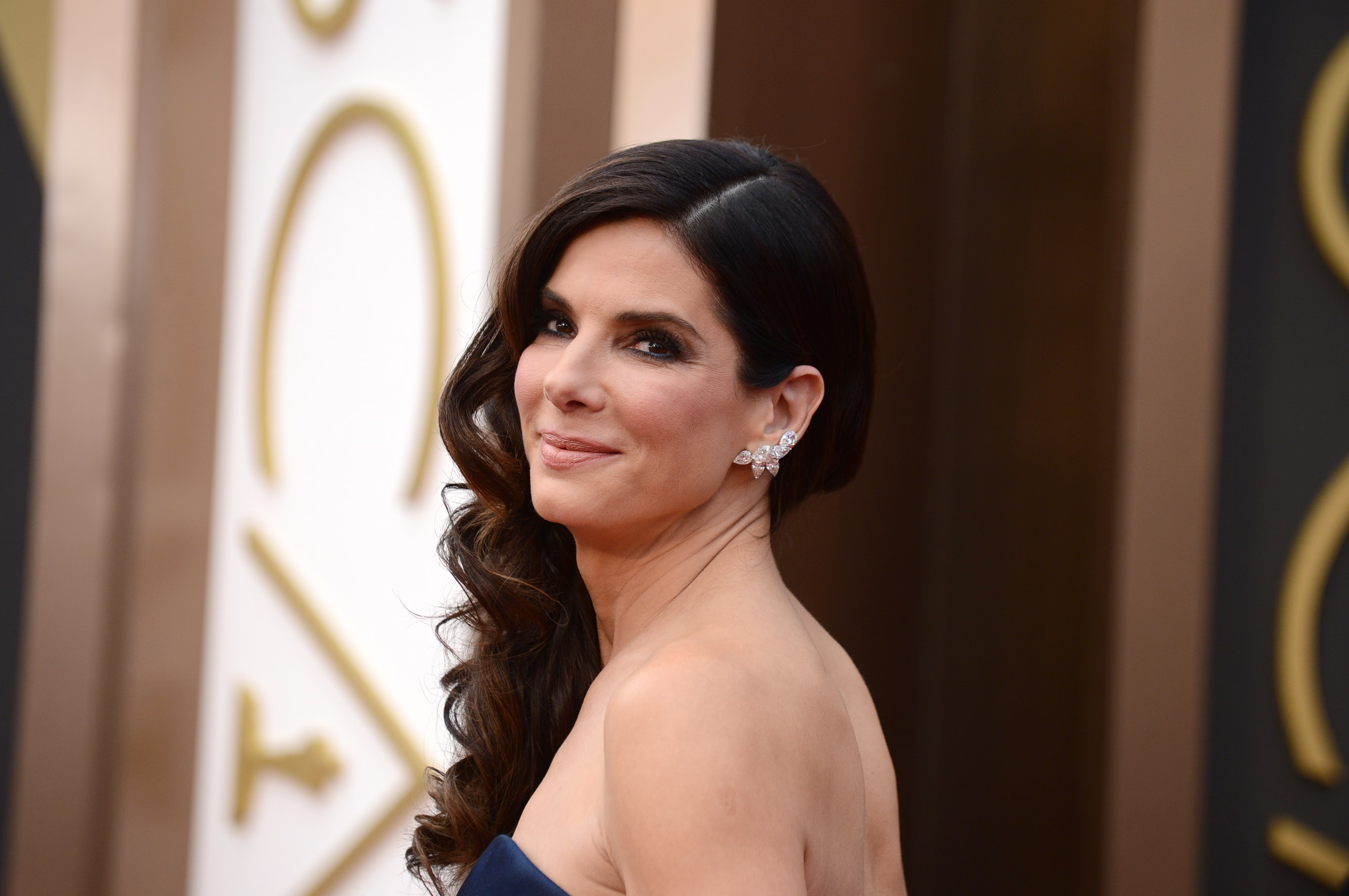
Hollywood actress Sandra Bullock has spoken publicly for the first time about the death of her longtime partner, Bryan Randall, who passed away following a battle with ALS — amyotrophic lateral sclerosis, a progressive and fatal neurological disease. It has been approximately three years since Randall's death, and Bullock, known for keeping her personal life largely private, has now chosen to share her experience with the world.
The actress, celebrated for her roles in films such as Speed, Miss Congeniality, and Bird Box, had maintained a notably low public profile in the years surrounding Randall's illness and subsequent passing. Her decision to speak out marks a significant shift, offering a rare and candid look into a chapter of her life that has been defined by grief, love, and profound personal transformation.
Who Was Bryan Randall?
Bryan Randall was a photographer and model who had been in a relationship with Bullock for approximately eight years before his death. The couple met in 2015 and were rarely seen together in public, with both preferring to shield their relationship — and especially their family life — from media scrutiny.
Randall was also known for his close bond with Bullock's two adopted children, Louis and Laila. By many accounts, he played an active and nurturing role in the family's daily life, and those who knew the couple described their relationship as deeply committed, even though they never married.
The Battle with ALS
ALS, commonly referred to as Lou Gehrig's disease, is a degenerative neurological condition that progressively impairs the nerve cells responsible for controlling voluntary muscle movement. The disease has no known cure and typically leads to complete loss of motor function over time, with most patients surviving between two and five years following diagnosis.
Randall's diagnosis was not publicly confirmed until after his death in August 2023, when Bullock's representatives released a statement revealing that he had been privately battling the disease for three years. His passing at the age of 57 came after what those close to him described as a courageous and dignified fight.
The decision to keep his illness private was a deliberate one. Sources close to the family indicated that both Bullock and Randall wanted to protect their children from unwanted public attention during an already difficult period, and to allow Randall the dignity of facing his illness without the added pressure of public scrutiny.
Bullock's First Public Remarks
In breaking her silence, Bullock has offered a glimpse into the emotional weight she has carried since Randall's diagnosis and death. While specific details of her comments continue to emerge, her willingness to speak about the experience reflects both a personal need to process her grief and, perhaps, a desire to raise awareness about ALS — a disease that continues to devastate families around the world.
Bullock's openness about such a painful personal loss is being viewed by many as a courageous act, particularly given her longstanding commitment to maintaining boundaries between her public career and private life. For years, she has been regarded as one of Hollywood's most grounded and private stars, and her choice to share this story signals just how significant this chapter has been for her.
Grief, Resilience, and Moving Forward
The loss of a partner to a terminal illness is an experience that reshapes a person's entire sense of self and daily existence. For Bullock, who had already navigated significant personal challenges — including a highly publicized divorce from Jesse James in 2010 — the death of Randall represented yet another moment of profound upheaval.
Yet those who know Bullock describe her as resilient, fiercely devoted to her children, and capable of finding meaning even in the most difficult circumstances. Her focus, by all accounts, has remained on her family and on honoring the memory of the man she loved.
The broader public response to Bullock's decision to speak out has been largely one of empathy and support. Many fans and fellow public figures have expressed admiration for her courage in addressing such a sensitive and painful subject, and her openness has once again spotlighted the devastating toll that ALS takes on patients and their loved ones alike.
ALS Awareness and the Ongoing Search for a Cure
One outcome of high-profile cases involving ALS — whether involving public figures or their loved ones — has historically been increased awareness and fundraising for research. The Ice Bucket Challenge of 2014, for example, raised over $220 million globally for ALS research and dramatically boosted public understanding of the disease.
Medical researchers continue to make incremental progress in understanding the mechanisms behind ALS, though a definitive cure remains elusive. Several medications have been approved in recent years that can slow the progression of the disease in some patients, but the overall prognosis for those diagnosed with ALS remains serious.
Advocacy groups and medical institutions have consistently emphasized the importance of continued research funding and public awareness, noting that each high-profile case that brings attention to the disease can translate into meaningful support for those living with ALS and their caregivers.
A Private Love Made Public
In many ways, Sandra Bullock's decision to speak about Bryan Randall and their life together is an act of remembrance as much as it is an act of advocacy. By bringing their story into the public sphere — on her own terms and in her own time — she ensures that the man she loved is remembered not only for the circumstances of his death, but for the life he lived and the family he helped to build.
For audiences around the world who have followed Bullock's career for decades, her words offer a humanizing window into the realities that even the most celebrated public figures must face: loss, love, caregiving, and the slow, difficult process of healing. Her story, like so many others touched by ALS, is ultimately one of endurance in the face of an unforgiving disease — and of the quiet, everyday courage it takes to continue forward.