Why is Jeremy Allen White concerned about social media for his children?
Jeremy Allen White believes that the constant exposure to a globalized digital world can prematurely desensitize children and disrupt their ability to form a stable identity. Speaking at the New York premiere of his film, the actor highlighted the psychological burden of living in an era of perpetual comparison.
The actor, known for his role in 'The Bear', expressed that the transition from local social circles to a global digital stage is a significant leap for developing minds. According to the Daily Mail, White noted that while it is already challenging for children to navigate peer comparisons in school, social media amplifies this pressure exponentially.
White’s primary concern lies in the way digital platforms facilitate an endless loop of self-comparison. When a child carries a smartphone, they are no longer just comparing themselves to their classmates; they are comparing their lives to the curated highlights of the entire world. This phenomenon, he suggests, can lead to a gradual desensitization and a distorted sense of self-worth.
The psychological mechanism of digital comparison
The core of White's anxiety revolves around the 'comparison trap.' In a traditional environment, a child's social reality is limited to their immediate community. This provides a manageable framework for social learning. However, social media removes these boundaries. By providing instant access to the perceived perfection of others, platforms can trigger feelings of inadequacy before a child has even established a baseline of self-identity.
White argues that the digital world presents a version of reality that is impossible to live up to, making the process of growing up even more difficult than the standard challenges of school and community life. For him, the risk is that children lose the ability to simply 'be' without the shadow of global scrutiny. He believes that by exposing children to the entire world too early, we strip away the necessary privacy required for self-discovery.
How does 'The Social Reckoning' reflect these digital anxieties?
'The Social Reckoning' serves as a cinematic exploration of the systemic issues within social media giants, directly influencing the themes of digital responsibility. The film, which premiered on October 9, 2026, draws inspiration from the 2021 Facebook whistleblower revelations.
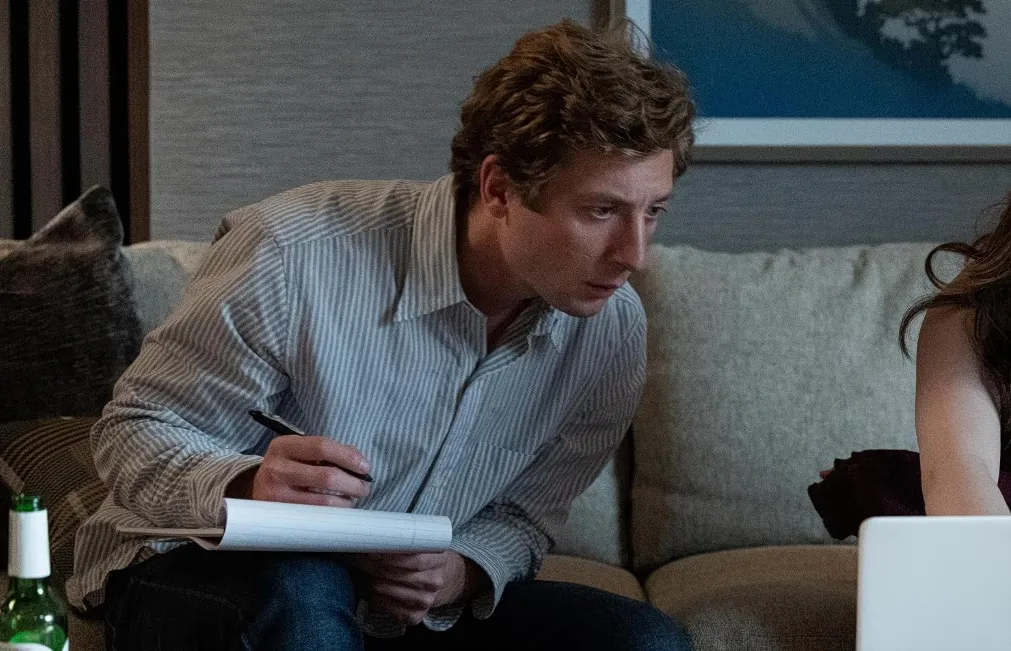
In the movie, Jeremy Allen White portrays Jeff Horvitz, a journalist for the Wall Street Journal. The narrative follows the fallout of massive disclosures regarding how social platforms operate. The film is a spiritual successor to the 2010 classic 'The Social Network', directed by Aaron Sorkin, who also returns to write and direct this new installment.
The casting and plot structure emphasize the gravity of the digital age:
- Maika Monroe: Plays Frances Haugen, the pivotal whistleblower.
- Jeremy Strong: Returns to portray Mark Zuckerberg.
- Aaron Sorkin: Provides the narrative depth as both writer and director.
By stepping into the role of a journalist investigating these platforms, White has gained a front-row seat to the complexities of digital ethics, a perspective that has clearly informed his personal parenting decisions. The film explores how the mechanisms built for connectivity can be turned into tools of massive social disruption.
What is the actor's specific strategy for his daughters?
White intends to delay his daughters' entry into the world of social media to allow them a period of uninterrupted personal growth. He currently has two daughters, seven-year-old Ezra and five-year-old Dolores, with his former wife, actress Addison Timlin.
His strategy is built on the concept of 'shrinking the world' for young people. He argues that children need a smaller, more controlled environment to explore their interests and personalities without the noise of external validation or criticism. By keeping their digital footprint minimal, he hopes to foster a more authentic sense of self.
White acknowledged to Entertainment Tonight that social media is not inherently malevolent. He recognized that platforms like Facebook and Instagram offer significant benefits, including:
- Enhanced communication with distant family and friends.
- Unprecedented access to global knowledge and educational resources.
However, he maintains a strict boundary regarding age and dependency. He noted that the danger arises when usage begins at an extremely young age, potentially leading to addictive behaviors that can compromise mental health. "Then that is when it starts to get scary for me," he noted, emphasizing his commitment to keeping his girls away from these platforms for as long as possible.
Is there a broader debate regarding digital age limits?
The actor's stance mirrors a growing global conversation among parents regarding the impact of digital platforms on youth. While there is no universal standard, the concerns raised by White—dependency, comparison, and identity formation—are central to the current discourse.
The tension lies between the undeniable utility of these tools and the developmental risks they pose. As platforms become more integrated into the fabric of daily life, the threshold for 'healthy use' becomes harder to define. White’s approach represents a precautionary stance, prioritizing psychological safety over digital literacy in the early years of childhood. The debate continues to swirl around whether the responsibility lies with the individual user, the parents, or the platforms themselves to mitigate these risks.
Frequently asked questions
What film is Jeremy Allen White starring in?
Jeremy Allen White stars in 'The Social Reckoning', a drama centered on the 2021 Facebook whistleblower revelations. He plays Jeff Horvitz, a Wall Street Journal journalist investigating the impact and ethics of major social media platforms.
Who are Jeremy Allen White's children?
The actor has two daughters, seven-year-old Ezra and five-year-old Dolores. They are his children with his former partner, actress Addison Timlin. White has expressed a strong desire to protect them from early social media exposure.
Who directed 'The Social Reckoning'?
'The Social Reckoning' is written and directed by Aaron Sorkin. Sorkin is also the creator of the acclaimed 2010 film 'The Social Network', making this project a thematic successor to his previous work on digital history.
Does White believe social media is entirely bad?
No, White acknowledges that platforms like Instagram and Facebook provide valuable communication tools and access to information. His concern is specifically focused on the age of entry and the risk of addiction and psychological comparison in young children.
What is the connection to 'The Social Network'?
'The Social Reckoning' acts as a follow-up to the themes explored in 'The Social Network'. While the earlier film focused on the origins of Facebook, this new project examines the consequences of the platform's dominance and the whistleblower events of 2021.
Key takeaways
- Jeremy Allen White is delaying his daughters' social media use to protect their identity formation.
- 'The Social Reckoning' explores the impact of Facebook following the 2021 whistleblower revelations.
- The film features Jeremy Strong as Mark Zuckerberg and is directed by Aaron Sorkin.
- White's concerns focus on the psychological dangers of global comparison and digital addiction.
The evolving role of digital parenting
Jeremy Allen White's decision to shield his children from social media highlights a significant shift in modern parenting. As the digital landscape becomes increasingly complex, high-profile figures are beginning to vocalize the need for developmental boundaries. While the benefits of connectivity are clear, the risks of early exposure—ranging from identity disruption to psychological desensitization—cannot be ignored. White's approach suggests that for the next generation, the most valuable asset may be the luxury of a private, uncurated childhood.