What is driving the current Mitsotakis Tsipras confrontation?
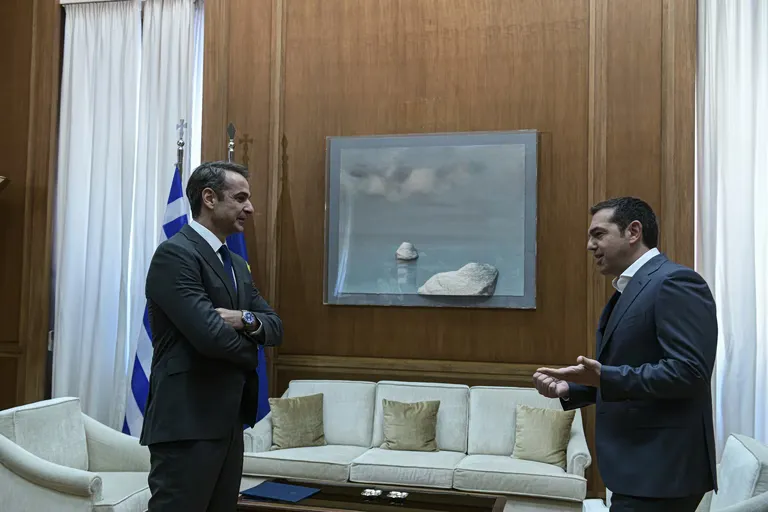
The primary driver of the current political friction is the intensifying pre-election rhetoric between Prime Minister Kyriakos Mitsotakis and opposition leader Alexis Tsipras. As the 2027 elections approach, both leaders are utilizing public platforms to dismantle their opponent's credibility. Mitsotakis has focused on defining his government's upcoming six-month policy pillars while simultaneously attacking the historical record of the SYRIZA administration.
During a recent cabinet meeting, Mitsotakis sought to discredit Tsipras's recent focus on government corruption. The Prime Minister suggested that those currently criticizing the administration's integrity are the same individuals who manipulated legislative processes in the past. Specifically, he referenced the period leading up to the 2019 elections, alleging that the previous administration kept Parliament open for an entire week solely to alter penal codes in their favor.
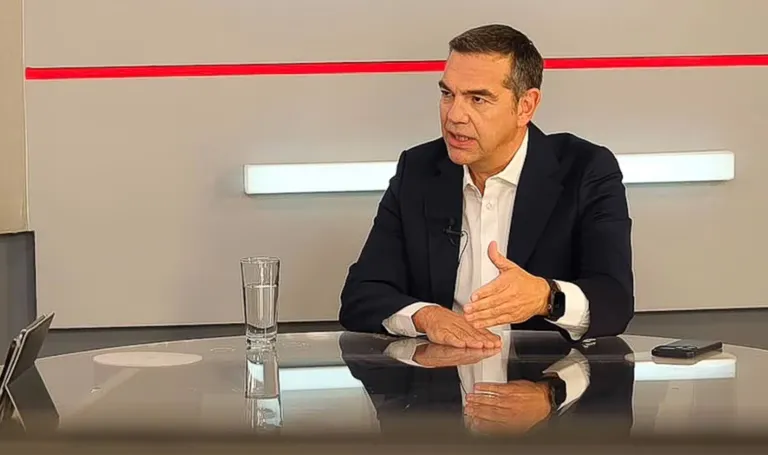
Conversely, Alexis Tsipras has escalated his rhetoric by framing the upcoming election as a strategic necessity to rid Greece of what he describes as its most corrupt and unjust government. Speaking from Messenia, Tsipras has positioned himself as the defender of democratic integrity against a ruling party he claims is disconnected from the realities of the Greek people.
How has corruption become the central theme of the debate?
Corruption allegations serve as the primary weapon in the current political struggle, with both sides accusing the other of undermining the rule of law. Tsipras has leveled severe accusations against the current administration, labeling the Prime Minister as a "high priest of corruption" and claiming the country is currently sinking into systemic dishonesty.
The opposition has highlighted several specific areas of concern regarding the management of the Greek state:
- Tax Administration: Tsipras criticized the reappointment of the Independent Authority for Public Revenue (AADE) head, Giorgos Pitsilis, for a third consecutive term, arguing this violates the two-term legal limit and suggests institutional inertia.
- Judicial and Criminal Links: The SYRIZA leader has accused the government of playing political games with convicted criminals, specifically mentioning the relationship between the government and figures associated with the Spartiates movement.
- Public Resource Management: There are ongoing allegations that the current leadership views the state as a source of personal or partisan gain rather than a public service.
The government's response to corruption claims
The government, through spokesperson Pavlos Marinakis, has vigorously defended the administration's record. Marinakis countered the corruption narrative by highlighting the increased role and efficiency of the AADE, noting that the authority conducts hundreds of thousands of audits annually to ensure compliance. Furthermore, the government has turned the critique back onto Tsipras, accusing him of "political audacity" for failing to support institutional frameworks that would prevent convicted criminal organization leaders from participating in elections during his tenure as opposition leader.
What are the economic and social grievances raised by the opposition?
Beyond the focus on corruption, Alexis Tsipras has articulated a broad critique of the government's socio-economic direction, claiming the administration has lost touch with the majority of the population. He argues that the current policy framework prioritizes large-scale interests and international investment funds over the needs of ordinary citizens.
The opposition's economic critique focuses on several key pillars:
- The Burden of Surpluses: Tsipras argues that the government is accumulating surpluses by placing an undue burden on the social fabric of the country.
- The Erosion of the Middle Class: He claims the government is facilitating the transfer of power to large funds, potentially undermining local economic stability.
- Generational Inequality: A central theme in the SYRIZA platform is the perceived failure to uphold the promise of the post-dictatorship era—that future generations would live better than their predecessors.
Tsipras has also pointed to the "Frape" and "Hasapis" scandals as symbols of a government that has strayed from ethical governance. By framing the election as a choice between a government that protects elite interests and one that serves the public, the opposition aims to mobilize voters through a sense of social injustice.
How is the healthcare system being used as a political battleground?
The state of the National Health System (ESY) has emerged as a critical point of contention, with Tsipras warning of a total collapse if structural reforms are not implemented. Speaking from Kalamata, the SYRIZA leader emphasized that the current administration's management has left the healthcare system in a precarious state.
Tsipras argued that without significant structural changes, the reconstitution of the ESY would be impossible. He linked the failure of the healthcare system to the broader theme of government mismanagement, suggesting that under the current leadership, corruption would only continue to flourish within public institutions. This focus on healthcare allows the opposition to connect abstract political arguments to the tangible, daily struggles of Greek citizens, making the political debate more personal and urgent.
What is the government's strategy for the upcoming months?
Prime Minister Mitsotakis is attempting to steer the national conversation away from the "pre-election hunt for votes" and back toward tangible governance and policy implementation. He has issued warnings to his ministers to ensure that their individual political ambitions do not overshadow the government's collective work.
The Prime Minister's strategy relies on two main components:
- The "Identity of Work": Mitsotakis maintains that the government's achievements and its record of implementation serve as its true identity and the best proof of its reliability.
- Countering Negativism: He views the opposition's rhetoric as mere "negativism" and seeks to frame the government as the only stable force capable of maintaining international and domestic credibility.
By focusing on the "stamp of reliability" on the government's passport, Mitsotakis hopes to present the New Democracy party as the adult in the room, contrasting his administration's perceived stability with the perceived chaos of the SYRIZA era.
Frequently asked questions
What are the main accusations against the Mitsotakis government?
The primary accusations involve systemic corruption, the prioritization of large investment funds over citizens, and the mismanagement of public institutions. Opposition leaders specifically point to the handling of tax administration and the perceived lack of accountability within the state's leadership as evidence of a government that has lost touch with the people.
How does Alexis Tsipras view the 2027 elections?
Tsipras views the upcoming elections as a decisive moment for Greece to undergo a "great political breakthrough." He frames the contest as a struggle to defeat the current administration strategically and electorally, aiming to replace what he describes as an unjust and corrupt government with one that serves the broader public interest.
What is the government's defense against corruption allegations?
The government, via spokesperson Pavlos Marinakis, defends its record by citing the increased efficiency and audit capabilities of the AADE. They also counter-accuse the opposition of hypocrisy, noting that SYRIZA failed to support necessary institutional reforms during their time in power that could have addressed criminal political involvement.
Why is the healthcare system a topic of political debate?
The National Health System (ESY) is a flashpoint because of its direct impact on citizens. Tsipras argues the system is facing collapse due to government neglect and corruption, using this to highlight the government's perceived failure to protect essential public services and the well-being of the population.
What is the Prime Minister's stance on the pre-election period?
Kyriakos Mitsotakis has urged his ministers to avoid focusing on pre-election campaigning at the expense of governance. He believes the government's best defense against political opposition is its record of work and its ability to maintain institutional reliability and international credibility.
Key takeaways
- The Mitsotakis-Tsipras confrontation centers on allegations of corruption and systemic governance failures.
- Alexis Tsipras claims the government prioritizes large funds and elite interests over the public.
- The Prime Minister emphasizes his government's record of work as its primary defense.
- The National Health System's stability has become a major political issue for the opposition.
- Both parties are using the 2027 election cycle to discredit each other's historical integrity.
Conclusion
The political landscape in Greece is rapidly polarizing as the 2027 elections approach. The confrontation between Kyriakos Mitsotakis and Alexis Tsipras has moved beyond mere policy disagreement into a fundamental battle over the integrity of the Greek state. While the government attempts to project stability and emphasize its record of achievement, the opposition is successfully leveraging themes of corruption, social inequality, and the collapse of public services to build momentum. As both sides sharpen their rhetoric, the central question for voters will be whether the current administration represents a reliable path forward or a system in need of radical structural change.