Why is Kyriakos Mitsotakis targeting traditional party strongholds?
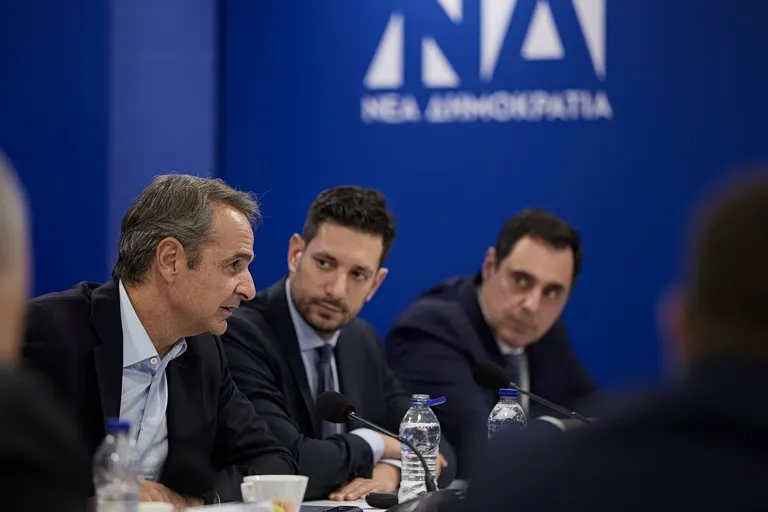
Kyriakos Mitsotakis is launching a concentrated effort to re-absorb voters who have drifted away from the New Democracy (ND) core. The Prime Minister's recent schedule indicates a strategic focus on regions that historically served as pillars for former leaders, aiming to shore up support before the 2027 electoral cycle. By visiting these areas, he hopes to mitigate the impact of voter leakage to the right and consolidate his leadership.
The Prime Minister's itinerary includes two highly symbolic locations. On Thursday, he is scheduled to visit Kalamata, a region closely associated with the political legacy of Antonis Samaras. Mitsotakis will serve as a keynote speaker at a KEDE conference in the area, attempting to engage with the strong Samaras-leaning electorate in Messenia. This move is seen as an attempt to bridge the gap with a faction of the party that has grown increasingly distant from the current administration.
Following this, the Prime Minister will head to Serres on Sunday. Serres holds deep historical significance as the birthplace of the Karamanlis family. This visit is timed to coincide with the return of cultural artifacts as part of a recent diplomatic agreement with Bulgaria. However, the visit is fraught with political tension, as the government faces significant pressure in Northern Greece from both right-wing rivals and internal dissenters.
The symbolic weight of regional visits
The choice of Kalamata and Serres is not merely logistical; it is deeply symbolic. In Greek politics, regional loyalty to specific political dynasties often dictates electoral outcomes. By entering the 'territories' of Samaras and Karamanlis, Mitsotakis is attempting to assert his authority over the entire spectrum of the center-right. This is particularly crucial as the rift between Mitsotakis and Kostas Karamanlis has widened significantly following the wiretapping scandal, which led to Karamanlis's withdrawal from the ND parliamentary group and his refusal to run on party tickets in Thessaloniki.
How is the Greek-Bulgarian Memorandum impacting the government?
The "Memorandum of Understanding" signed with Bulgaria regarding the exchange of cultural artifacts has become a significant political liability for the Mitsotakis administration. While the government presents the agreement as a successful piece of cultural diplomacy, it has triggered intense backlash from various sectors, including within the New Democracy party itself. Critics argue that the deal undermines Greek sovereignty over looted historical items.
The core of the controversy lies in the nature of the exchange. Unlike the Treaty of Neuilly, which established a unilateral obligation for Bulgaria to return Greek artifacts, the new memorandum involves a reciprocal exchange. Opponents claim this effectively recognizes a contested status for artifacts that were looted from Greek soil during the Bulgarian occupation in World War I. This perceived concession has caused significant dissatisfaction in regions like Drama, where local religious and political leaders have expressed skepticism toward the deal.
The criticism has also reached high-level political figures. Former President Prokopis Pavlopoulos has voiced sharp opposition, describing any form of "compromise" regarding looted heritage as unacceptable. He argued that such an arrangement constitutes a surrender of ownership and sets a dangerous precedent for other major international disputes, such as the ongoing struggle for the return of the Parthenon Sculptures. Furthermore, internal parliamentary pressure has mounted, with ND MP Miltos Chrysomallis requesting the disclosure of the memorandum's full text—a request that the Ministry of Culture denied, citing the need to maintain strategic diplomacy.
What are the internal challenges facing New Democracy?
Internal friction is mounting within New Democracy as the party navigates a prolonged pre-election period. The administration is facing accusations of bureaucratic paralysis, with claims that government ministries have become less efficient due to the focus on upcoming political contests. This "pre-election hunt for votes" has reportedly distracted civil servants from their primary duties, leading to calls for increased administrative productivity.
In response to these concerns, Kyriakos Mitsotakis has attempted to balance political campaigning with governance. During a recent cabinet meeting, he acknowledged the temptation of the "pre-election hunt" but explicitly instructed ministers to prioritize "government results." He urged his cabinet to move beyond political maneuvering and focus on delivering tangible outcomes for the country, effectively telling officials to "pick up the pencils" and return to work.
However, the Prime Minister's focus quickly shifted back to party organization during meetings with the party's Executive Secretariat. There, the emphasis was placed on mobilizing party officials and organizing regional tours to prepare for the spring 2027 elections. Mitsotakis has sought to boost morale by emphasizing the organizational strength of New Democracy, asserting that no other political formation possesses the same level of structured readiness. This dual approach aims to maintain government functionality while simultaneously hardening the party's electoral machinery.
What is the impact of the Karamanlis-Mitsotakis rift?
The political divide between Kyriakos Mitsotakis and Kostas Karamanlis has fundamentally altered the landscape of the Greek right. This rift, catalyzed by the wiretapping scandal, has stripped the party of a significant portion of its traditional base in Northern Greece. The decision by Karamanlis to withdraw from the party's electoral lists in Thessaloniki marked a definitive break in the unified front that had previously characterized the center-right.
This fragmentation has created a vacuum that both the government and its rivals are attempting to fill. As Mitsotakis seeks to reclaim the North, he must contend with the reality that the Karamanlis influence remains potent. The loss of support from this faction is not just a matter of individual votes but represents a loss of ideological cohesion that could impact the party's ability to present a unified vision for the country in 2027.
Frequently asked questions
Why is the Bulgarian memorandum controversial?
The memorandum is controversial because it involves a reciprocal exchange of cultural artifacts rather than a unilateral return of looted items. Critics, including former President Prokopis Pavlopoulos, argue that this compromises Greek ownership of artifacts stolen during World War I and sets a bad precedent for the Parthenon Sculptures.
What regions is Mitsotakis visiting to secure votes?
Mitsotakis is targeting Kalamata in the Messenia region to engage the Samaras-leaning electorate and Serres in Northern Greece to address the Karamanlis stronghold. These visits are designed to curb voter leakage to the right and consolidate his support in traditional party territories.
How has the relationship with Kostas Karamanlis changed?
The relationship has suffered a deep and unbridgeable rift following the wiretapping scandal. This led to Karamanlis withdrawing from the New Democracy parliamentary group and refusing to appear on party ballots in Thessaloniki, significantly weakening the party's cohesion in Northern Greece.
Is the Greek government facing administrative delays?
Yes, there are internal allegations that government ministries have experienced a form of "paralysis" due to the extended pre-election period. Prime Minister Mitsotakis has addressed this by instructing his cabinet to prioritize government performance and results over purely political campaigning.
What is the political significance of the Serres visit?
The visit to Serres is significant because it combines regional campaigning in a Karamanlis stronghold with the diplomatic presentation of the Greek-Bulgarian memorandum. It serves as a test of the government's ability to manage both local political tensions and sensitive international cultural agreements.
Key takeaways
- Kyriakos Mitsotakis is targeting Kalamata and Serres to reclaim lost New Democracy voters.
- The Greek-Bulgarian Memorandum faces intense criticism for potentially compromising ownership of looted artifacts.
- The political rift with Kostas Karamanlis has weakened New Democracy's influence in Northern Greece.
- Mitsotakis is urging his cabinet to prioritize governance over pre-election political maneuvering.
- The 2027 elections are driving intense party organization and regional mobilization efforts.
Conclusion
Kyriakos Mitsotakis finds himself at a critical juncture, attempting to navigate a complex landscape of internal party fragmentation and external diplomatic controversy. His strategic tours of Kalamata and Serres represent a calculated effort to mend the fractures within the New Democracy base and counteract the influence of former leaders like Samaras and Karamanlis. However, the backlash against the Bulgarian memorandum and the ongoing tensions in Northern Greece present significant hurdles. As the country moves toward the 2027 elections, the Prime Minister's ability to balance effective governance with aggressive political consolidation will determine the future stability of his leadership.